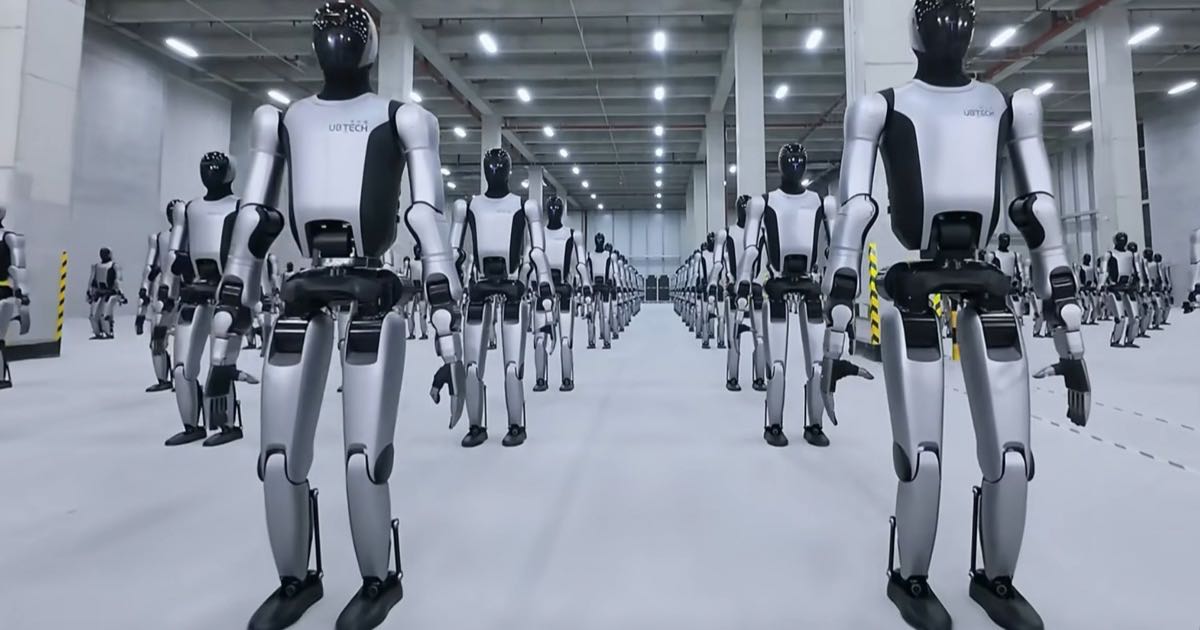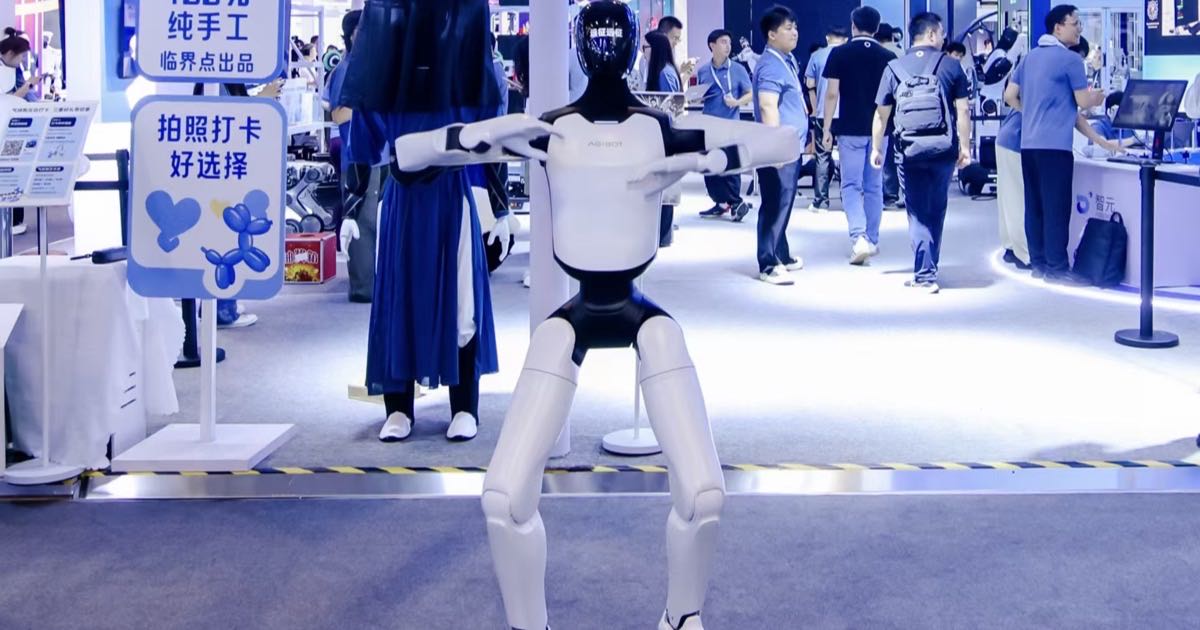
AgiBot, a three-year-old Shanghai-based robotics company, shipped approximately 8,400 humanoid robots in the first half of 2026, surpassing Unitree Robotics to become the world’s largest humanoid robot vendor. The data comes from San Francisco-based research firm Smart Analytics Global, which published its H1 2026 market report on Sunday.
The broader picture is more striking than any single company’s ranking. Chinese manufacturers supplied over 97 per cent of all humanoid robots shipped globally in the first half. Total worldwide shipments hit roughly 19,100 units — a 272 per cent jump from the same period a year earlier. Chinese buyers accounted for more than 85 per cent of demand.
What AgiBot Did Differently
AgiBot captured 44 per cent of the global market. Its shipments surged 562 per cent year on year, driven by a diversified product portfolio: full-size bipedal A-series models, compact X-series units, and wheeled G-series robots. The multi-line strategy gave AgiBot coverage across industrial, commercial, and research deployments.
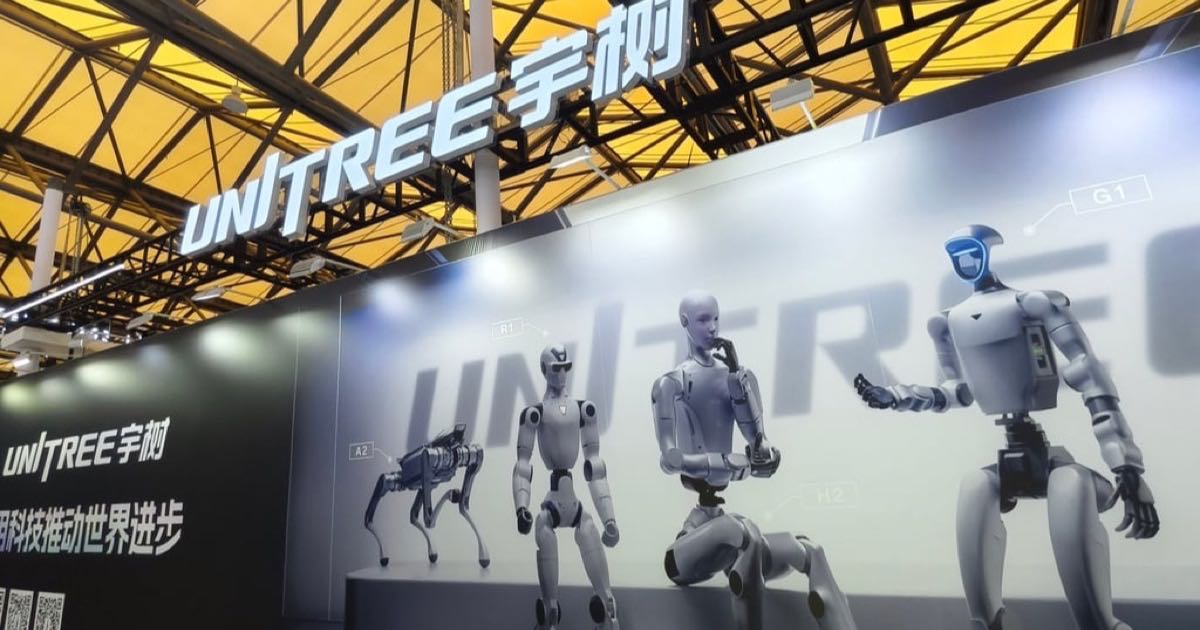
Unitree, by contrast, shipped about 5,900 units for 31 per cent market share. Its humanoid business remained concentrated in the flagship G1 model, with education, research, and performance demonstrations making up a substantial share of deployments. That concentration worked when the market was small. As industrial demand scaled, AgiBot’s broader line-up pulled ahead.
What stands out is how quickly the lead changed hands. Unitree was the story of 2025 — the viral backflipping G1, the Musk endorsement, the first humanoid robot company to file for IPO. AgiBot was barely on the radar outside China. A 562 per cent growth rate in a single half-year changes the narrative.
Both Companies Are Racing to IPO
The rivalry now extends to capital markets. Unitree priced its Shanghai STAR Market IPO at 150.8 yuan per share, expecting to raise roughly 6.1 billion yuan (US$904 million). The offering drew extraordinary demand — oversubscribed 8,288 times according to Machine Dawn — with a retail winning rate of 0.0181 per cent. The company is profitable: 1.7 billion yuan in revenue and 591 million yuan in adjusted net profit last year.
AgiBot is pursuing a Hong Kong listing, with Citic Securities, CICC, and Morgan Stanley as joint sponsors. Founder Deng Taihua said revenue surpassed 1 billion yuan in 2025, with a target of 10 billion yuan by 2027. Financial details have not been publicly released.
The contrast matters. Unitree is profitable and listing on a mainland exchange. AgiBot is pre-profit, growing faster, and listing in Hong Kong. Investors are being asked to choose between proven economics and growth velocity — in a market where 97 per cent of supply comes from a single country.
The Factory Floor Is Where the Money Is
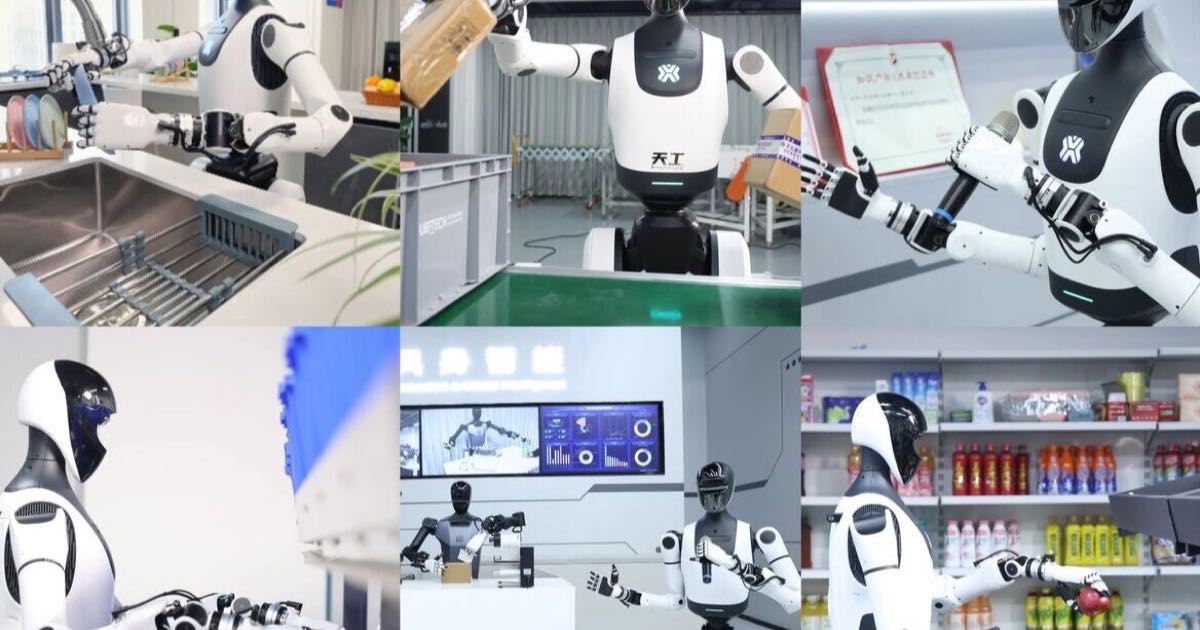
Industrial and commercial applications accounted for over 70 per cent of humanoid shipments in the first half, up from about 50 per cent a year earlier. This is the shift that separates real business from demonstration. When humanoids were primarily research and education tools, volumes stayed small. Factory automation and logistics are scaling the market.
SAG projects full-year global shipments to approach 60,000 units — nearly tripling year on year. That projection rests on continued factory deployment, not consumer adoption. The humanoid robot in your home is not imminent. The humanoid robot on a production line is already happening, mostly in Chinese factories.
What 97 Per Cent Market Share Actually Means
China’s near-total dominance of humanoid robot manufacturing is not a marketing claim. It is a supply chain reality. The country’s integrated component sourcing, domestic demand, and manufacturing scale create a cost structure that non-Chinese makers struggle to match. Robot hand components alone can cost hundreds of thousands of yuan, and Chinese supply chains produce these at lower cost than any alternative.
The geopolitical angle is unavoidable. The US FCC has already banned Unitree’s products on national security grounds. Tesla, Figure, Boston Dynamics, and Agility Robotics are building humanoids in the US, but their volumes are a fraction of what AgiBot and Unitree ship each quarter. The gap is widening, not narrowing.
NZ Angle
New Zealand imports its industrial automation equipment. A market where 97 per cent of humanoid robots come from China means NZ manufacturers considering humanoid deployment face a binary choice: buy Chinese hardware, or wait for Western alternatives that cost more and ship in smaller numbers. The FCC ban on Unitree creates a precedent that other Five Eyes partners may follow, which could limit options further.
There is also a workforce consideration. The robot trainer role emerging in China — paying up to 800,000 yuan annually — is a job category that does not yet exist in NZ. If humanoid deployment scales globally, the skills gap between countries that deploy early and those that wait could compound quickly.
❓ FAQ
How many humanoid robots were shipped globally in H1 2026? Approximately 19,100 units, a 272 per cent increase from H1 2025. SAG projects full-year shipments approaching 60,000 units.
Why does China dominate humanoid robot manufacturing? Integrated supply chains, lower component costs, domestic demand accounting for 85 per cent of global purchases, and a manufacturing ecosystem that supports rapid scaling. The cost structure is difficult to replicate elsewhere.
Is AgiBot profitable? AgiBot has not released financial details publicly. Unitree, its main rival, reported 1.7 billion yuan in revenue and 591 million yuan in adjusted net profit in 2025 — making it one of the few profitable humanoid robot companies globally.
Can US or European companies compete? Tesla Optimus, Figure AI, Boston Dynamics, and Agility Robotics are developing humanoids in the US. Their shipment volumes are significantly smaller than Chinese manufacturers. The FCC ban on Unitree products reflects ongoing geopolitical tension that shapes market access.
📰 Sources
- SCMP — AgiBot dethrones Unitree as world’s top humanoid maker
- Machine Dawn — Today in Robotics, 11 August 2026
- Singularity.Kiwi — Unitree IPO: First humanoid robot company goes public
- Singularity.Kiwi — FCC bans Chinese humanoid robots
- Singularity.Kiwi — China humanoid robots on the factory floor
— CJ Murden, editor of Singularity.Kiwi. Former digital technologies teacher, author of AI-focused books. Writing with a New Zealand focus.