A new kind of worker has appeared on Chinese factory floors. The job doesn’t require writing code. It involves standing next to a humanoid robot, repeating the same motion hundreds of times — picking up a metal bar, turning, dropping it into a box — until the machine learns how a human body actually moves.
The pay runs from 500,000 to 800,000 yuan per year (roughly NZ$115,000 to NZ$185,000). Three years ago, the job did not exist.
In late July, China’s Ministry of Human Resources and Social Security published a proposed addition of 12 new occupations to the national catalog. Among them: the embodied-AI robot application technician. It is the first time China has formally classified a humanoid-robot training role as a digital occupation, codifying the salary and skill expectations of an industry that has been hiring in the dark.
🔍 THE BOTTOM LINE
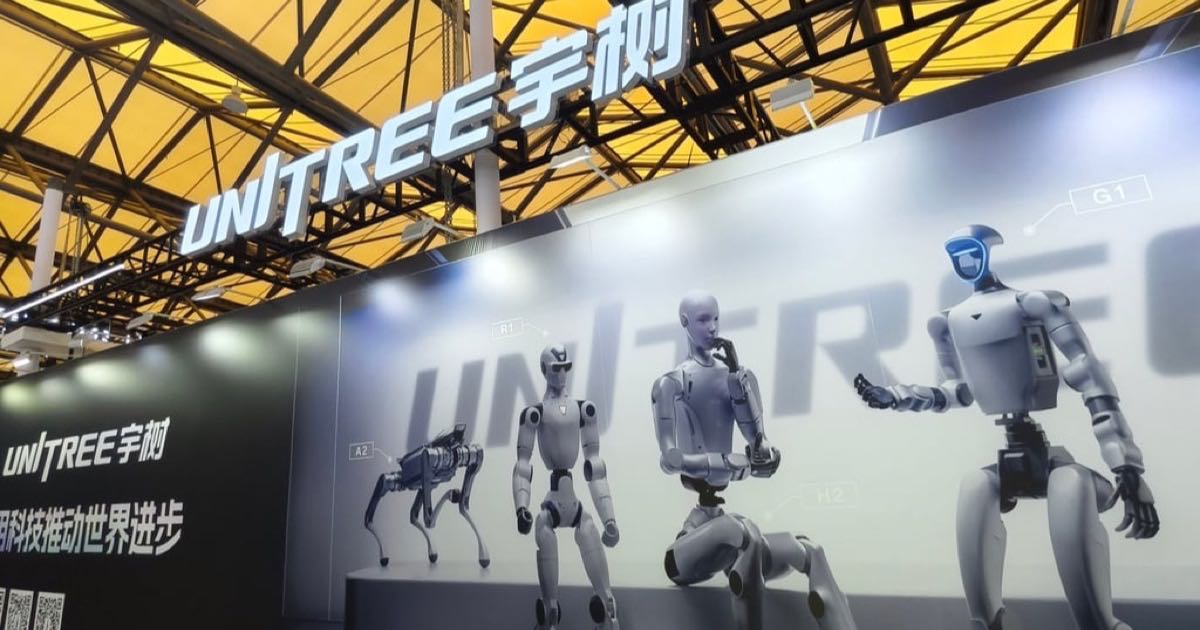
The robot trainer shortage reveals the real bottleneck in humanoid robotics. The problem is not building robots — China had more than 140 humanoid robot manufacturers and 330 models in 2025. The problem is generating the motion data that makes them useful. Every reach, grip, and step needs to be demonstrated by a human, captured, trimmed, and fed back into the model. Without enough trainers, the robots stay on the demo floor.
What the Job Actually Involves
Wei Xingfeng, who moved into the role after years as a traditional industrial robot engineer, describes the work as closer to a driving instructor than a programmer. A human demonstration is captured, trimmed to about eight seconds of useful motion, repeated thirty times, then fed back into the model. The expectation is patience and muscle memory, not algorithms.
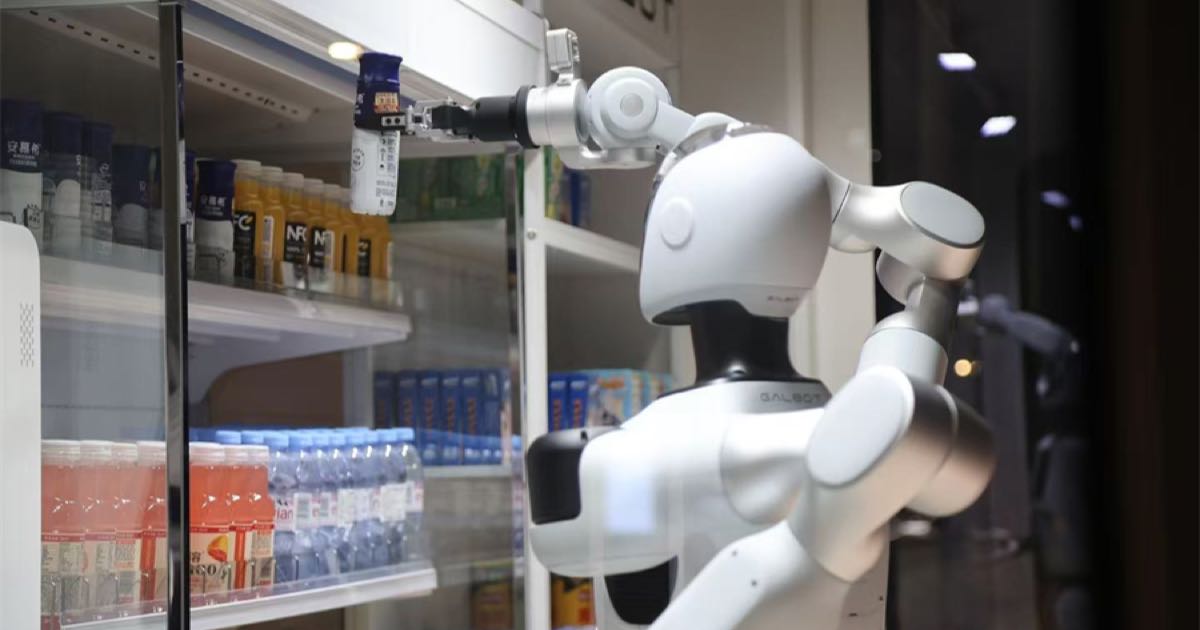
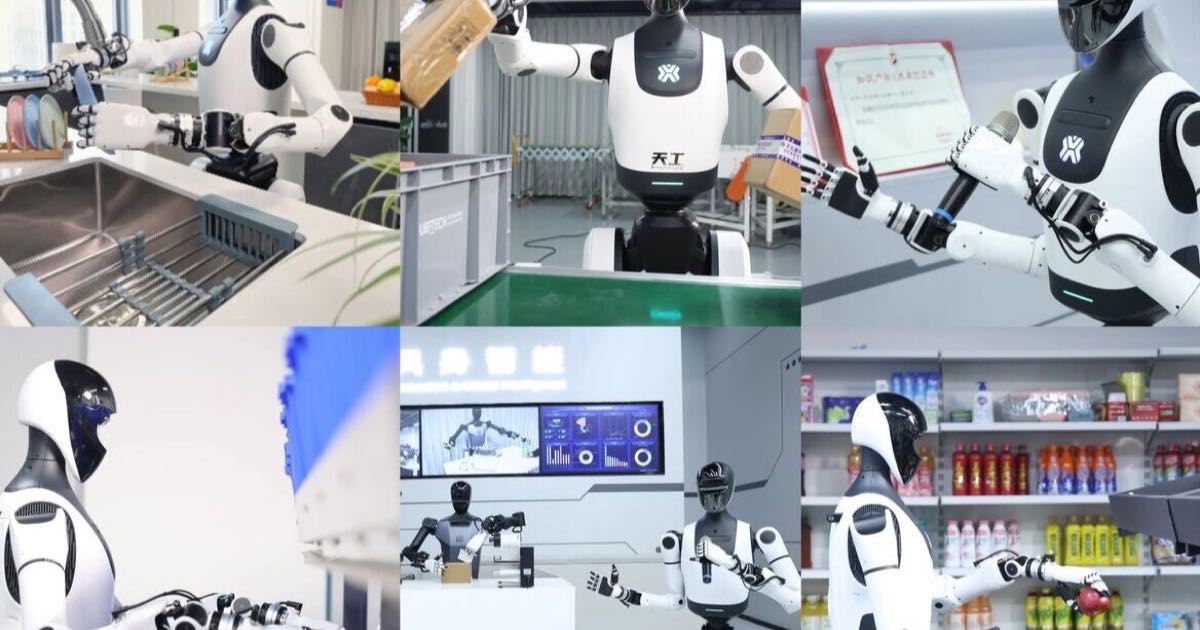
At the Hubei Humanoid Robot Innovation Center, one of China’s largest facilities dedicated to humanoid robotics, trainers spend their days teaching machines how to perform everyday tasks through physical demonstrations. They use motion capture suits, sensors, and virtual reality systems to translate human movements into training data. When the trainer raises an arm, the robot lifts its own. When the trainer grips a coffee grinder and pours hot water, the robot repeats the sequence step by step.
The process is far more labor-intensive than it sounds. Even simple movements can require hundreds or thousands of repetitions before robots perform them reliably. In a typical workday, trainers spend hours repeating and correcting actions while engineers capture usable data from only a fraction of those trials. Tasks that humans execute effortlessly — adjusting a grip on a utensil, coordinating several actions in sequence — remain genuinely hard for robotic systems.
What this work produces is something pure coding cannot: a continuous stream of human motion data that no synthetic pipeline can replicate at scale. That data is the real product. It is what separates a robot that can walk from a robot that can work.
The Numbers Behind the Hiring Surge
The recruitment data tells the story. According to Pandaily’s reporting, recruitment index numbers for embodied-AI roles rose 15-fold year-on-year between January and April 2026, reaching 579 against a base of 36. Average monthly pay in the segment hit 62,000 yuan. New positions tied to humanoid robots grew 215.8 per cent, with the average annual offer reaching 406,100 yuan.
One company illustrates the demand. Minth Group, the Ningbo-headquartered auto-components supplier, says its embodied-AI business grew 400x in a single year and still has 40 unfilled trainer seats. That is a single company — and the industry has hundreds.
China accounted for roughly 90 per cent of global humanoid robot shipments in 2025, according to industry estimates. Morgan Stanley projects the humanoid robot market at $5 trillion and expects China’s annual humanoid robot sales to reach around 28,000 units in 2026, roughly doubling from earlier levels. More robots means more trainers needed.
The Supply Side Can’t Keep Up
Universities are catching up, but slowly. Nine top engineering schools, including Harbin Institute of Technology, Beihang University, and Beijing Institute of Technology, opened embodied-AI majors in 2026. The industry’s view is that production demand is doubling every quarter, while graduate throughput is linear.
The shortage is therefore not a passing bottleneck. It is the defining labor-market story of the embodied-AI decade — at least in China. The government publicly warned in 2025 about the risk of a bubble in the humanoid robot industry given the lagging state of commercialisation and applications. The trainer shortage is the other side of that coin: capacity to build exists, but the human infrastructure to make the robots useful does not.
What This Means for NZ
New Zealand’s robotics sector is small but growing. The country faces the same demographic pressures driving China’s automation push — an ageing population, rising labour costs — without China’s manufacturing scale. The robot trainer pattern is worth watching because it suggests the next wave of robotics jobs won’t be in writing AI software. They will be in physical demonstration, data collection, and quality assurance — work that requires patience and muscle memory, not a computer science degree.
For NZ manufacturers considering humanoid deployment, the implication is practical: budget for training time and human trainers, not just the robot’s sticker price. The cheapest part of a humanoid robot may turn out to be the hardware.
❓ FAQ
How much does a robot trainer earn in China? Salaries range from 500,000 to 800,000 yuan per year (approximately NZ$115,000 to NZ$185,000). The role was officially classified as a digital occupation by China’s Ministry of Human Resources in July 2026.
What does a robot trainer actually do? They stand next to a humanoid robot and demonstrate physical tasks — picking up objects, walking through spaces, gripping tools. The movements are captured via motion capture suits and sensors, then used to train the robot’s AI models. It requires hundreds of repetitions per task.
Why can’t this be done with synthetic data? Synthetic data pipelines cannot replicate the full complexity of human motion — the micro-adjustments, force variations, and adaptive responses that come from a real body interacting with real objects. Human demonstration data remains the gold standard for training humanoid robots.
Is this job coming to New Zealand? Not immediately at the same scale. But as humanoid robots enter NZ workplaces — warehouses, factories, potentially aged care — the need for people who can train them will follow. The skill set is physical, not technical.