BYD, the world’s largest electric vehicle manufacturer, has confirmed it will unveil its first humanoid robot in August — joining a growing field of Chinese automakers pivoting from cars to robots, and adding serious manufacturing muscle to the global robotics race.
The company told the China Securities Journal that the robot will debut at one of its “Di Space” experience centres, a network of offline science education venues across China. A teaser image posted by the Zhengzhou Di Space venue on July 25 hinted at the reveal, with marketing copy that focused on interaction rather than specifications: “It won’t show up with a pile of specs and jargon. Maybe when you walk closer, it moves slightly.”
🔍 THE BOTTOM LINE
When the world’s biggest EV maker builds a humanoid robot, the manufacturing economics shift. BYD’s supply chain already produces motors, battery systems, and power electronics at scale — the exact components that make humanoid robots expensive. If BYD applies its cost-down manufacturing playbook to robotics, the price floor for humanoid robots could drop faster than anyone expects.
What We Know So Far
According to CnEVPost, BYD set up a dedicated humanoid robot team in late 2024 under its 15th Business Division, focusing on embodied AI products. Executive vice president Stella Li confirmed the company’s robotics ambitions in a June talk show appearance, saying the key to competition lies in manufacturing capability.
“Automotive capabilities share the same roots as robotics technology,” Li said. She outlined plans for an open platform that would produce both BYD’s own robots and products co-developed with partners — a strategy that mirrors how BYD opened its blade battery technology to external customers.
Li said she hopes every BYD store will eventually have two or three robots to introduce and demonstrate vehicles to customers, with robot sales advisors potentially ready for real-world use within the next year or two. She was quick to add that robots “cannot replace the emotional connection between human salespeople and customers.”
Why Automakers Are Pivoting to Robots
BYD is not alone among Chinese carmakers. The pattern is now a trend:
- Xpeng plans to start mass production of its Iron humanoid robot by end of 2026
- Chery’s incubated brand Aimoga has already begun selling humanoid robots to consumers
- SAIC-GM has deployed wheeled humanoid robots on battery assembly lines
The logic is straightforward. Automakers already have the manufacturing infrastructure, supply chain expertise, and battery technology that humanoid robots require. Electric vehicle drivetrains and humanoid robot actuators share underlying componentry — motors, controllers, power electronics. A company that can produce millions of electric motors for cars can produce millions of actuators for robots.
This is the same logic driving Tesla’s Optimus program, which leverages the company’s vehicle manufacturing base to drive down robot production costs.
The Chinese Market Context
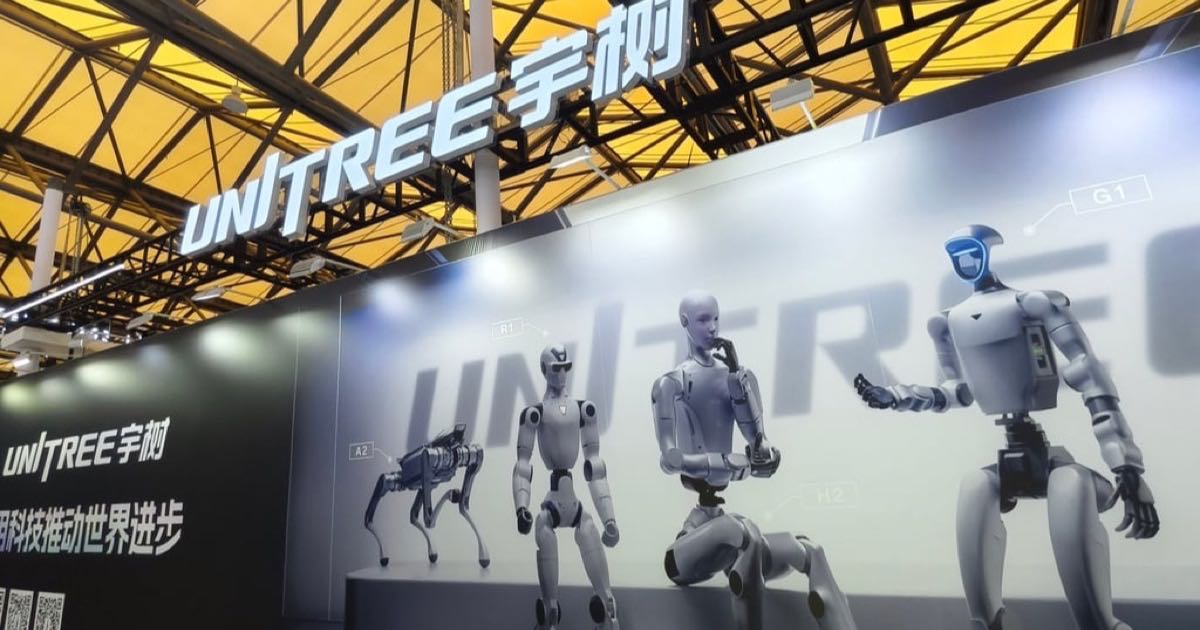
China dominates global humanoid robot installations, accounting for more than 80% of 16,000 units installed worldwide in 2025, according to Counterpoint Research. Chinese market leaders AGIBOT and Unitree each shipped more than 5,000 units last year — the highest globally. Unitree has pledged to expand production capacity to 75,000 humanoid robots annually.
BYD entering this field matters for a different reason than the startups. BYD is not a robotics company learning to manufacture at scale. It is a manufacturing giant learning to build robots. The company produced over 4 million vehicles in 2025 — more than Tesla. That volume translates into component cost advantages that no pure-play robotics startup can match.
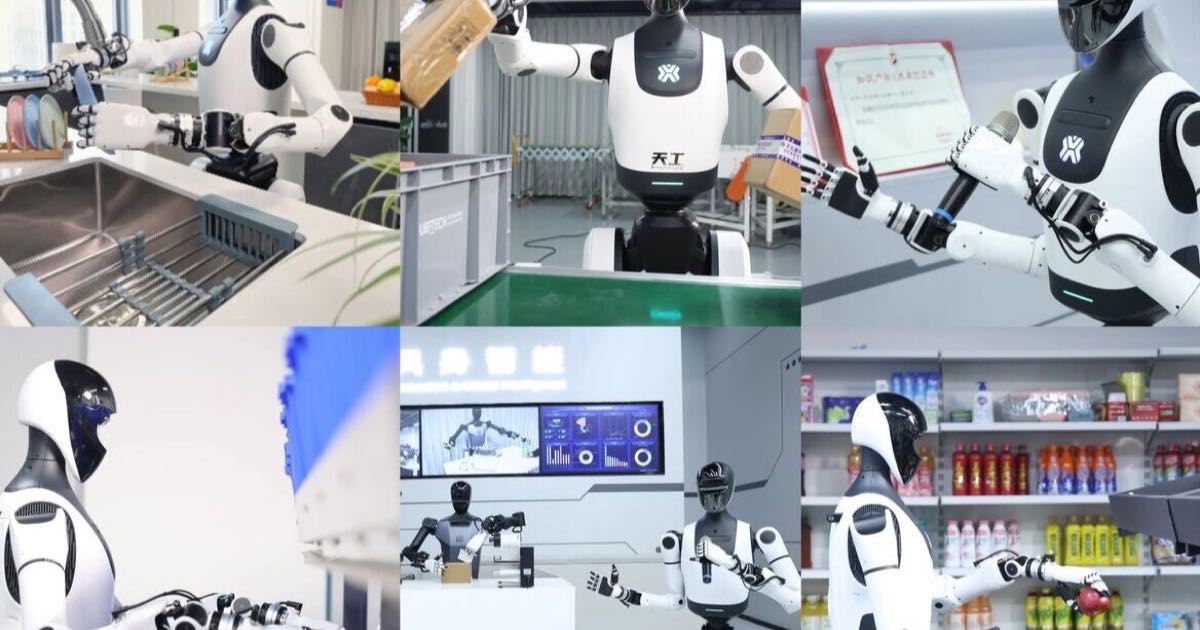
The Chinese government has named embodied intelligence — physical AI — as one of its key strategic industries, using automation to boost economic productivity. UBTech, a Chinese robotics firm, had fewer than 10 humanoids in factories in 2024. In 2025, that number jumped to more than 1,000. The company aims to launch 10,000 full-size humanoid robots in 2026.
The IQ Problem
Not everyone is convinced the industry is ready for prime time. Tang Wenbin, founder of embodied intelligence startup Yuanli Lingji, was blunt at a Beijing tech forum: “The reason our applications aren’t taking off is that the robots’ IQ is too low. The models are poor, their success rates are low.”
“Honestly, the whole industry’s level is still at a very elementary stage,” Tang said. “Right now, a lot of what we see is ‘dancing disguised as working.’”
That assessment was echoed at China’s second humanoid robot half-marathon in April 2026, where 40% of participants navigated autonomously — up from zero the year before. Some models reached 14 km/h. Others crashed into railings. The winning Tiangong Ultra, built by the state-backed Beijing Innovation Center of Humanoid Robotics with UBTech, finished in 2 hours and 40 minutes, more than double the human winner’s time.
What BYD’s Entry Signals
BYD’s move into humanoid robotics is significant for three reasons. First, it adds another deep-pocketed manufacturer to a field that has been dominated by startups and tech companies. Second, it validates the thesis that automotive manufacturing and robotics share enough underlying technology to justify the pivot. Third, it intensifies the US-China robotics rivalry just as the FCC bans new Chinese robot imports from the American market.
If BYD’s robot enters production at anything close to the company’s vehicle manufacturing scale, it would add a fourth major Chinese player to a market where three — Unitree, AGIBOT, and UBTech — already dominate global shipment numbers. The August unveil may be a prototype rather than a product, but the manufacturing pipeline behind it is real.
NZ Angle
BYD has a growing presence in New Zealand’s EV market, with its Atto 3 and Seal models gaining traction. If the company’s humanoid robots eventually commercialise, the same distribution network could bring them here. New Zealand’s agricultural sector is already being primed for humanoid adoption, with MPI predicting robots on farms within a decade. A Chinese robot sold through a Chinese car dealership is a plausible pathway — and one that raises the same data-sovereignty questions the US is now grappling with.
❓ FAQ
When will BYD unveil its humanoid robot? BYD confirmed an August 2026 unveiling at one of its Di Space experience centres in China. The event is expected to be a physical prototype showing, not a concept announcement.
Will BYD’s robot be sold commercially? BYD has not announced pricing or a commercial release date. Executive VP Stella Li said robot sales advisors could be ready for real-world use in the next year or two.
How does BYD’s manufacturing scale compare to other robot makers? BYD produced over 4 million vehicles in 2025 — more than Tesla. Its existing supply chain for motors, batteries, and power electronics overlaps significantly with humanoid robot componentry.
Does BYD’s entry into robotics affect the US market? The FCC’s ban on new Chinese robot imports means BYD’s humanoid robots cannot be sold in the US unless they receive FCC authorisation — which seems unlikely given current policy direction.
🔍 THE BOTTOM LINE
The companies best positioned to manufacture humanoid robots at scale are not robotics startups. They are automakers — companies that already build millions of motorised, sensor-equipped, battery-powered machines. BYD’s entry confirms that the humanoid robot industry’s future may be decided not in robotics labs but on automotive production lines.
📰 Sources
- CnEVPost
- China Securities Journal
- Counterpoint Research
- Reuters (via Stuff)
- Omdia