For two years the humanoid robot industry has run on demo videos and funding rounds. This week we finally got something better: a balance sheet. Agility Robotics, the Oregon company behind the Digit humanoid, has filed the S-4 paperwork for its proposed SPAC merger with Churchill Capital Corp. XI, and the numbers inside are the most honest snapshot yet of what the humanoid business actually looks like before the marketing layer goes on.
In 2025, Agility generated $1.8 million in net sales. It ran a $140 million operating loss. It burned roughly $100 million in cash. And the SPAC deal it hopes to complete values the company at $2.5 billion — around 1,400 times last year’s revenue.
The first open books in a closed industry
Until now, every big humanoid maker has been private, which means every valuation in the sector has been a rumour with a term sheet attached. Figure, Apptronik and 1X have all raised large rounds at headline valuations, but none of them publish financials. Agility’s S-4 is the first time an American humanoid company has had to show its work in public.
What the work shows is a company spending $111 million a year on operations to place robots at exactly nine customer sites. Those Digit units have logged more than 65,000 operating hours, and Agility says it has over $300 million in multi-year orders for the Digit v5 from a single customer. That’s real demand — and it hasn’t yet converted into revenue that comes close to justifying the price tag.
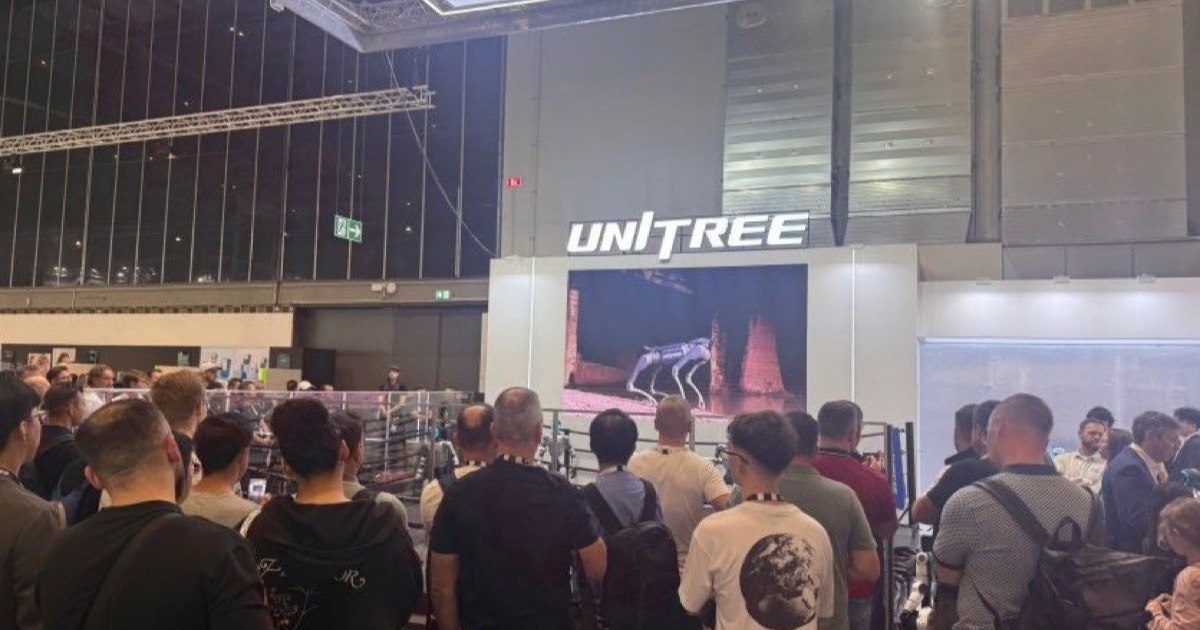
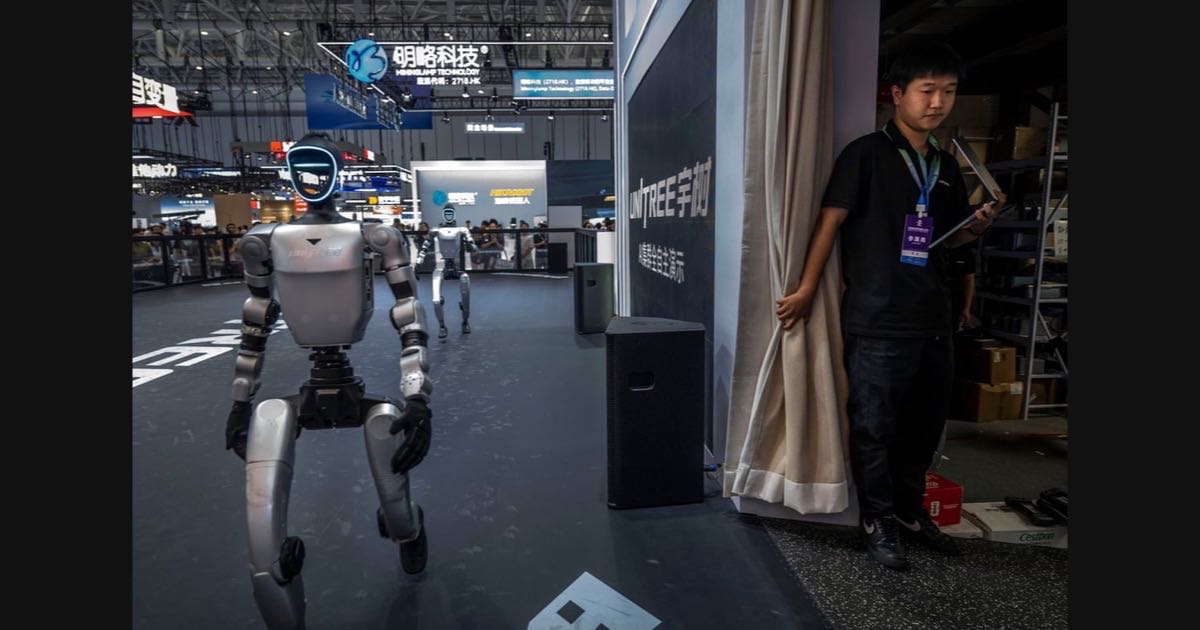
The only public comparable is Unitree, which listed on Shanghai’s STAR Market in August and closed its first day up 460 per cent, raising about US$905 million. That debut told you what Chinese markets think of humanoids; Agility’s filing tells you what one actually costs to build.
What a Digit costs, per month
The most useful part of the S-4 isn’t the loss — it’s the price list. Agility lays out two ways to buy a humanoid:
- Robots-as-a-service: about $8,500 a month ($102,000 a year) plus a $25,000 deployment fee, which Agility estimates works out to roughly $535,000 of revenue per robot over a five-year life.
- Outright purchase: about $200,000 upfront, plus a $20,000 deployment fee and around $36,000 a year for software and maintenance — about $400,000 per robot over five years.
Those are the first credible street prices for a general-purpose humanoid working in the wild, and they’re worth pausing on. Renting a Digit costs about the same as employing a person at $50 an hour for full-time hours. It is not cheap. The bet underneath the whole sector is that the price falls and the capability rises fast enough that those lines cross with room to spare.
The growth curve, and what it assumes
Agility’s own projections in the S-4 sketch a path from today’s fleet to around 800 Digit v5 units deployed in 2027, 7,000 by 2030, and up to 25,000 by 2035. At the $8,500 monthly rate, 25,000 robots would mean roughly $2.55 billion in annual subscription revenue.
Put plainly: for the valuation to make sense on today’s numbers, the company would need to grow revenue about 1,400-fold while driving down manufacturing costs and proving that customers keep the robots busy. The filing itself cautions that unit economics depend on assumptions about contracts, timing, pricing and utilisation that may not hold. That’s the honest phrasing, and it applies to every player in the sector, not just Agility.
There’s a reasonable case on both sides. On one: the $300 million in committed orders, 65,000 operating hours in real facilities, and a business model (RaaS) that turns robots into recurring revenue. On the other: a $140 million annual loss, a dependency on one customer for the headline order book, and a hardware business trying to compress a decade of cost curves into five years. Investors in the SPAC — which is expected to raise more than $620 million gross, including a $200 million PIPE led by Foxconn — are buying the first version of that story with public-market liquidity attached.
What stands out here is less the size of the gap than the fact that someone finally published it. When Figure or Apptronik eventually face the same disclosure requirements, Agility’s numbers will be the baseline they’re measured against.
Why this matters outside the US
New Zealand isn’t deploying humanoid warehouse fleets, but the pricing data matters anyway. The $8,500-a-month figure is the number to watch as the benchmark for “what does a robot worker cost” — it’s the anchor for every business case, every union argument, and every government projection that follows. And the S-4 shows the direction: Agility’s whole model assumes costs fall as volume rises, which is the same curve that put flat-screen TVs in every lounge. Whether humanoids follow it is the multi-billion-dollar question the SPAC market has just agreed to underwrite.
The timing is also a reminder of how fast the ground is moving elsewhere. The same week this filing landed, Reuters reported on China’s work to move humanoids from trade-show demos toward military training grounds. The commercial filings and the strategic programmes are converging on the same hardware. One of them is audited. The other isn’t.
Frequently asked questions
What is Agility Robotics worth? The proposed SPAC merger with Churchill Capital Corp. XI values Agility at $2.5 billion, expected to generate more than $620 million in gross proceeds, including about $420 million from the SPAC trust and $200 million from a Foxconn-led PIPE.
How much revenue does Agility Robotics make? $1.8 million in net sales in 2025, against a $140 million operating loss, according to its S-4 filing. The company spent $111 million on operations in 2025.
How much does a Digit humanoid robot cost? Per the S-4: about $8,500 a month on a robots-as-a-service plan (plus $25,000 to deploy), or about $200,000 to buy outright (plus $20,000 deployment and $36,000 a year for software and maintenance).
Is Agility Robotics profitable? No. It lost $140 million at the operating level in 2025 and burned about $100 million in cash. The S-4 projects it would need to grow revenue roughly 57-fold just to match the revenue of 1,000 rented robots.
— CJ Murden, editor of Singularity.Kiwi. Former digital technologies teacher, author of AI-focused books. Writing with a New Zealand focus.