IFA Berlin opened its doors on September 4, and the most complicated company on the floor is a Hangzhou robot maker.
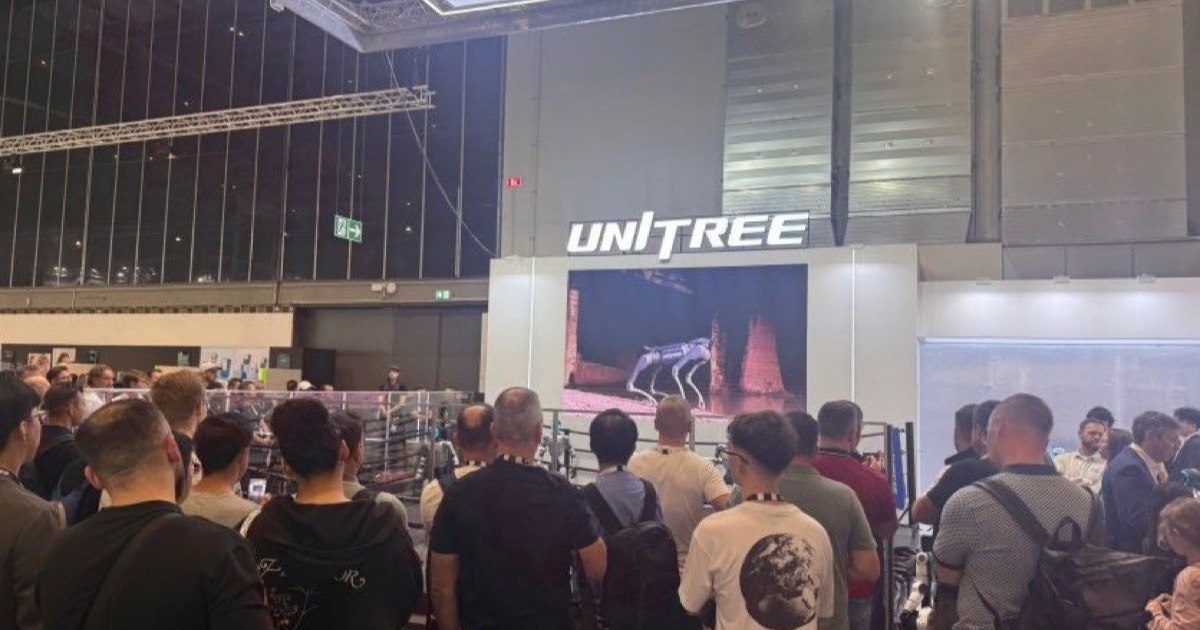
Unitree Robotics is exhibiting at IFA Next (Hall 25, Stand H25-145) alongside 932 other Chinese companies — close to half of the 1,900-plus exhibitors at this year’s show, roughly 200 more than a year ago. On Saturday September 5, Unitree headlines “Robots on the Runway,” what IFA calls the first robot catwalk in the show’s 102-year history, with the G1 and machines from EngineAI, DEEP Robotics, AgiBot, Astrall Dynamics and AIMOGA parading a purpose-built T-stage.
None of that is remarkable by itself. What is remarkable is the position Unitree occupies as it does it.
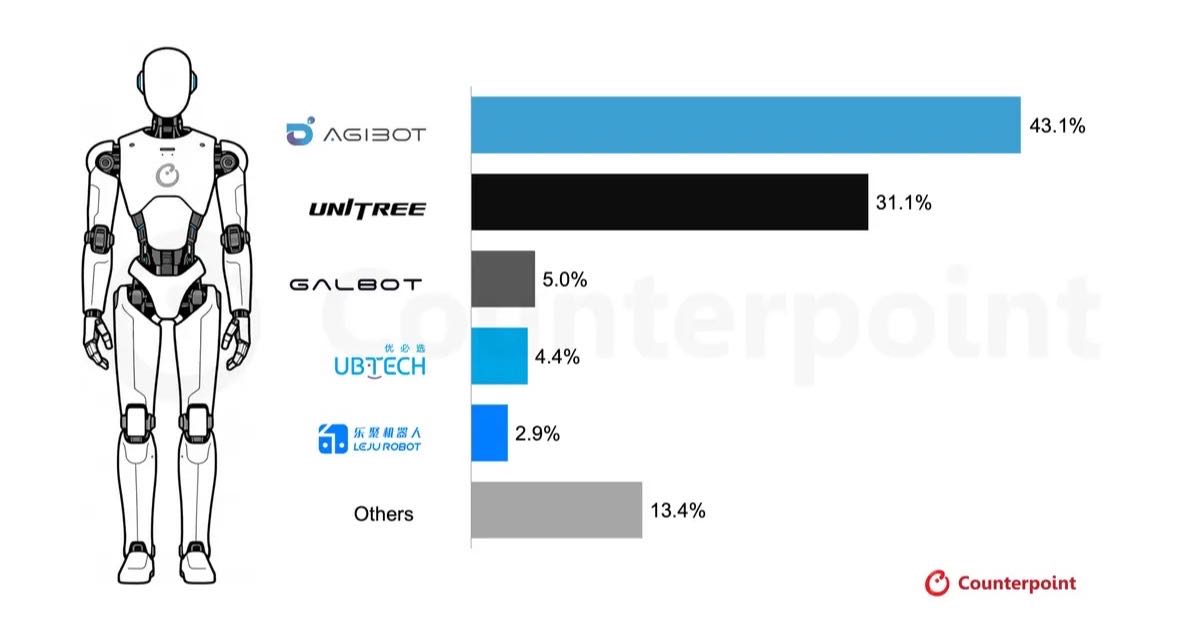
The company debuted on Shanghai’s STAR Market on August 19, closing its first day at roughly ¥342 billion — about $51 billion US, 460 per cent above its IPO price, with retail bids exceeding available shares by a record 8,000 times. It is the first public-market pricing event for a humanoid robotics company, and Singularity.Kiwi has followed that story from its 629 per cent debut pop through to its market-share battle with AgiBot.
At the same time, the US government has moved against it. The FCC placed Unitree on its national security Covered List in July, and the Pentagon designated it as Chinese military-linked technology in June. That doesn’t just restrict new imports and sales — it sits awkwardly next to NVIDIA’s June decision to make Unitree’s H2 Plus chassis the physical basis of its Isaac GR00T open reference humanoid, a partnership announced seven weeks before the FCC action, on which NVIDIA has issued no public comment since.
Europe has issued no equivalent of either US action. That’s the actual story of Unitree at IFA 2026: the world’s most widely deployed humanoid is simultaneously a $51 billion listed company, the substrate of NVIDIA’s global robotics research platform, and hardware Washington will no longer authorise — all on display for European buyers who have no regulatory signal of their own to lean on.
The security picture gives those buyers something to weigh. Security researchers have documented two exploit chains affecting the G1 — a wormable Bluetooth Low Energy flaw giving root access, and CVE-2026-76639/76640 — with no publicly confirmed firmware patch as of the most recent independent reporting. We covered the disclosure when it landed in August: root compromise over unpaired Bluetooth. Network segmentation, disabling the CloudSail telemetry service and restricting Bluetooth range reduce but do not eliminate the exposure.
Then there’s China’s National Intelligence Law, which obliges Chinese organisations and citizens to assist state intelligence work. Its extraterritorial reach is genuinely contested among legal scholars — Chinese academics and US analysts read Article 7 very differently — but it’s a fixed condition of Unitree’s incorporation that no contract or European subsidiary can waive. Unitree has consistently said it does not collect data for state intelligence, and there is no public evidence it has. The point is not a verdict. The point is that Europe hasn’t held the hearing.
For buyers, the arithmetic is blunt. The G1 starts around $13,500-16,000, a price Western rivals don’t come near, and its quasi-direct-drive actuators are the profitable heart of the business. Three quarters of Unitree’s 2025 humanoid sales went to research buyers, not production lines — the exact crowd walking the halls in Berlin this week. Mitigations exist and are documented. What doesn’t exist is an EU assessment of the kind the US has already made.
My own read: this is what a technology standards vacuum looks like from the inside. Washington decided; Brussels hasn’t; and the gap between those two positions is now a procurement decision being made at a consumer electronics show by institutions whose own governments haven’t advised them. That’s not a stable situation, and it won’t last out the year. Watch for an EU security assessment of connected Chinese robotics hardware — the US template is sitting right there.
— CJ Murden, editor of Singularity.Kiwi. Former digital technologies teacher, author of AI-focused books. Writing with a New Zealand focus.