America’s two largest school districts have both reversed course on AI in the same week. New York City Public Schools announced that student-facing AI is banned in all K-8 classrooms this year, with high schoolers limited to a small approved toolbox, per Tech Policy Press. A day later, on Wednesday 2 September, Los Angeles Unified went further: a one-year moratorium on generative AI for all of its roughly 378,000 students, a move that, by the LA Times’ account, caught even district officials by surprise.
🔍 THE BOTTOM LINE
The 2023 chatbot bans lasted five months before the same districts caved and embraced the technology. This time the push isn’t coming from administrators — it’s parents and teachers, organised, with two years of receipts — which is exactly why this round may stick.
The Whiplash Is the Story
None of this is new territory. NYC blocked ChatGPT on district devices in January 2023. LAUSD had banned it in December 2022. Seattle, Baltimore, and Oakland followed within weeks. Then, remarkably fast, the bans collapsed: by May 2023 the NYC chancellor was ready to “embrace” ChatGPT, and by that August LAUSD’s superintendent was exploring permissive use. Three years of enthusiastic integration later, both districts have arrived back where they started — with stronger restrictions than the first time.
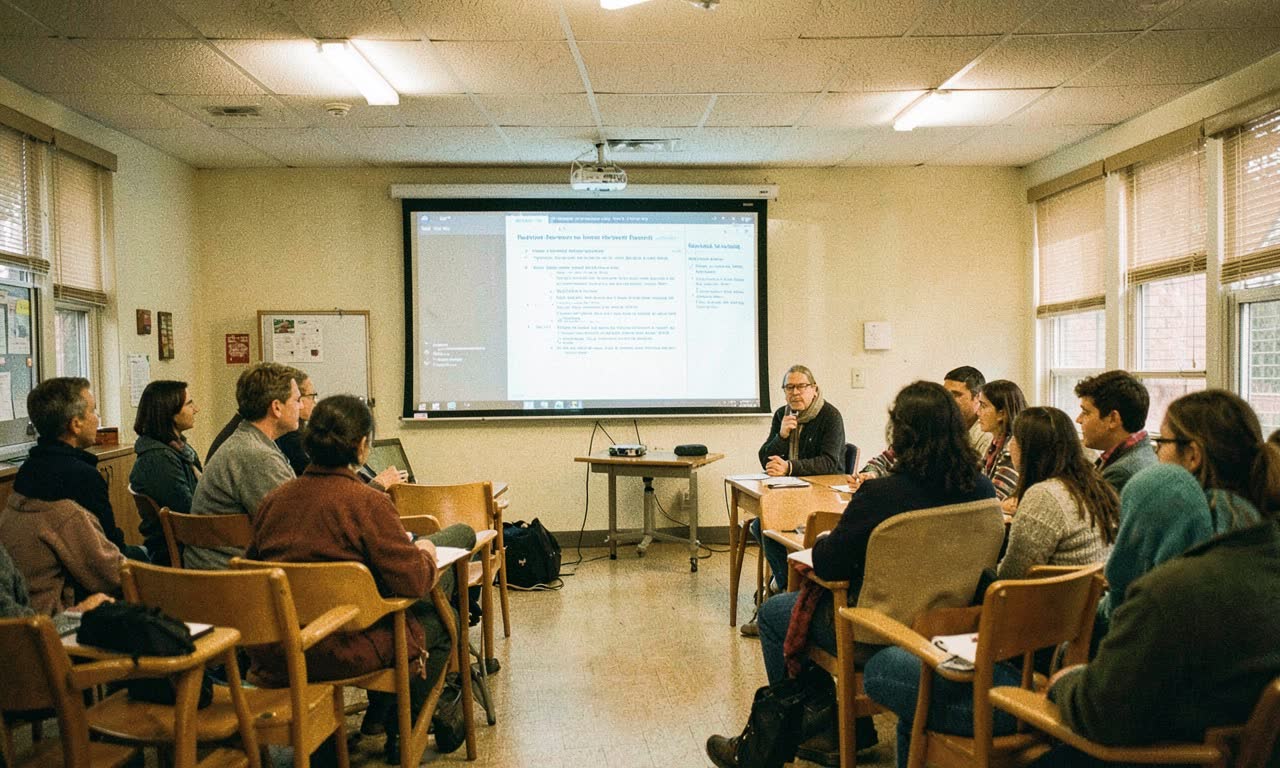
The reason matters more than the headline. This isn’t 2022-style panic about plagiarism. NYC’s March draft policy used a traffic-light framework that left almost all student use at “yellow light,” with decisions delegated to individual teachers. Parents revolted at a marathon policy panel, the district pulled the draft, Chancellor Kamar Samuels admitted it “missed the mark,” and the district paused software purchases over the summer before settling on the tighter K-8 ban. The 2026 restrictions weren’t imposed on a passive public. They were negotiated downward from a looser plan because organised opposition made the looser plan unsellable.
Who Is Pushing, and What They’re Saying
The advocacy here is unusually specific. In Los Angeles, the parent group Schools Beyond Screens had to rewrite their prepared speeches at the committee meeting where the ban was announced — from asking for a moratorium to thanking the district for delivering one. “Thank you, LAUSD for setting an example and knowing that your obligation is to do so,” Sandra Martinez Roe told LAist, per Tech Policy Press.
In New York, the AI Moratorium Coalition — teachers, students, and parents campaigning for a full classroom moratorium for two years — called the partial pause “a step in the right direction,” while flagging what they still don’t like: AI pilots running in some schools, few limits on staff use, and no metrics for evaluating the tools. A Harlem third-grade teacher with the United Federation of Teachers’ rank-and-file caucus told Tech Policy Press he was “overall very pleased” with the new policy. A fourth-grade teacher from the same caucus went further, arguing the teen mental-health evidence makes it “really dangerous” to ignore the needs of high schoolers, not just the K-8 grades the ban covers.
Read those together and you get the actual political shape of the issue: the demand isn’t “no AI ever,” it’s “prove it’s safe before it touches the kids.” The districts have agreed to half of that. The half they’ve conceded is the younger half.
What The Teachers Get Right — and What The Ban Doesn’t Fix
The pedagogical case for pausing is straightforward: homework written by a chatbot teaches nothing, and districts that adopted AI tools in 2023-25 did so with essentially no independent safety evidence. NYC’s own guidance now frames student-facing AI as off-limits for younger grades pending better information. From a teacher’s standpoint, “wait for evidence” is not an extreme position — it’s how school systems treat everything else they put in front of children.
What stands out, though, is what the moratoriums don’t touch: staff use. NYC’s policy leaves teachers’ own AI use largely unrestricted, and the teacher celebrating the ban is a member of the same union caucus that wants more limits on the adults. That’s the honest tension here. The systems are saying: children shouldn’t lean on AI before they can think without it, while the adults who teach them lean on it freely. There’s a defensible argument for that asymmetry — professional judgment, workload, the difference between a tool and a crutch — but it’s untested, and it’s the part of the policy most likely to erode quietly first.
The NZ Angle
New Zealand has no equivalent to a 378,000-student district imposing a moratorium, and nothing like the NYC traffic-light saga — which we covered when the framework launched — has a direct local counterpart. NZ schools have drifted toward permissive, school-by-school decisions, with the Ministry’s guidance remaining advisory. What the US reversals offer this side of the Pacific is less a policy to copy than a data point: the most tech-saturated large systems in the world tried full integration, hit organised parental resistance, and tightened. NZ schools will face the same parent pressure; the difference is whether it arrives before the first bad incident or after.
The 250+ experts who demanded a five-year moratorium on classroom AI in April will read this week as vindication. The districts’ actual position is narrower — a pause to gather evidence, not a verdict that AI is harmful. The gap between those two framings is where the next three years of this argument will live.
❓ FAQ
Which school districts banned AI in September 2026? New York City Public Schools, the largest US district, banned student-facing AI in all K-8 classes with a limited approved list for high schoolers. Los Angeles Unified, the second largest, imposed a one-year moratorium on generative AI for its roughly 378,000 students, per Tech Policy Press.
Didn’t these districts already ban ChatGPT in 2023? Yes — LAUSD banned it in December 2022, NYC in January 2023. Both lifted the bans by mid-2023 and spent three years encouraging AI use before reversing this week. The new restrictions are tighter than the 2023 versions.
Does the NYC ban apply to teachers? No. The policy restricts student-facing AI in K-8 and sets an approved list for high school use, but staff use of AI remains largely unrestricted — the main gap the AI Moratorium Coalition wants closed.
Are any NZ schools doing anything similar? No district-wide moratorium exists here. NZ schools decide individually under Ministry guidance, which is permissive by comparison. The US reversals signal where organised parent campaigns may push NZ school boards next.
Is this the same as the experts’ five-year moratorium call? Not quite. The April expert letter demanded a blanket five-year pause pending independent audits. The district moratoriums are shorter, narrower, and framed as evidence-gathering pauses.
🔍 THE BOTTOM LINE
The significant thing about the AI whiplash of 2022-26 is the direction of travel: permissive enthusiasm → organised parent backlash → tighter rules, in the two districts with the most resources to do AI “right.” If the best-funded school systems in America can’t make classroom AI work without a pause, the burden of proof has shifted — and it now sits with the vendors, not the parents.
📰 Sources: Tech Policy Press, NYC Public Schools AI guidance, LA Times, LAist, Chalkbeat.
— CJ Murden, editor of Singularity.Kiwi. Former digital technologies teacher, author of AI-focused books. Writing with a New Zealand focus.