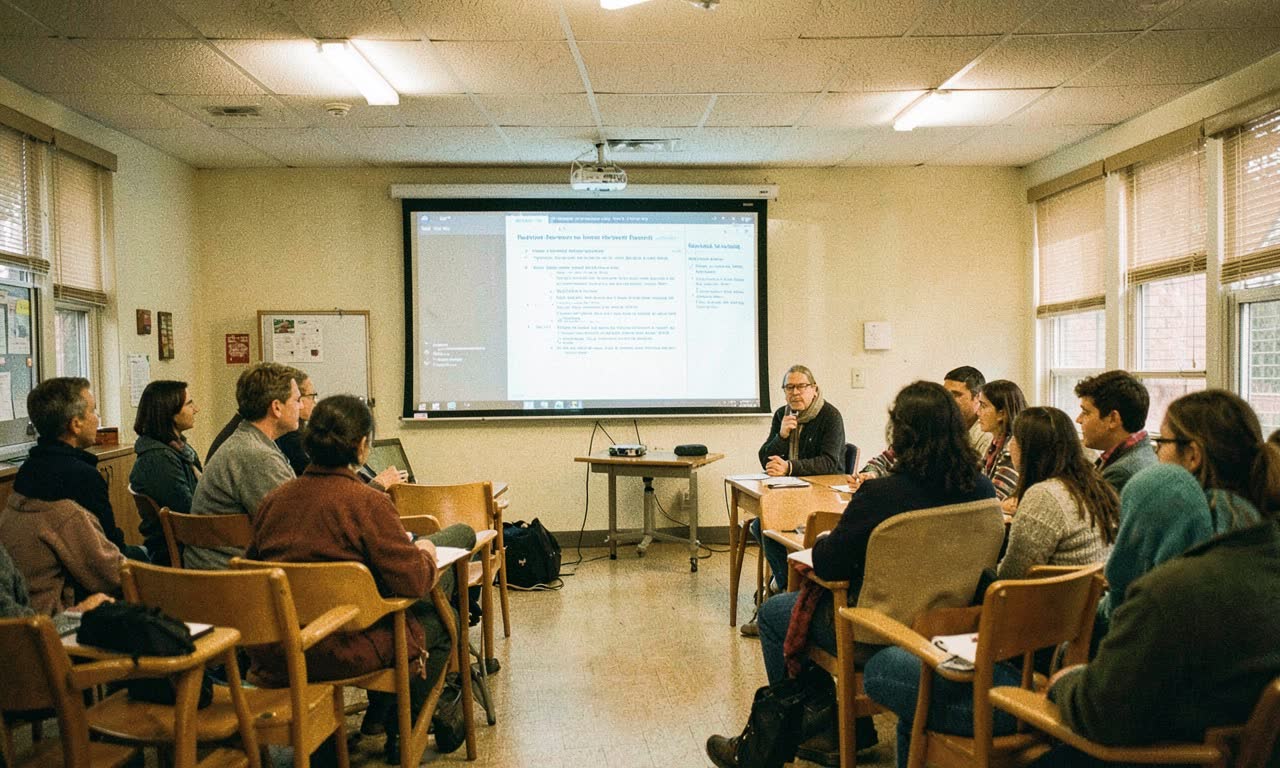
Palm Beach County School District has implemented one of the most restrictive AI policies in any major US school district, effective April 15, 2026. The rules are clear, sweeping, and backed by criminal penalties — drawing a hard line that contrasts sharply with districts embracing AI integration.
What the Policy Requires
The district’s new AI framework covers students, teachers, and administrators with distinct rules for each group.
For students:
- AI use is banned on all standardized tests — state assessments, AP exams, and IB exams — unless a specific exception is granted
- Students must cite any AI tool used on any assignment, including AI-generated text, images, or research assistance
- Creating deepfakes carries criminal penalties under Florida law — not just academic consequences
For teachers:
- AI cannot be the sole basis for grading, disciplinary decisions, or eligibility determinations
- Confidential student data cannot be entered into AI tools
- Teachers must verify all AI-generated content before using it instructionally
The policy leaves little room for interpretation. Use AI without citation? Zero grade. Create a deepfake? Potential criminal charges under Florida statute.
The Deepfake Criminal Penalty Angle
This is the provision that sets Palm Beach apart. While most districts handle AI misuse through academic integrity codes, Palm Beach explicitly references Florida’s deepfake laws — which can carry criminal penalties including jail time.
For students, this means the consequences of using AI to create manipulated images or videos of classmates or staff go well beyond a failing grade. It’s a legal threat, not just an academic one.
Whether this is appropriate deterrence or overreach depends on your perspective, but it represents the most aggressive legal escalation in a K-12 AI policy seen so far.
The Patchwork Problem
Palm Beach’s restrictive stance comes the same week that Putnam County, Tennessee announced it’s expanding AI integration across its schools, providing AI tools to both students and teachers as learning aids.
This is the fundamental tension playing out across American education:
- Restrictive districts (Palm Beach, FL): Ban AI on tests, mandate citation, threaten legal consequences
- Integrative districts (Putnam County, TN): Provide AI tools, train teachers, embed AI in curriculum
- Middle-ground districts: Allow AI with various levels of oversight and disclosure requirements
There is no national standard. No federal guidance. No consensus framework. Students in neighboring districts — sometimes even neighboring schools — face completely different rules about the same technology.
What This Means for Students
The citation requirement is arguably the most consequential part of the policy. It forces students to be transparent about AI use, which has educational value. But it also creates a compliance burden — tracking every AI interaction, from a grammar check to a brainstorming session, and documenting it properly.
The bigger concern is whether restrictive policies leave students unprepared for a world where AI tools are ubiquitous. Students who never learn to work alongside AI may graduate without skills their peers in other districts are developing.
The Bigger Question
The real debate isn’t whether AI should be banned on standardized tests — most people agree that makes sense. It’s whether the overall framework prepares students for the world they’re entering or shelters them from it.
Palm Beach has drawn a clear line. Whether that line protects students or holds them back is a question that won’t be answered for years — when these students enter a workforce where AI literacy is baseline expected knowledge.
SOURCES
- Palm Beach Post