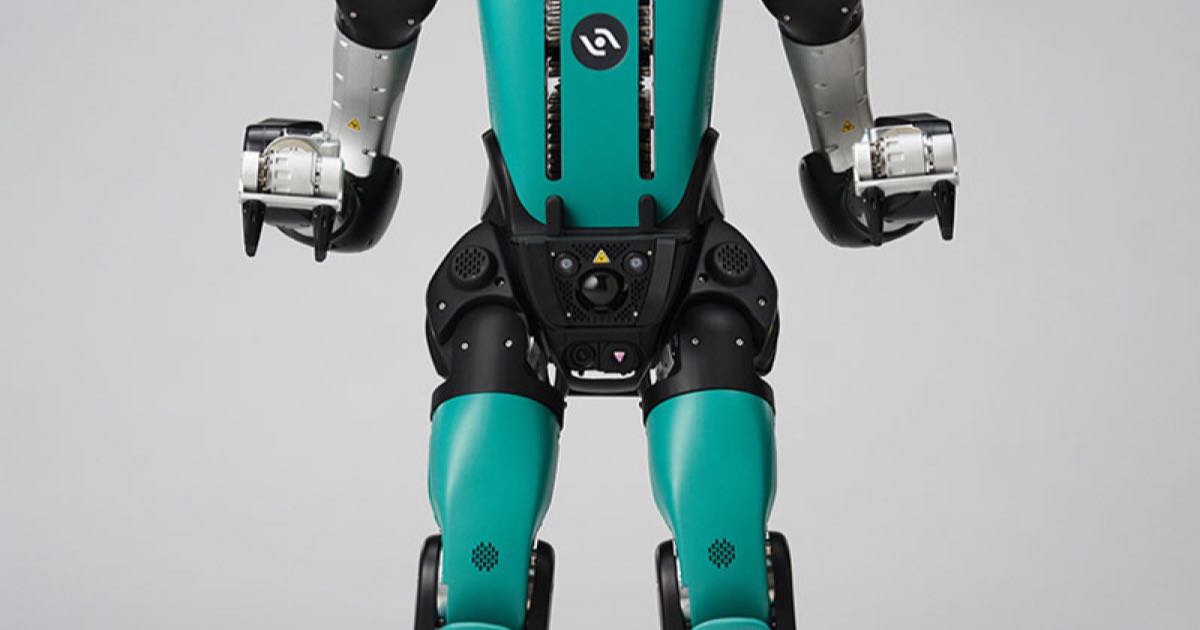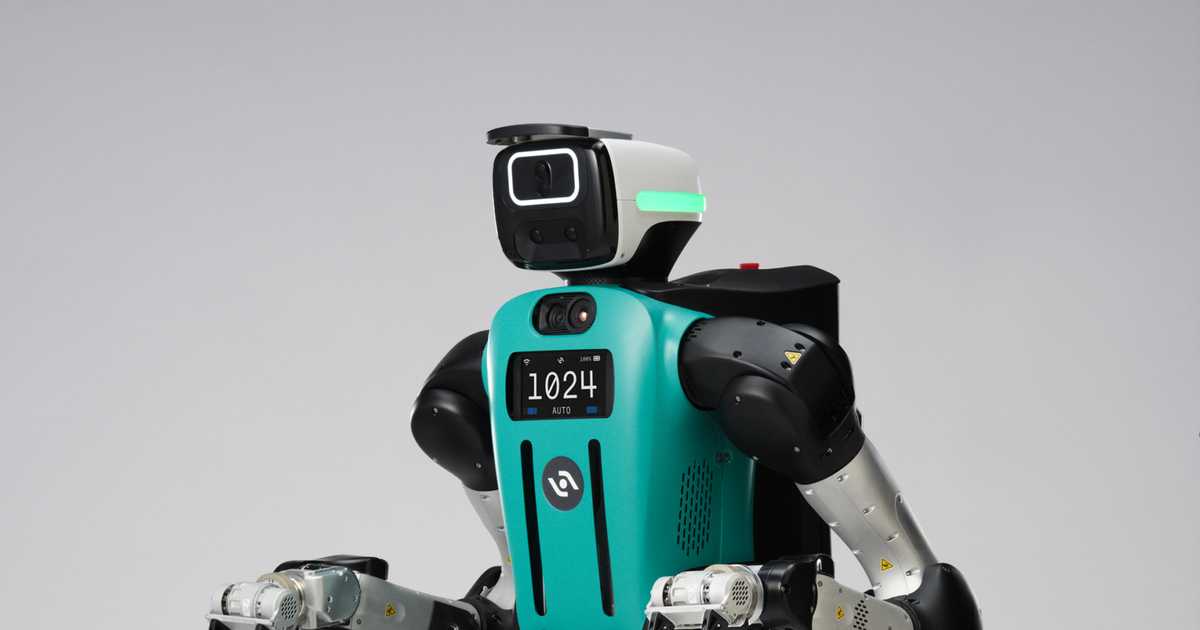
Agility Robotics has picked UK battery startup Nyobolt as the charging-technology partner for Digit 5, a deal the two companies announced yesterday (13 October US time) that aims squarely at the least glamorous number in robotics: how long a humanoid spends plugged into a wall.
The claims, in Agility’s announcement and coverage by The Robot Report: a battery that runs 90 minutes and recharges in nine, a 10:1 run-to-charge ratio against the 2:1 of Digit 4. Agility chief business officer Daniel Diez tied that directly to money: “Digit 5 will deliver more than 20 hours of productive work in a 24-hour day, more than two full shifts. That’s the kind of gain that materially improves the value customers get from Digit and the economics of deploying a humanoid robot fleet.”
Nyobolt, founded in Cambridge in 2019, builds high-power fast-charge cells from proprietary anode materials — the same company that hit a $1 billion valuation in May with a $60 million raise backed in part by warehouse-automation firm Symbotic. CEO Sai Shivareddy said Digit 5 “will need more power from a smaller, lighter pack, in environments where reliability isn’t optional.”
Why charging is the number that decides fleet economics
Warehouse robots have historically been sold on tasks and failed on uptime. The classic fix is a battery swap or a long lunch-break charge, both of which carve the workday into awkward shifts or require duplicate fleets. Forklift operators solved this decades ago with opportunity charging — topping up in the gaps between jobs — and the 10:1 ratio is what lets Agility describe the same pattern for a humanoid: charge during the natural dead time of a work cycle instead of scheduling around the battery. That is also presumably why the pack can be smaller and lighter, as Shivareddy’s quote implies — a robot that recharges nine times a day does not need to carry a full-day cell.
There is a second-order effect worth noticing. A lighter battery means less mass the robot hauls through every step, which lowers energy per pick and eases the safety case — the same logic that made Agility’s uncaged Digit 5 safety architecture headline news last month. Charging and safety are not separate engineering problems; they are the two halves of “can this machine share a floor with people for a full shift.”
The claims are vendor claims, for now
Both numbers — the nine-minute recharge and the 20-hour workday — are company figures announced ahead of hardware anyone can buy. Early-access Digit 5 units with the Nyobolt battery are slated for the first half of 2027, with wider availability over the following six to nine months, so independent data does not exist yet. Fast-charge cycle life is exactly where battery claims tend to soften: Nyobolt says its cells hold up under high-power cycles, but warehouse duty is the extreme end of that test, not the brochure end.
The timing is not accidental. Agility is heading to a Nasdaq listing via the Churchill Capital Corp XI SPAC, expected to close this quarter under ticker AGLT, and every announced spec between now and then feeds the investor deck for a company whose SEC filings showed $1.8 million in net sales against a $140 million operating loss. Battery uptime is a cleaner story than revenue — it promises future economics without needing current ones.
For New Zealand, the relevance is indirect but real. This country has no meaningful humanoid deployments yet, and its warehouses and port operations run on lean crews where one operator supervising multiple machines is the norm rather than the demo. That operating pattern only works when the machines stay running — which is exactly the constraint Nyobolt’s cells claim to solve. The 20-hour robot that has not shipped is still a slide in a deck. The nine-minute charge, if it survives contact with real warehouses, is the part of the slide that would matter.
Sources: The Robot Report, Agility Robotics press release, Unite.AI, Nyobolt. Battery and runtime figures are company claims ahead of the 2027 rollout.