Shanghai-based embodied-AI startup Infiforce closed nearly $150 million across combined Series A and A+ rounds on August 15, 2026, to develop its AtomBrain intelligence system and expand robot deployments across more than 30 Chinese cities.
Dunhong Asset Management led the round, with participation from Zhejiang University Science and Technology Innovation Group, Yandu State-owned Assets Management, Lishui State-owned Assets Management, and existing shareholder Genesis Partners Venture Capital. The investor list is almost entirely state-backed — a pattern that has characterised China’s embodied-AI funding landscape throughout 2026.
First-person data as the training shortcut
Infiforce’s approach mirrors what Dyna Robotics published days earlier: use first-person human video to train robot models, rather than relying exclusively on slow, expensive teleoperation data. The company calls its data source “Ego” data — first-person recordings of people interacting with the physical world, capturing movement, spatial relationships, and environmental feedback.
The parallel is not coincidental. Multiple labs are converging on the same insight: ordinary human video may be to robotics what scraped web text was to language models. Infiforce’s announcement describes a technology stack that combines Ego data with its Atom series of world models and AtomBrain, intended as a common intelligence layer across different robot forms.
The company reported benchmark results from its research pipeline. Its AtomVLA model recorded 97 per cent on the Libero robot-learning benchmark. Its HiMem-WAM model reached 97.7 per cent. Its third-generation AIM world model scored 93.1 per cent on RoboTwin 2.0. These are company-reported numbers from benchmark testing, not independent evaluations, and should be read with that caveat.
DataGrid: the data factory
DataGrid is the infrastructure layer. It combines data collection, processing, and hardware, supporting several collection methods including handheld grippers, first-person recording devices, and remote operation of physical robots. The stated goal is a feedback loop where deployed robots generate additional data that trains the next generation of models.
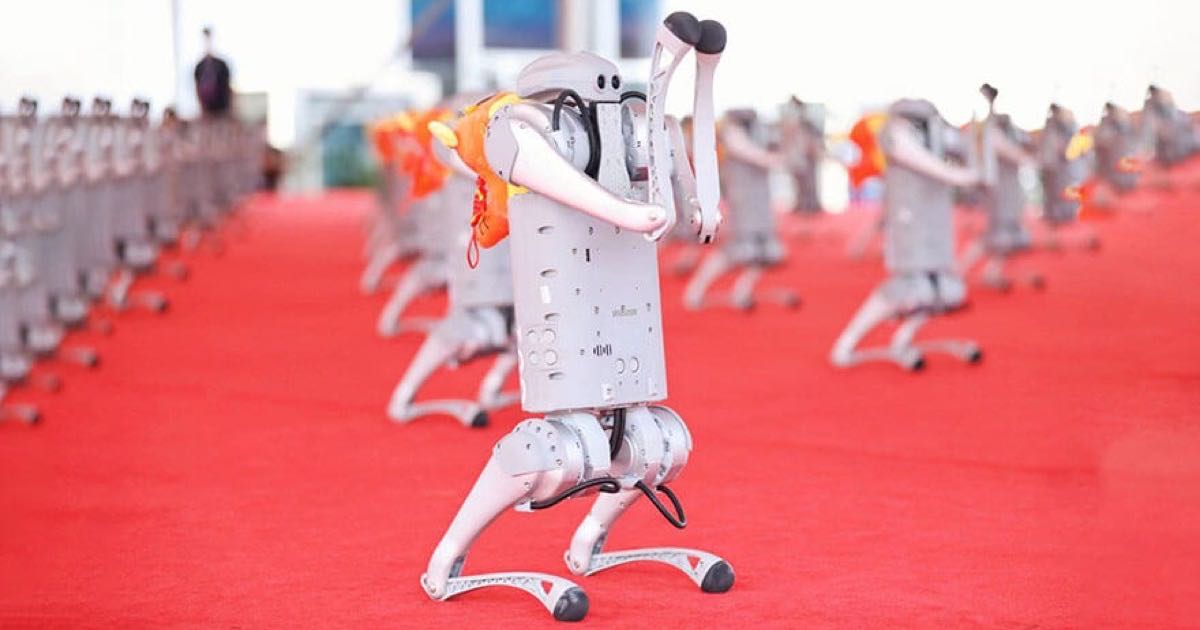
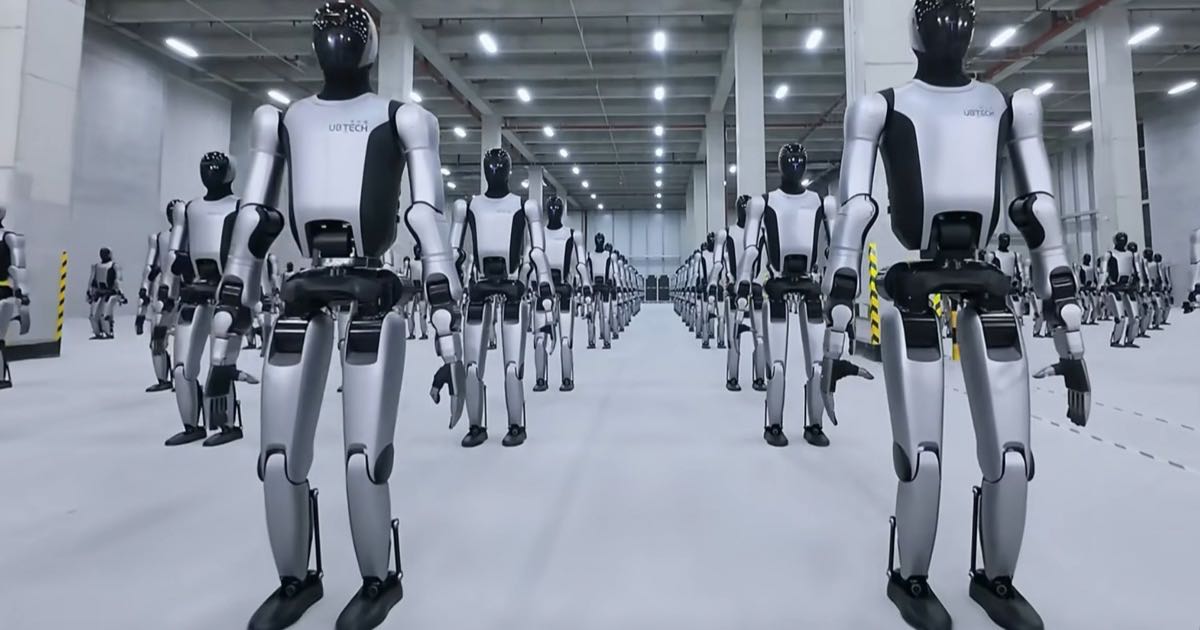
This is the same flywheel that Tesla’s Optimus program and Figure AI’s deployment strategy aim to build. The difference is that Infiforce is starting from a pure data-infrastructure play rather than a robot-hardware-first approach. The hardware lineup includes the AstroDroid wheeled humanoid, UltraDroid general-purpose robot, Little Atom bipedal robot, and specialised Force systems — a broader form-factor spread than most Western competitors, who tend to commit to one body type early.
30 cities, 100 scenarios
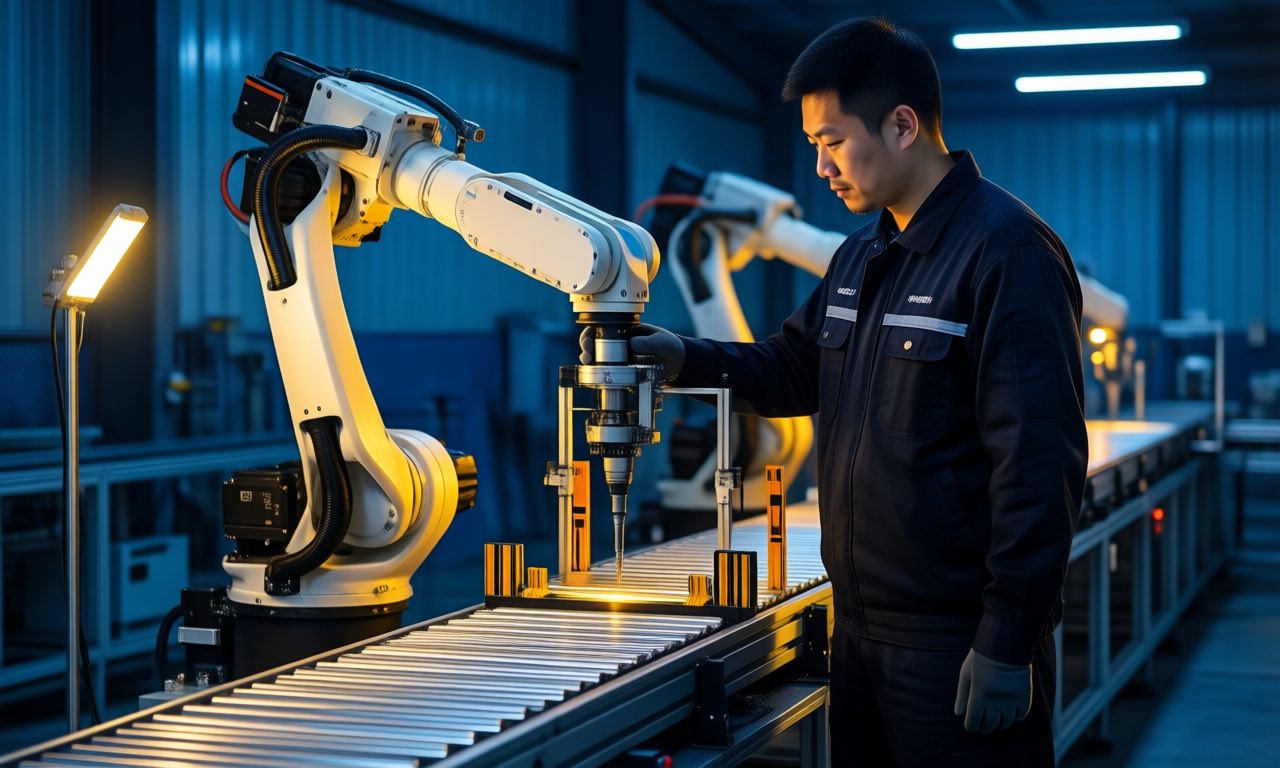
Infiforce says its robots are being tested or commercialised across more than 30 Chinese cities and over 100 operating scenarios, including manufacturing, logistics, warehousing, and commercial services. It is working with CRRC High-Tech on embodied intelligence for infrastructure applications and has participated in drafting a proposed national specification for crowdsourced embodied-intelligence data collection and management.
That last detail is worth pausing on. China is building a national standard for how embodied-AI companies collect and manage data from public deployment. No equivalent process exists in the US or EU. Whether that is a competitive advantage or a surveillance concern depends on who is asking.
The funding pattern
Infiforce is not an outlier. Chinese state-and-university-backed capital has been flowing into embodied-AI companies throughout 2026. The same week, Dyna Robotics published results showing that human video can scale robot learning. The difference is that Dyna is a commercial company selling robot cells to hotels and laundromats, while Infiforce is building a platform that spans multiple robot forms and deployment scenarios with state backing.
Morgan Stanley revised its 2026 China humanoid shipment forecast to 50,000 units. Xpeng is targeting monthly production capacity of more than 1,000 IRON robots by year-end. BYD confirmed its first humanoid robot will debut this month. The field is crowded, the capital is abundant, and the state is actively involved in both funding and standards-setting.
What stands out
Two things separate Infiforce from the pack. First, the DataGrid infrastructure is being positioned as a shared data layer — “a Hugging Face for embodied AI,” in the company’s own framing. If that works, it becomes the substrate other Chinese robotics companies build on. Second, the cross-embodiment ambition is broader than most competitors. Building one model that runs a wheeled humanoid, a bipedal robot, and a general-purpose arm is harder than committing to one body type, but the payoff is larger if it succeeds.
The risk is that state-backed capital with a national standards mandate can produce impressive deployment numbers without producing the kind of model quality that survives contact with global competition. The benchmark numbers are self-reported. The 30-city deployment figure covers testing and commercialisation, not all of which are the same thing.
For New Zealand, the development reinforces a structural question about the robotics supply chain. If Chinese companies dominate the embodied-AI software layer the way they dominate hardware manufacturing, then the FCC’s July ban on foreign-produced robots starts to look like the opening move in a broader decoupling. NZ companies buying robots in five years may face a choice between a Chinese software stack with broad deployment data and a Western stack with less data but fewer geopolitical strings.