China’s National Data Administration says it plans to develop standards for embodied artificial intelligence and to guide local authorities in the work, a signal that the country’s robot push is moving from building better bodies to organising the data that makes them useful. The pledge came in a statement posted to the regulator’s website on Sunday and was picked up by Bloomberg the same day.
🔍 THE BOTTOM LINE
The frontier of the robot race has quietly shifted from hardware to plumbing. Whoever standardises how robots’ physical-world data is collected and shared first — and China is now organising state resources to try — gets compounding advantages in training the models that make robots actually work.
What the Regulator Actually Said
The statement followed a symposium on September 10 convened by NDA head Liu Liehong with representatives from the Chinese Academy of Sciences’ automation institute, the Beijing Academy of Artificial Intelligence, and companies including JD.com, Deep Robotics (深度机智), robot-data firms, and the Beijing Humanoid Robot Innovation Center. The theme was data: “data empowering the development of embodied intelligence.”
The NDA’s language was deliberately unhurried but directional. It said it would “strengthen scientific planning and development guidance,” “timely advance the construction of embodied AI data standards,” guide local data systems “in an orderly manner,” and actively support companies in increasing investment in data resources — with the stated goal of enabling embodied AI development and promoting the industry’s “healthy growth.”
It is also the second move this year. In June, the same agency issued an implementation plan for building high-quality industry datasets, and the national standardisation body has already put an embodied-intelligence data-collection standard into its work plan. Sunday’s statement extends that from general data policy to embodied AI specifically.
Why Data Is the Bottleneck
The economics are stark. Gasgoo’s industry analysis, published in June, described the shift bluntly: the contest is moving “from hardware to data,” and the company that secures millions of hours of real-world physical data first will define the next generation of embodied AI. Xinghaitu’s chief executive Gao Jiyang has estimated that training an embodied foundation model usefully takes somewhere between 1 million and 10 million hours of physical interaction data — against roughly 100,000 waking hours a human needs to learn to control a body. Another founder in the same report put the data demand for physical AI at 1,000 times that of autonomous driving.
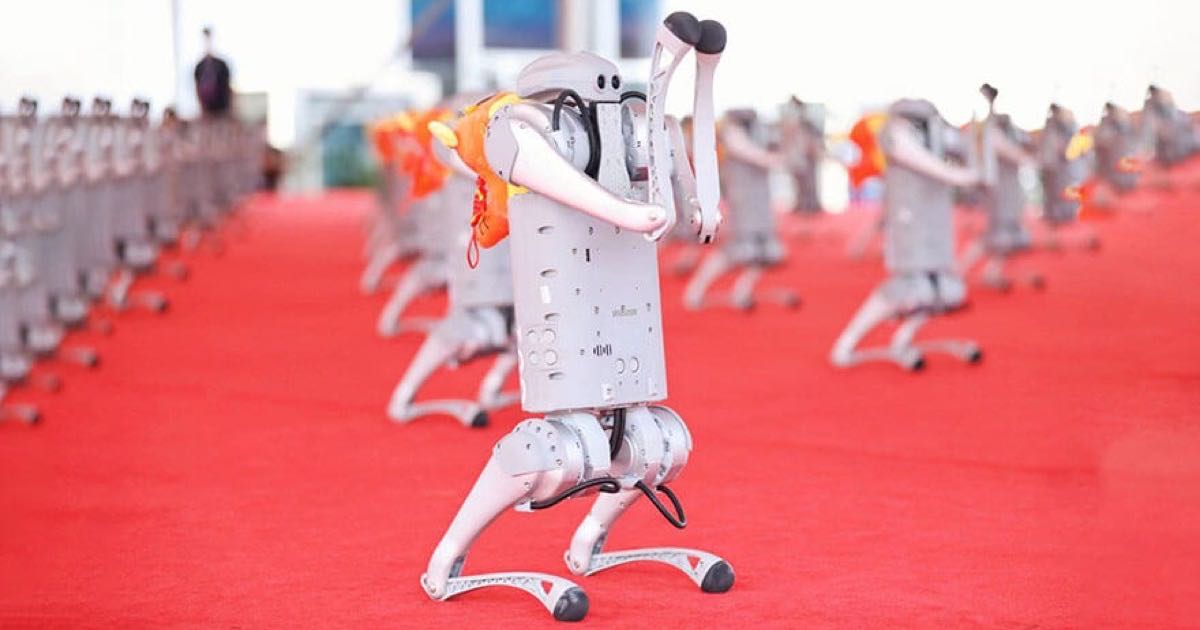
China’s industry is already organised around that chase, with companies racing toward 10-million-entry training datasets, shared data-collection centres, and — uniquely — commercial “data malls” where robot-generated data is traded. What has been missing is standardisation: without agreed formats and collection protocols, every dataset is a private dialect that other labs’ models cannot fully drink from.
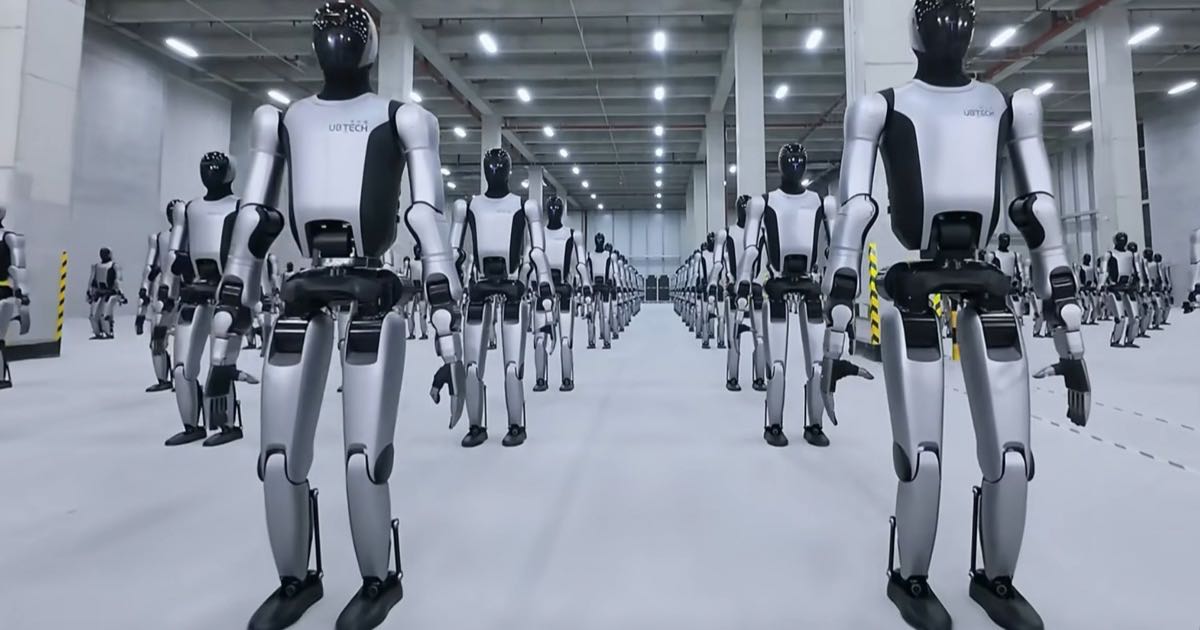
The scale context matters too. Chinese manufacturers made 97 per cent of the world’s humanoid robots in the first half of this year, with shipments up 272 per cent (our coverage), and the country’s largest embodied-AI training-ground project, World 2026, is already open-sourcing real-world robot data. The State Council’s research arm projects the embodied AI market to top one trillion yuan (about US$146 billion) by 2035.
The Referee Question — and the Open-Weight Contrast
Standards from the state can cut two ways. Harmonised formats would let the sector’s scattered datasets compound instead of fragmenting — a genuine accelerator, and one aligned with how China has approached AI infrastructure: shared national compute, shared data assets, open-weight models released to the world.
The counter-reading is that a standards monopoly is a moat. Western robot labs generate their own proprietary teleoperation data, while Chinese firms building to a national standard could interoperate and swap data at scale. And the state gains a lever: whatever the standards say about data provenance, labelling and export becomes a channel of industrial policy. Bloomberg framed the NDA statement as a response to “growing demand for high-quality, diverse and large-scale datasets” — but the demand it satisfies is national first.
There is also a governance thread here that connects to work the site has done on China’s robot boom: regulators there have already shown willingness to intervene when the sector overheats, from IPO restrictions after Unitree’s volatile debut to the current standardisation push. Data standards are the softer instrument in that toolkit.
For New Zealand — a country that imports its robots rather than manufacturing them — the near-term significance is practical: the robots NZ firms buy in five years will run on data ecosystems being designed in Beijing and Washington right now, and whichever ecosystem NZ ends up integrated with will shape what the machines can do and who audits them.
❓ FAQ
What is embodied AI? AI systems that control a physical body — humanoid robots, robotic arms, autonomous machines — learning from sensor data tied to real-world actions rather than from text alone.
What did China’s National Data Administration announce? That it will develop standards for embodied AI data, guide local authorities in related work, and support companies investing in data resources, following a September 10 symposium with robot makers and research institutes.
Why does data matter more than robot hardware now? Industry estimates put useful embodied-model training at 1 million to 10 million hours of physical interaction data — a scale no single lab generates alone, which is why collection, sharing and standards have become the competitive frontier.
Does this affect other countries? Indirectly but materially. If Chinese robot makers coalesce around national data standards, their robots arrive with a trained-data ecosystem attached — shaping both their capabilities and the audit trail of how they were trained.
🔍 THE BOTTOM LINE
China’s robot advantage has always been scale; the new move is about turning that scale into shared, standardised fuel. If the standards land as described, the competitive question for every robot maker outside China stops being “how good is your robot” and becomes “how good is your data commons” — a question most of them cannot yet answer.
📰 Sources
- National Data Administration — statement on embodied AI symposium (nda.gov.cn, 13 September 2026)
- Bloomberg — “China’s Data Regulator Plans Standards Push for Embodied AI” (13 September 2026)
- Gasgoo — “The Second Half of Embodied AI: Stuck on Data” (June 2026)
- China.org.cn / Xinhua — World Intelligence Expo 2026 report (30 May 2026)
- robots-maker.com — “China Embodied AI: The Race to 10 Million Robot Training Data Entries” (27 August 2026)