XPeng’s robotics business has raised over $900 million in its first external funding round, valuing the unit at more than $6.3 billion. The Chinese EV maker calls it the largest single-round private financing in the country’s embodied AI industry — and it is hard to argue with the math.
The round was announced on August 24. IDG Capital led, with Gaorong Ventures participating and Tencent and Alibaba joining as strategic investors. Roughly $600 million comes from external backers, about $200 million from an XPeng subsidiary, and $100 million from leadership. XPeng retains controlling ownership and will keep the unit consolidated on its balance sheet.
What the Money Is For
The capital is earmarked for software and hardware R&D, training of XPeng’s Physical AI foundation models, data generation, construction of mass production facilities, and global commercial expansion. The stated goal: mass production of the IRON humanoid robot by the end of 2026, with initial deployment at XPeng’s own stores and campuses before commercial deliveries in China and overseas markets in 2027.
That timeline matters. If XPeng hits it, the company beats Tesla’s Optimus program to manufacturing scale — and Tesla has been talking about Optimus production targets for years without delivering a robot you can buy. XPeng’s framing of its own timeline as keeping the company “ahead of Tesla’s stalling Optimus program,” as Electrek reported, is sharp but not unreasonable.
The IRON Robot
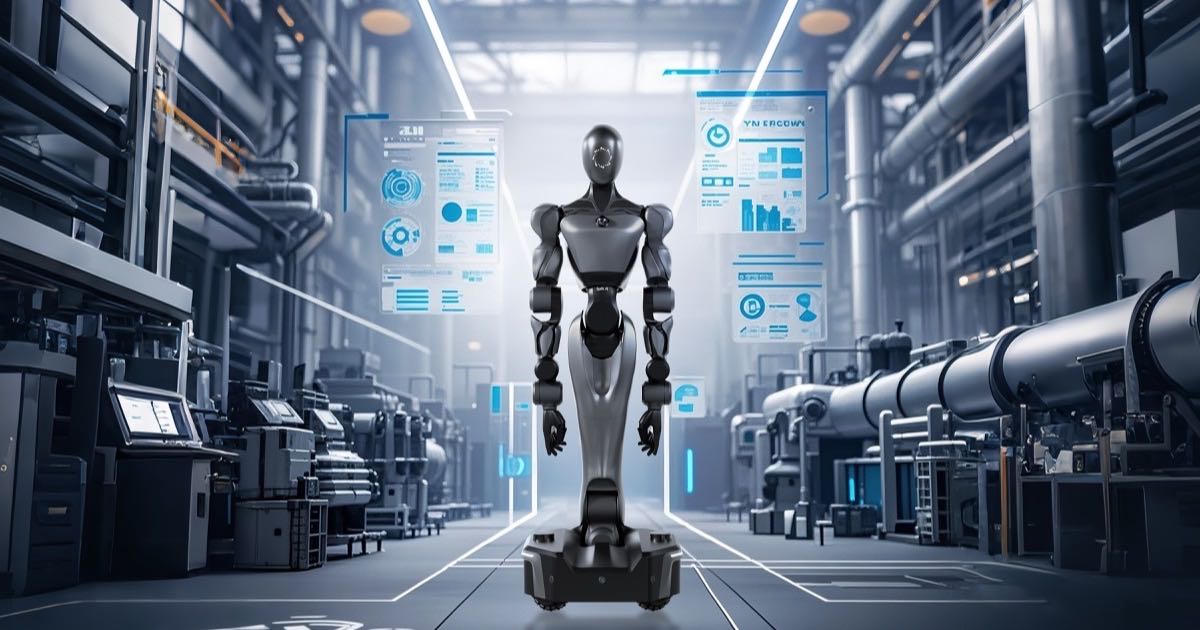
The machine investors are pricing at $6.3 billion is called IRON. According to XPeng’s announcement, IRON carries 76 degrees of freedom across its body and 21 in each hand. It runs on three Turing AI chips delivering up to 2,250 TOPS of on-device compute, and executes tasks autonomously without remote operation by running XPeng’s Physical AI foundation model directly on the robot.
The design, detailed at XPeng’s AI Day presentation in November 2025, includes a humanoid spine with bionic muscles, fully covered flexible skin, all-solid-state batteries, and a combination of models — VLT, VLA, and VLM — handling conversation, walking, and interaction. The form factor mirrors human movement, which XPeng says lets it draw on behavioural data from everyday human activity. Each deployed robot feeds a data flywheel that improves the foundation model.
Why an EV Company Is Building Humanoids
The strategic logic is the carryover. Chips, controllers, motion modules, and dexterous hands are all developed in-house. XPeng applies automotive-grade quality standards and uses existing EV manufacturing infrastructure for robot production. As Unite.AI noted, Gaorong Ventures framed the investment as translating more than a decade of full-stack R&D, supply chain, and manufacturing capability from smart EVs into robotics.
This is the same bet other automakers are making. BYD unveiled its own humanoid earlier this month. Hyundai has targeted 20,000 humanoid robots through its supply chain. The auto-to-robotics pipeline works because the underlying engineering — power systems, actuation, sensor integration, manufacturing at scale — overlaps more than people might expect.
The Valuation in Context
A $6.3 billion valuation for a humanoid robotics unit that has not yet shipped a commercial product is steep, but it is not without comparables. DeepSeek’s recent investment in Unitree’s Shanghai IPO valued that rival at around $9 billion. XPeng’s raise is the second act of a much smaller first one: in July 2022, the unit closed a Series A of over $100 million, also led by IDG Capital, when its product was a quadruped robotic pony aimed at households. Four years later, the same lead investor is pricing a humanoid-focused business at more than nine times that round’s size.
The structure is worth noting. This is external capital coming into a controlled subsidiary of a dual-listed public company, not a startup round. XPeng keeps consolidation, the unit gets an outside valuation, and leadership gets incentive alignment through equity participation. It is a carve-out, not a spin-off.
The Cost Question
Humanoid robot prices have been falling fast. EngineAI reported that production costs for general-purpose humanoid robots have dropped below RMB 100,000 — roughly $13,800 USD. XPeng has not disclosed IRON’s target price, but the company’s automotive supply chain advantage is directly relevant: the components that make a humanoid expensive (actuators, sensors, compute modules) are the same components XPeng already sources at automotive volume.
Whether $6.3 billion proves cheap or expensive depends entirely on whether IRON reaches mass production on schedule. The global humanoid robot market shipped roughly 22,000 units in the first half of 2026, with Chinese manufacturers commanding 97 per cent of that volume. XPeng is entering a market that is already scaling — but where, as Unitree’s CEO warned, the gap between demonstration and reliable autonomous operation remains the real bottleneck.
❓ FAQ
What is XPeng’s IRON robot? IRON is XPeng’s next-generation humanoid robot, featuring 76 degrees of freedom in its body and 21 in each hand, powered by three Turing AI chips with 2,250 TOPS of on-device compute. It runs XPeng’s Physical AI foundation model locally, without remote operation.
How much did XPeng’s robotics unit raise? Over $900 million in its first external funding round, at a post-money valuation exceeding $6.3 billion. The round was led by IDG Capital, with Tencent and Alibaba as strategic investors.
When will XPeng’s IRON robot go into mass production? XPeng targets mass production by the end of 2026, with initial deployment at its own stores and campuses. Commercial deliveries in China and overseas are planned for 2027.
How does this compare to other humanoid robotics funding? The $900 million round is the largest single-round private financing in China’s embodied AI industry. For context, Unitree was valued at approximately $9 billion in its Shanghai IPO, and most growth-stage robotics rounds globally have remained an order of magnitude smaller.
📰 Sources
- Electrek — XPeng robotics raises $900M at $6.3B valuation for IRON robot push
- Unite.AI — XPENG Robotics Raises $900M+ First Round at $6.3B+ Valuation
- Bloomberg — Xpeng Robot Unit to Raise $900 Million From Likes of Alibaba
- PR Newswire — XPENG Robotics Business Raises Over US$900 Million
- Humanoids Daily — XPENG Robotics Raises Over $900 Million at $6.3 Billion Valuation