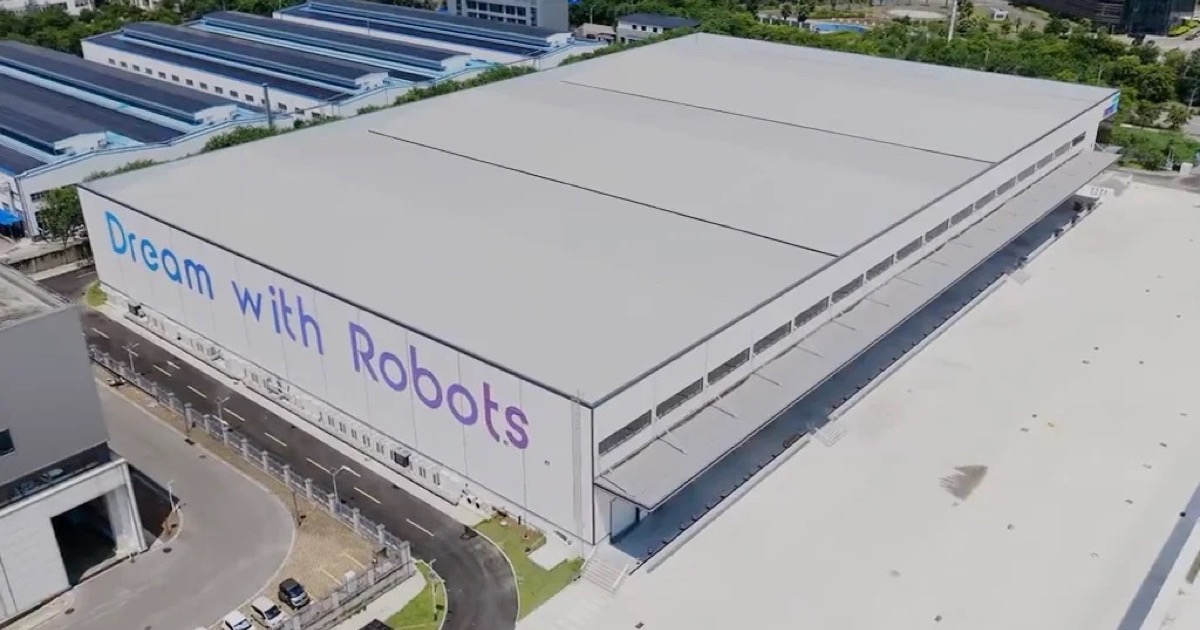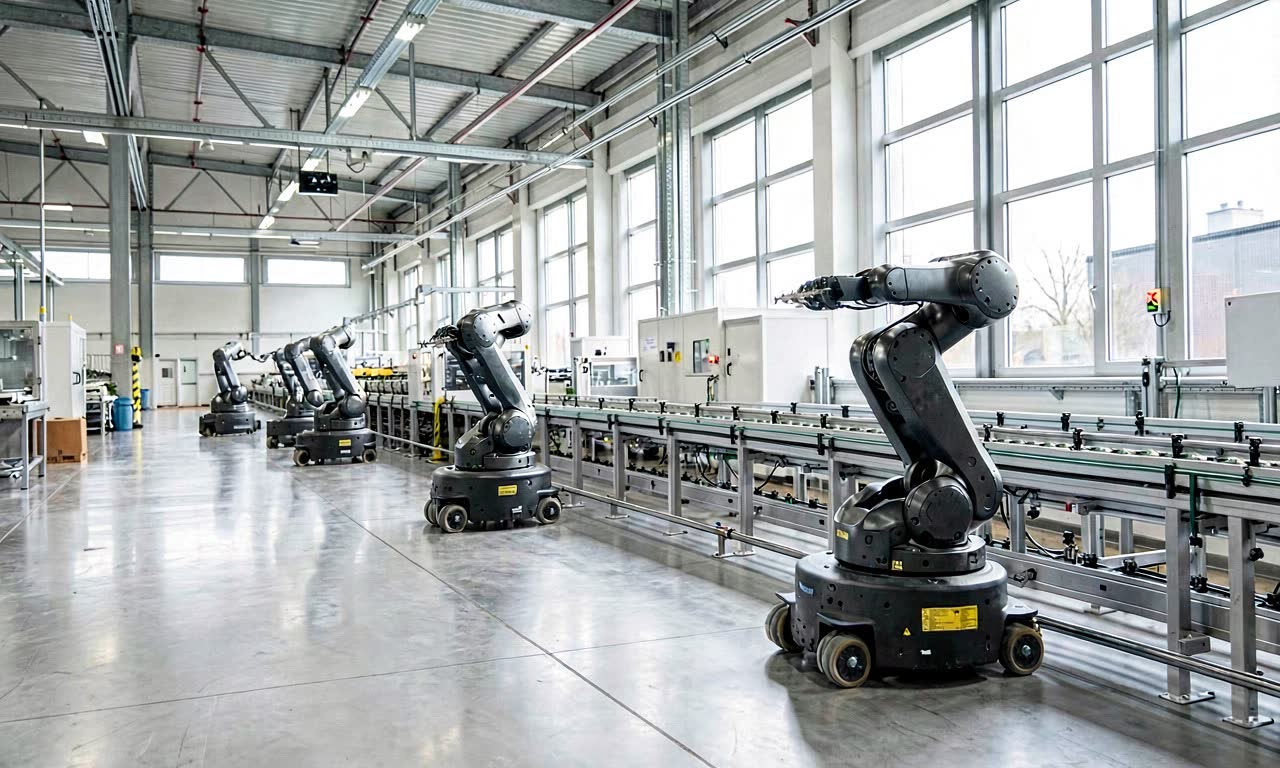
Bosch will begin series production of humanoid robots at its plant in Bühl, Germany in August 2027, making it the first facility in Europe to industrialise humanoid technology at manufacturing scale. The robots are wheeled, not bipedal — and that distinction is the entire story.
The announcement, revived by Germany’s regional press this week, confirms a production date, a named customer, and a named product. Most of Bosch’s bipedal-focused rivals still have a roadmap slide. Bosch has a factory.
Why Wheels Beat Legs to the Factory Floor
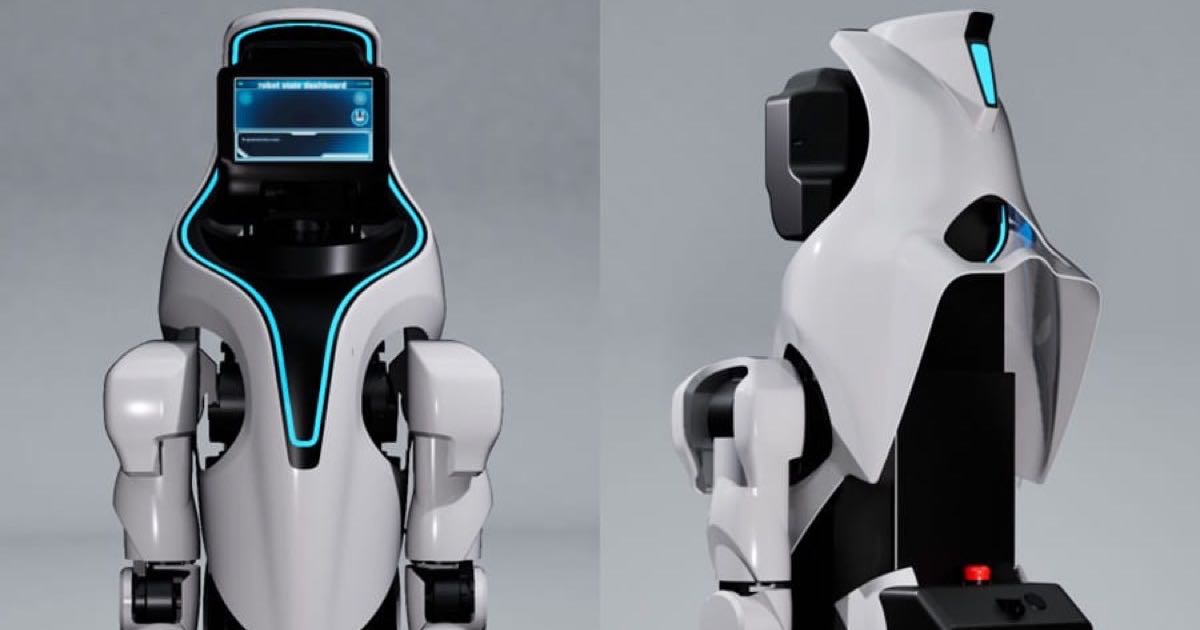
The robot being built at Bühl is the HMND 01, designed by Humanoid — a London-based startup also known as SKL Robotics Ltd. The commercial variant, called the Alpha Wheeled, stands 2.2 metres tall, weighs 300 kilograms, and moves omnidirectionally at speeds up to 7.2 km/h. Its 29 active degrees of freedom sit in the upper body — arms, hands, and head — where the actual work happens. Payload capacity is 15 kilograms at a reach of 2 metres. The system runs for four hours per charge on an NVIDIA Jetson Thor processor.
The wheeled platform’s advantage is structural, not cosmetic. Under the EU Machinery Directive, wheeled mobile manipulators fall under a significantly less complex conformity assessment pathway than bipedal walking robots, which must navigate additional safety standards covering falling hazards, dynamic balance, and pedestrian-space hazards. Humanoid expects CE certification by 2027 — a timeline that bipedal competitors working through the same European regulatory framework would struggle to match, as Tech Times reported.
The regulatory gap is not a footnote. It is the reason Bosch has a confirmed date and others do not.
Who Is Humanoid?
The startup behind the robots is less than three years old. Founded in 2024 and incorporated in the UK, Humanoid employs more than 250 engineers and researchers across London, Boston, Vancouver, and San Diego. In July 2026, the company closed a $152 million Series A at a $1.35 billion post-money valuation, making it Europe’s first pure-play humanoid robotics unicorn. The round was led by Prime Movers Lab, with strategic participation from both Bosch and Schaeffler. Total funding stands at $270 million.
Schaeffler: The Anchor Customer
The Bühl production line has a customer ready to buy. In January 2026, Humanoid and Schaeffler Technologies announced a strategic partnership that has since been formalised into what both companies describe as the largest publicly announced commercial agreement in the humanoid robotics industry. The deployment agreement was signed on May 13, 2026.
Initial deployments run from December 2026 through June 2027 across two Schaeffler facilities in Germany. The Herzogenaurach site will focus on box-handling automation. The Schweinfurt site begins with a three-month capability demonstration, followed by a three-month operational validation period targeting near-production-scale continuous operation. The longer-term target is deploying thousands of wheeled units globally across Schaeffler’s facilities by 2032.
The relationship runs deeper than customer and supplier. Schaeffler is also Humanoid’s preferred supplier for joint actuators, covering more than half Humanoid’s actuators through 2031 — a seven-digit volume commitment. That arrangement makes the two companies structurally dependent on each other, which is also why Schaeffler’s strain wave gearboxes have become a quiet bottleneck story in the humanoid supply chain.
Robotics-as-a-Service, Not a Purchase
Humanoid is not selling its robots outright. The commercial model is Robotics-as-a-Service — a subscription structure where the robots are leased rather than purchased as capital equipment. Humanoid retains ownership of the hardware and delivers each deployment bundled with maintenance, support, and software updates, alongside fleet management software and ongoing performance management.
For a manufacturing customer, RaaS shifts the risk profile: instead of a large upfront capital commitment on hardware that may become obsolete, the customer pays an ongoing service fee while the vendor assumes responsibility for hardware performance. The tradeoff is vendor dependency — if Humanoid encounters financial difficulty, customers’ automation infrastructure is directly affected.
A Plant Facing Retrenchment Gets a New Mission
Bühl has been the home of Bosch’s small electric motor production — window lifters, automotive actuators, legacy components for an automotive supply chain under structural pressure. The roughly 2,700 people who work there already know that around 1,100 positions are slated to disappear by 2030 as Bosch navigates the EV transition. The humanoid production deal does not undo those cuts, but it gives Bühl a forward-facing purpose.
IG Metall, the German metalworkers’ union, concluded a “Future Collective Agreement” with Bosch Mobility that prohibits compulsory redundancies through the end of 2027 — which means the humanoid production ramp begins within a legally protected labour window. Initial staffing for the humanoid line is expected to start in the double digits, scaling as volumes grow.
The Global Race
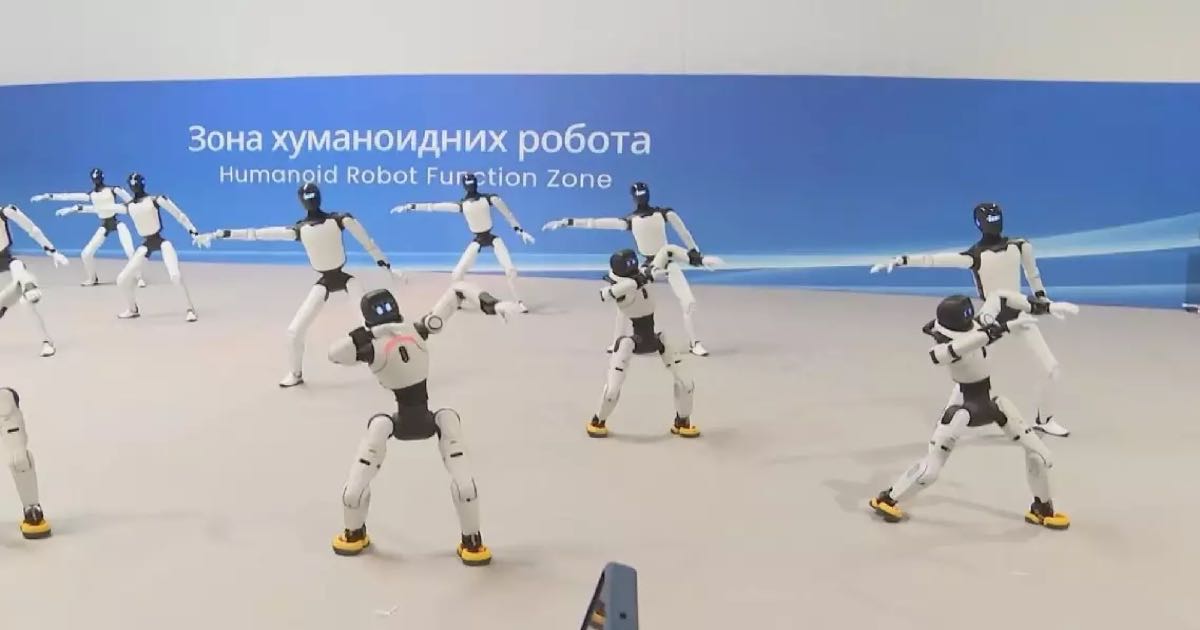
Bosch is not entering an empty field. Tesla’s Optimus program carries the highest public profile, with Musk targeting a consumer price between $20,000 and $30,000. LG and NVIDIA are partnering on bipedal humanoids aimed at 2027. Chinese manufacturers like AgiBot and Unitree are already shipping at volume — 97 per cent of the 22,000 humanoid robots deployed globally in H1 2026 came from China.
What sets Bosch apart is that it is building the first European production line for a product with a confirmed customer, a confirmed date, and a regulatory pathway that is structurally easier than what bipedal competitors face. The wheeled design is not a compromise. It is the strategy.
❓ FAQ
Why is Bosch building wheeled robots instead of bipedal ones? Wheeled mobile manipulators face a less complex conformity assessment under the EU Machinery Directive than bipedal walking robots, which must meet additional safety standards for falling hazards and dynamic balance. The wheeled design clears regulatory hurdles faster, enabling a confirmed 2027 production date.
Who is the customer for Bosch’s humanoid robots? Schaeffler Technologies is the anchor customer, with deployments starting December 2026 across two German facilities. The longer-term target is thousands of wheeled units across Schaeffler’s global facilities by 2032.
What is Robotics-as-a-Service? RaaS is a subscription model where robots are leased rather than purchased. The vendor retains ownership of the hardware and bundles maintenance, support, software updates, and fleet management into an ongoing service fee.
How does the Bosch production line compare to Chinese humanoid manufacturing? Chinese manufacturers dominated H1 2026 shipments with 97 per cent of global volume. Bosch’s Bühl line represents Europe’s first humanoid manufacturing facility, targeting industrial logistics rather than the broader consumer and research markets Chinese firms are pursuing.
📰 Sources
- Tech Times — Bosch Confirms August 2027 Start for Europe’s First Humanoid Robot Production Line
- The Robot Report — Humanoid Partners with Bosch, Schaeffler to Scale Robot Production
- eWeek — Humanoid, Bosch Warehouse Robots Production
- Global Sources — Bosch Gears Up for Humanoid Robot Production
- Denkstrom — Bosch to Produce Humanoid Robots from 2027