Humanoid robots are stuck in a manufacturing bottleneck that nobody outside the industry talks about. The actuators that move their joints account for roughly half the total cost of building one, and the strain wave gearboxes inside those actuators are made the same way they have been for decades — by precision machining, which is slow, expensive, and wasteful. Schaeffler, the German motion technology company, says it has a fix: form the gears instead of cutting them, and you get the same precision at a fraction of the cost.
The company announced on August 13 that it has concluded validation testing of formed strain wave gearboxes developed specifically for humanoid robots. Mass manufacturing is slated to begin in 2027, starting in Germany before expanding to other regions.
What strain wave gearboxes do
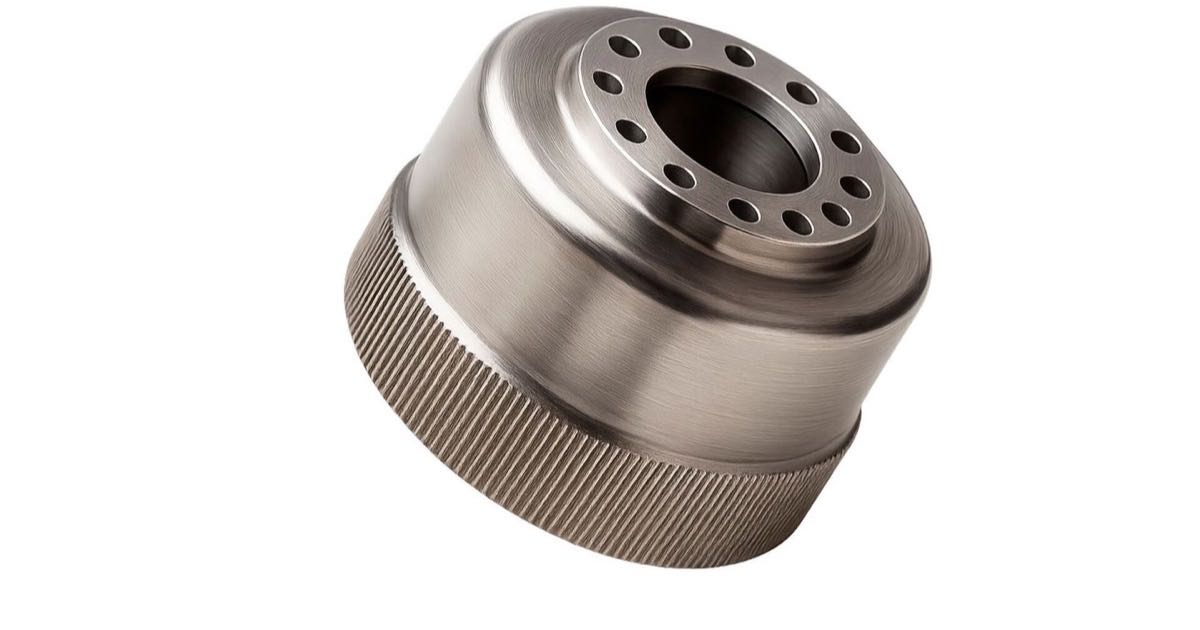
What is a strain wave gearbox? It is a compact gear mechanism used in robot joints to transmit movement with high precision and torque. Unlike conventional gears, strain wave gearboxes (also called harmonic drives) use a flexible metal cup that deforms against a rigid circular spline, creating a gear reduction ratio of 50:1 to 160:1 in a package small enough to fit inside a humanoid’s elbow or hip. They are the standard choice for humanoid upper body joints and collaborative robot arms because they offer near-zero backlash — typically under one arcminute — which means the joint does not wobble or slip.
The problem is that manufacturing them requires specialised CNC machining that removes large amounts of material to achieve the required tolerances. It is capital-intensive and slow. As humanoid production scales from thousands to potentially millions of units, this method becomes a serious constraint.
From minutes to seconds
Schaeffler’s approach replaces machining with high-pressure forming. Instead of cutting gear geometries out of metal, the process presses the component into its final shape using high pressing forces. The result: manufacturing steps that previously took minutes now take seconds. Schaeffler claims the method cuts overall manufacturing costs by more than 25 per cent and reduces material consumption by more than 75 per cent, while achieving comparable torque, efficiency, and dimensional accuracy to conventionally machined components.
This is not a theoretical exercise. Schaeffler has already supplied more than two million formed strain wave gearboxes to the automotive sector over the past decade. The company is transferring that manufacturing expertise to humanoid robotics — a market where the volumes are smaller today but are projected to grow rapidly.
The Robot Report noted that Schaeffler is positioning itself as a component supplier to the entire humanoid industry, not just one manufacturer. David Kehr, president of humanoid robotics at Schaeffler, said the company deploys humanoids along its own global value chain and develops key components based on that operational experience.
Why this matters for the humanoid supply chain
The humanoid robotics industry is often framed as a race between companies — Tesla versus Figure, Unitree versus Agility, Boston Dynamics versus everyone. But the supply chain underneath these companies is where the real scaling challenge lives. If every humanoid needs dozens of strain wave gearboxes, and each one takes minutes to machine, the gearbox supply becomes a hard ceiling on how many robots the industry can produce.
Schaeffler is not the only company working on this. Established suppliers like Harmonic Drive and Leaderdrive dominate the current market with machined components. But Schaeffler’s forming technology, if it delivers on the claimed cost and speed improvements at scale, could shift the economics of humanoid manufacturing in a way that benefits the entire industry — not just one robot maker.
This connects to a broader pattern we have been tracking: the humanoid supply chain is maturing. Companies like Agility Robotics are expanding deployments, Unitree went public at a $53 billion valuation, and Figure is producing one robot per hour. Component-level innovations like Schaeffler’s are less flashy than a backflipping robot, but they are what make the difference between a few thousand units and a few million.
The NZ angle
New Zealand does not manufacture humanoid robots, but the cost trajectory of components like strain wave gearboxes affects when humanoids become economically viable for NZ businesses. If gearbox costs drop 25 per cent and production scales, the downstream effect is cheaper actuators, cheaper robots, and a shorter timeline for NZ manufacturers and logistics companies considering humanoid deployment. It also matters for NZ’s robotics research community, which relies on affordable off-the-shelf components.
FAQ
When will Schaeffler start mass producing these gearboxes? Mass manufacturing is slated to begin in 2027, starting in Germany before expanding to other regions.
How much do strain wave gearboxes cost? Schaeffler has not published per-unit pricing. The company says actuators account for approximately half the total manufacturing cost of a humanoid robot, and strain wave gearboxes are a key component within those actuators.
Which humanoid robot companies will use these gearboxes? Schaeffler has not named specific customers. The company is positioning itself as a supplier to the broader humanoid industry rather than partnering with a single manufacturer.
The bottom line
A 25 per cent cost reduction on a component that makes up half a robot’s manufacturing cost is not a minor optimisation. It is the kind of supply chain improvement that compounds as volumes grow. Schaeffler’s automotive background — two million formed gearboxes over a decade — gives the claim credibility that a robotics startup making the same promise would lack. The question now is whether the humanoid industry’s growth rate matches Schaeffler’s production timeline. If it does, the gearbox bottleneck may be one of the first scaling problems the industry solves.