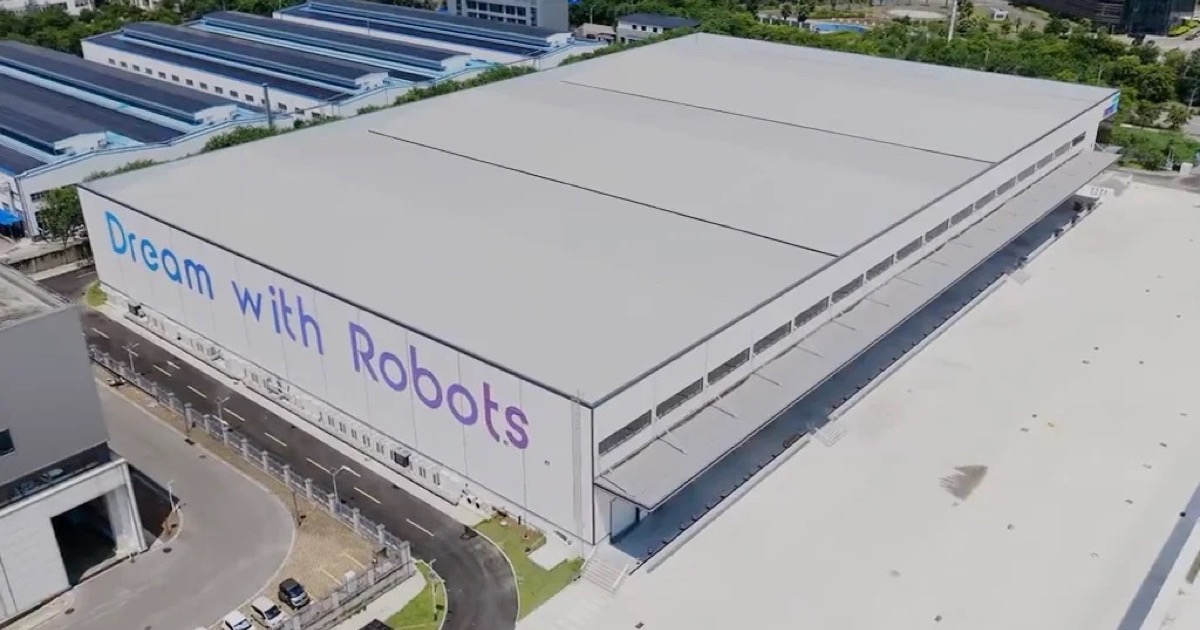
Sabac is a town of about 30,000 people in western Serbia, best known until now for agriculture and a Minth Group auto-parts plant. As of Saturday 30 August 2026, it hosts Europe’s first serial production line for humanoid robots. A factory jointly built by Serbia and the Chinese manufacturing group Minth officially commenced production, with Serbian President Aleksandar Vucic touring the floor, shaking hands — reportedly — with one of the products.
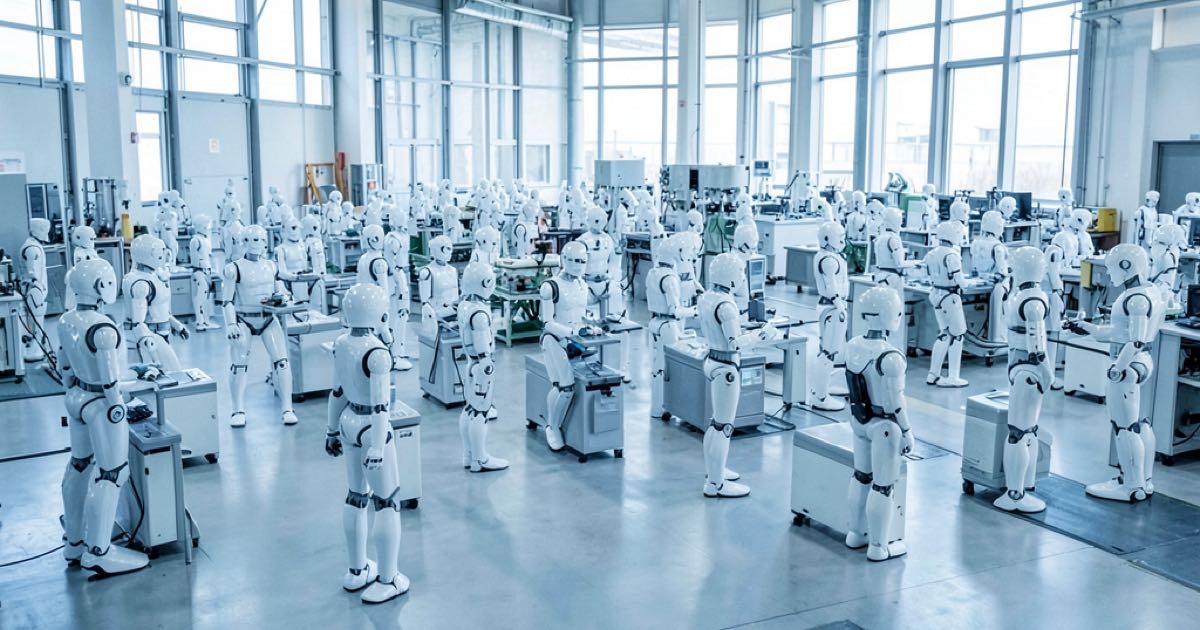
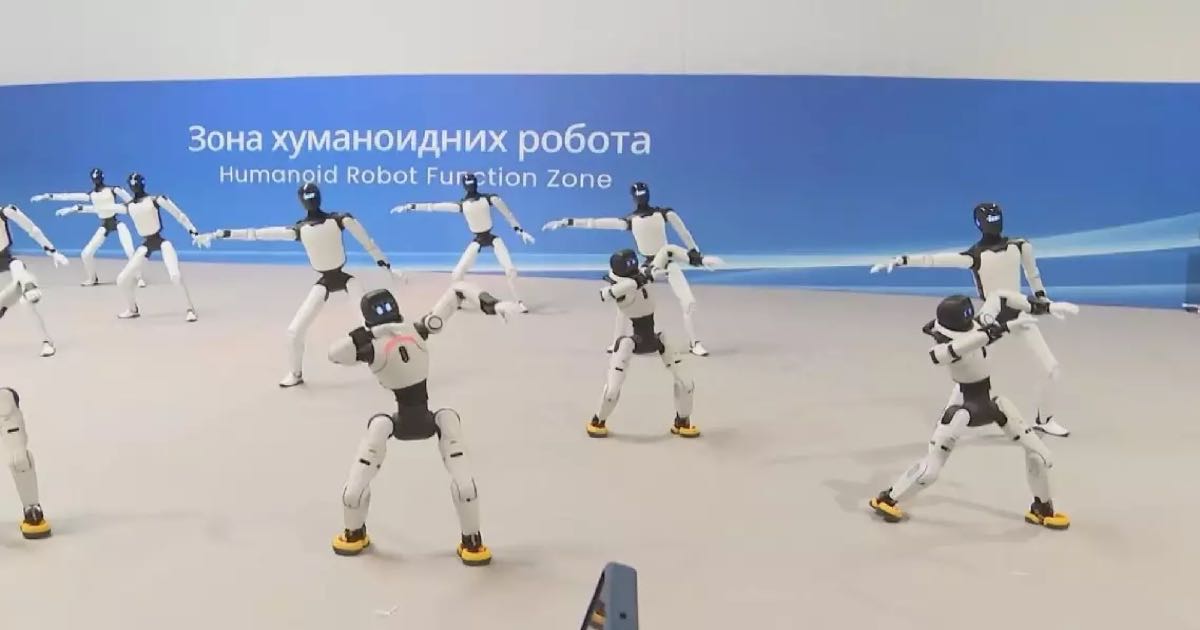
The numbers, per Xinhua and Serbian coverage: an initial investment of about 20 million euros, a 3,000-square-metre facility assembling humanoid robots and robot dogs, calibrating their movement and vision systems. Vucic said he hopes the site will assemble, and eventually produce, more than 5,000 robots annually. The longer game is a robotics industrial park with a total planned investment of roughly 200 million euros, targeting annual capacity of up to 20,000 humanoid robots and robot dogs for European and global markets.
Why Serbia, and why now
Minth Group is not a robot startup. It’s an automotive parts manufacturer — a China-headquoted company that entered Serbia in 2018 and now runs 10 factories there employing nearly 5,000 people, according to Vucic’s speech. Humanoid assembly is being bolted onto an existing manufacturing and logistics footprint. That’s a cheaper route into European robot production than building greenfield.
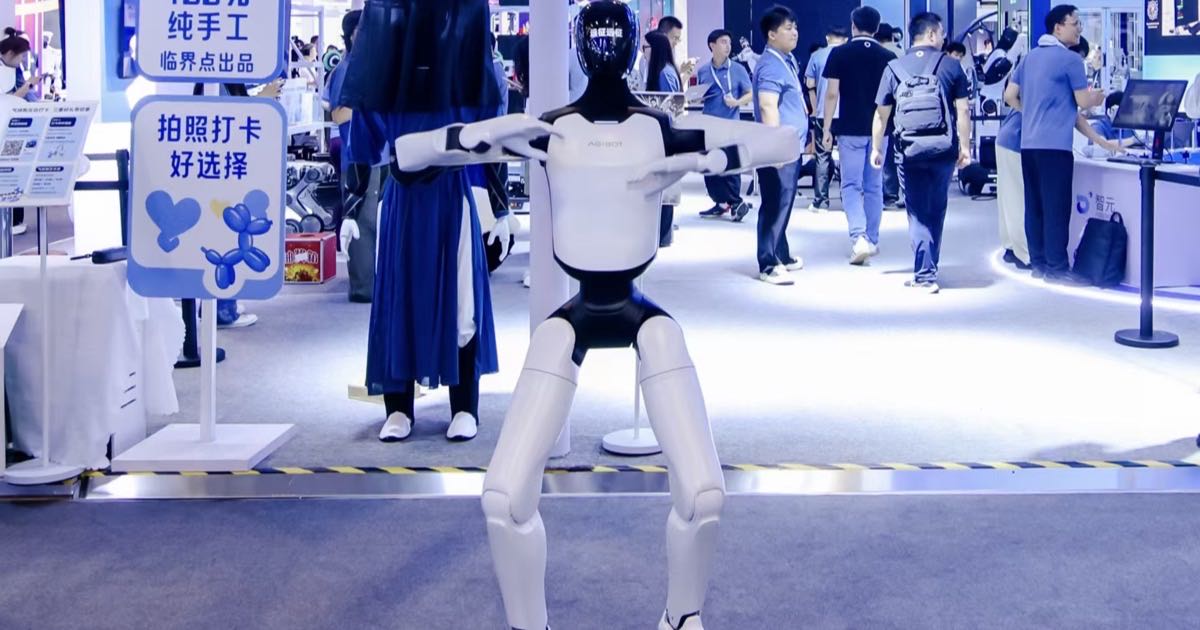
The timing has an obvious logic. European buyers — factories, logistics firms, public services — are beginning to trial humanoids, but almost all supply currently ships from China, with all the tariff exposure, shipping lag, and geopolitical friction that entails. A production base inside Europe, in a non-EU but EU-adjacent country with comparatively low labour costs and an eager government, is a hedge against exactly that friction. In February, Vucic announced the collaboration with Minth and Chinese robotics company AgiBot to build what was billed as Europe’s first large-scale humanoid production base. AgiBot matters here: as we covered in AgiBot dethrones Unitree as China captures 97% of global humanoid shipments, Chinese humanoid makers have spent 2026 racing each other for shipment volume — and export markets are the natural next front.
Reading the claims carefully
Vucic’s “pioneer of humanoid production in Europe” framing is a government’s framing, and the capacity numbers are aspirations, not output. The 20,000-unit figure attaches to the industrial park “upon full completion” — a project that doesn’t exist yet. What exists today is a 20-million-euro assembly and calibration plant making initial production runs. Whether it reaches even the 5,000-a-year mark depends on European demand materialising, and on the robots doing work that customers will pay for. The stated first applications — industrial production, later education and public services — mirror what we saw at Chinese deployments like humanoid robots on the real factory floor: pilot first, prove second.
It’s also worth noting what this is geopolitically, without dressing it up. Serbia is building its industrial future on Chinese capital and, increasingly, Chinese technology. Vucic thanked President Xi Jinping by name at the ceremony. A Chinese-backed robot plant inside Europe is a small thing on a trade map and a loud thing on a political one.
The part that matters for the industry
The interesting signal isn’t Serbia. It’s that humanoid manufacturing is starting to look like car manufacturing: capital plants sited near customers, national governments competing for the jobs, capacity targets stated in the thousands before the demand side is proven. That’s what an industry looks like when its participants believe the demand curve is real — or want investors to believe it.
Both can be true at once. Either way, keep an eye on whether European orders follow.