Every robotics founder has a theory about what’s holding humanoid robots back. Gao Yang’s is refreshingly specific: it’s not the hardware, which he thinks is roughly solved. It’s not even the models. It’s the data — and his company is spending hundreds of millions of dollars on an unusually labour-intensive answer to that problem.
Gao, co-founder and chief scientist of Chinese embodied AI firm Spirit AI, told Reuters in an interview published on 18 September that “the brain is indeed the weakest link in the complete robotics stack.” His prediction: a breakthrough comparable to OpenAI’s GPT-3 — the model that made ChatGPT possible — could arrive for robot brains as soon as mid-2027. But the same interview carries a much longer timeline for the part everyone actually wants: robots in homes are, on his own numbers, at least eight years away.
The timeline, stage by stage
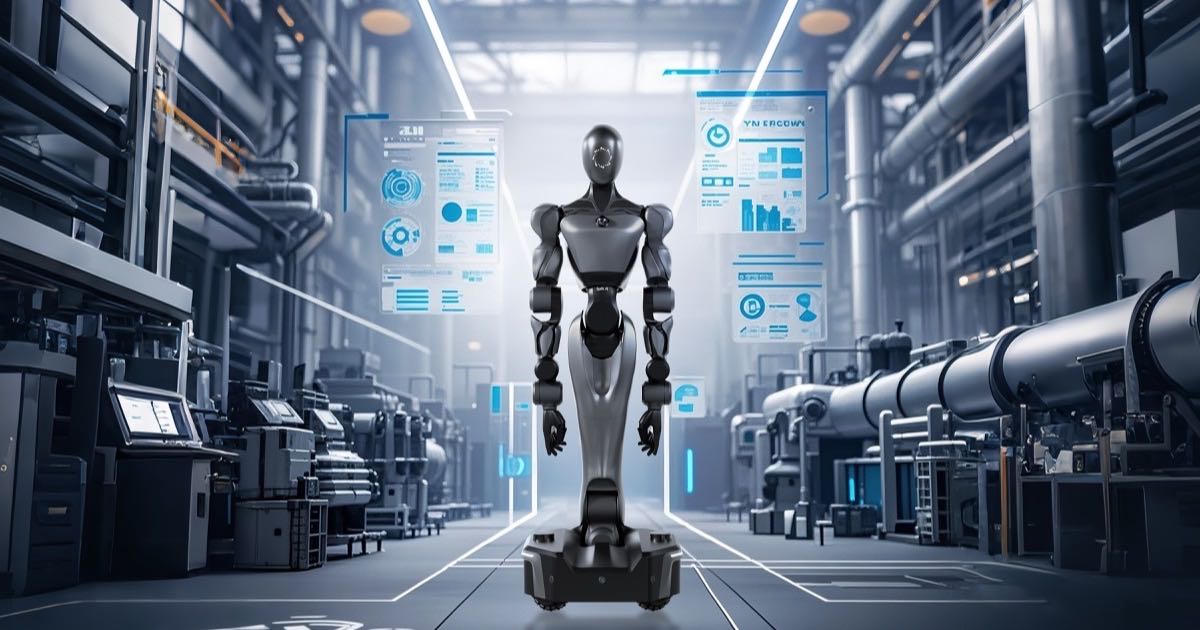
Gao’s sequencing is worth reading closely, because it’s more conservative than most of what comes out of the industry. The next one to two years are the “initial window for industrial applications” — factories, where tasks are repetitive and environments can be controlled. Two years from now, he expects robots in commercial service settings doing simpler tasks. Homes come last and hardest, “far harder than both.”
That’s a staged rollout measured in years, from the founder of one of China’s fastest-capitalised robotics companies. It contrasts sharply with the consumer-marketing framing that dominates the space, and with the ChatGPT-moment predictions that Unitree’s founder made at August’s World Robot Conference — though even Wang Xingxing’s optimistic case was two to three years, with a decade possible if things go badly.
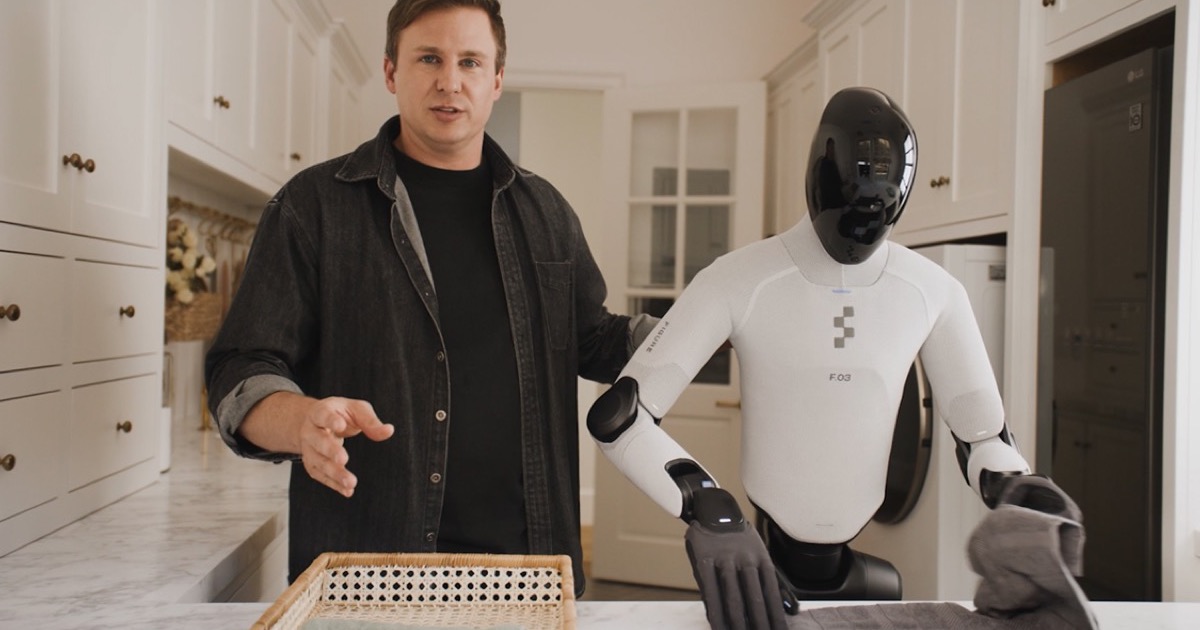
Where Spirit AI stands today: its robots manage a 90 percent success rate on simple tasks in structured living-room environments. That’s a real number and a real achievement — and it also tells you the gap that remains. A home is not a structured environment. Nobody rearranges their kitchen for the robot’s benefit.
Why Spirit AI hires 1,000 people to wave their arms
The most concrete thing in the Reuters interview is what Spirit AI’s data operation actually looks like. The company employs around 1,000 contractors nationwide who wear sensor equipment in real households and on production lines — Reuters’ reporter saw a Beijing training facility where dozens of young people repeatedly opened fridges, unlocked safes and cut vegetables with knives, their movements captured for training data.
This is a deliberate bet against the field’s dominant orthodoxy. Most competitors lean on simulation to cut training costs. Gao’s argument against it: simulators “handle rigid bodies well, but flexible objects like deformable electric cables remain a problem.” Anyone who has watched a robot try to plug in a cable will recognise the problem. Cloth, cables and food are the tasks that break sim-to-real transfer, and they’re disproportionately the tasks that matter in homes.
Spirit AI even found that so-called “dirty data” — messier, more varied human motion — trains its models faster than the squeaky-clean repeated takes other facilities chase, where operators may repeat a movement more than 50 times to get one usable clip. Whether that intuition survives contact with scale is an open question; teleoperation data at this labour cost doesn’t get cheaper as you grow, which is exactly the criticism long aimed at this approach. But Gao’s bet is that data quality beats data cost, at least until someone proves otherwise.
The company behind the claim
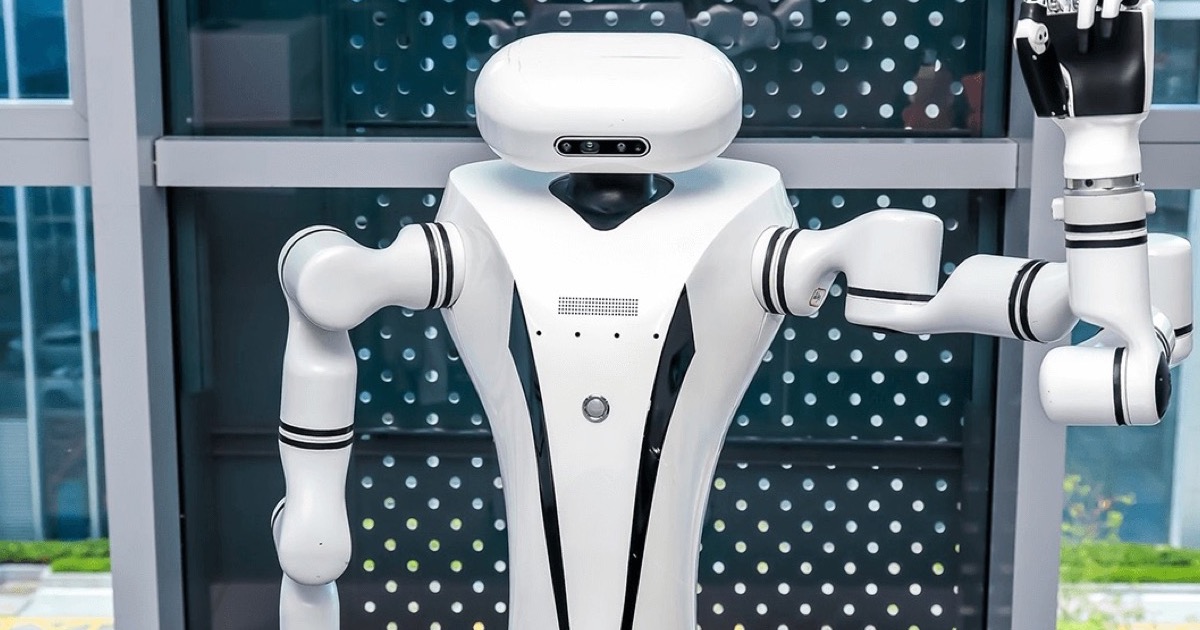
For context on how much weight to put behind the prediction: Spirit AI is a 300-person startup founded in 2024, which has raised over US$670 million and is valued at 20 billion yuan (US$2.9 billion), with JD.com among its investors. Its Moz1 wheeled humanoid — wheels instead of legs, a pragmatic choice that trades spectacle for reliability — is deployed in the tens on production lines at battery maker CATL and JD.com itself. Gao declined to comment on IPO plans.
It’s also worth noting this is the same company whose RoboArena benchmark run ended in removal for manipulation in August — an episode the company disputed, but which showed how high the pressure runs in China’s embodied AI race. None of that invalidates Gao’s argument about data; it does mean his timelines deserve the same scepticism as any founder’s.
The honest summary of Gao’s position: robot brains may be where large language models were in mid-2020 — capable of surprising things in narrow settings, useless outside them. The GPT-3 moment, if it comes in 2027, won’t put a robot in your kitchen. By Gao’s own accounting, that’s an eight-year wait at minimum — and founder timelines, as every robotics watcher knows, have a way of slipping right.