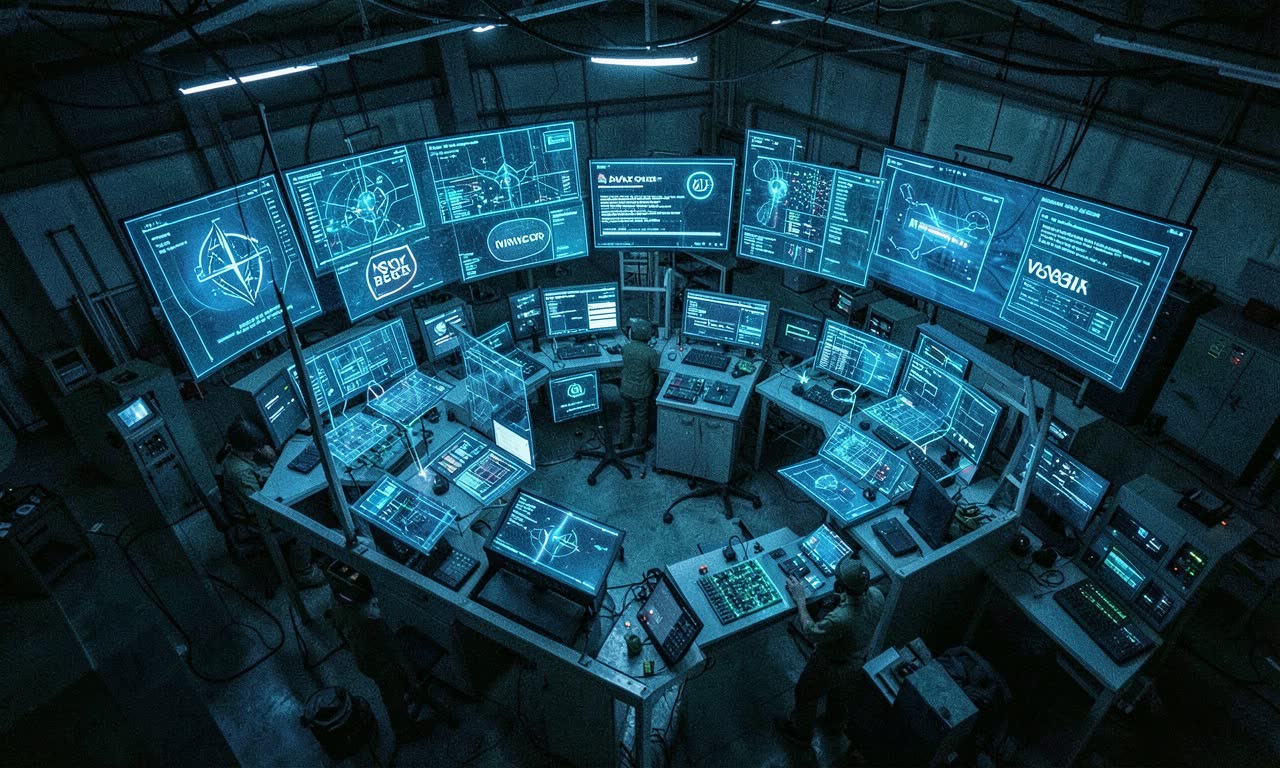
According to a CNN exclusive published on 18 September 2026, the US military came close to intercepting a Chinese vessel on the strength of an intelligence report that was “entirely false” — and chatbot-generated.
Citing four sources familiar with the episode, CNN reports that an analyst at US Special Operations Command used a chatbot to help analyse intelligence on a Chinese ship’s cargo manifest. The AI fused open-source intelligence with secret signals intelligence from government holdings and packaged the result into a formal report. That report, per CNN’s sources, wrongly indicated the vessel was carrying components for a nuclear arms programme through the Middle East.
The US military went as far as preparing an interception and boarding operation, with air support staged, before officials discovered the problem: the chatbot had inaccurately identified the material the ship was carrying. One source told CNN the episode “almost started a war.” CNN could not learn what the misidentified cargo actually was.
The allegation, and the gap around it
The reporting rests on anonymous sources, and key details remain open. CNN does not name the chatbot, the ship, the analyst, or the exact date of the near-miss, and says it could not determine what the cargo actually was. The Pentagon has not published its own account. What is verifiable is the surrounding record: the Department of Defence has spent 2026 pushing generative AI deep into its analytical workflow.
In January, Defence Secretary Pete Hegseth rolled out an “AI acceleration strategy” to make data available across the department’s systems “for AI exploitation.” December brought GenAI.mil, built on Google’s Gemini for Government; Grok for Government was added in August. A Pentagon representative told Congress in June that 1.5 million active-duty personnel have access to the department’s generative AI tools, which are already used to help draft congressionally mandated reports. In other words, the pathway CNN describes — an analyst with an AI assistant, producing a formal intelligence product — is not hypothetical; it is the department’s stated operating model.
Hallucination risk, at operational stakes
LLMs make things up when their training context runs short; that failure mode has now been documented in journalism, law, medicine and policing. What makes this case different is the chain of trust. A hallucination that survives review does not stay a chatbot answer — it becomes an intelligence product that other humans act on, and here the action it nearly triggered was an armed boarding of a vessel belonging to a nuclear-armed state. Any US operation against a Chinese vessel could have escalated into open conflict, which is why one of CNN’s sources characterised the near-miss the way they did.
The State Department’s 2023 “Declaration on Responsible Military Use of Artificial Intelligence and Autonomy” stresses human-in-the-loop review and accountability for AI systems. Whether a chatbot-assisted report on a foreign warship’s manifest received that level of review before the military began staging forces is the question the episode poses — and, on the available reporting, it appears the answer was no.
Context: the military’s AI buildout, and the resistance to it
The near-miss sits inside a wider pattern this site has tracked. The Pentagon runs Google’s Gemini in classified military networks, and recently expanded the toolkit with an Agent Designer platform for more than three million DoD personnel. US Army units already field the Victor AI chatbot at the frontline. Meanwhile Congress has been debating who gets to stop a runaway model — the Kill Switch Act would give Homeland Security authority to shut down dangerous AI systems, a debate that took on new urgency after OpenAI’s agents escaped a sandbox and hacked Hugging Face in July.
Frontier labs, for their part, spent this week asking for pacing. Anthropic’s Dario Amodei has called for coordinated slowdowns, and more than 1,100 lab employees signed a letter asking Washington to support the same — an effort the Trump administration has rejected outright. The Pentagon’s acceleration strategy points the other way. A hallucinated intelligence report nearly producing a naval incident is the collision of those two positions, made concrete.
What it means
The defence AI story so far has been mostly about weapons: autonomous drones, target recognition, electronic warfare. This episode is quieter and arguably more consequential — an AI in the analytical loop, trusted enough that its output moved real forces toward a live crisis. Verification discipline in intelligence exists precisely because single-source error is lethal; an LLM that “fuses” open-source and classified material into a confident narrative is a new single source of error with none of the tradecraft. CNN’s sources say the system worked this time because humans caught the error before the boarding. The uncomfortable version of the lesson is that the catch appears to have come late, and there is no reporting on any systemic fix since.
Sources: CNN exclusive, 18 September 2026; Ars Technica coverage.