China has prohibited SoftBank Group’s proposed $5.4 billion acquisition of ABB’s robotics division, the first time Beijing’s foreign investment security review has vetoed a robotics deal of this scale. ABB confirmed to The Robot Report that China’s Office of the Working Mechanism for Foreign Investment Security Review blocked the acquisition, with the Financial Times first reporting — citing people familiar with the matter — that regulators were concerned robotics data gathered in China could be transferred overseas and used to train AI models. ABB and SoftBank say they remain “in close dialogue and are working constructively on the transaction.”
🔍 THE BOTTOM LINE
The veto isn’t really about who owns robot factories. It’s about who owns the data robots generate. A robot arm in a Shanghai electronics plant produces exactly the kind of operational data that trains physical AI models — and Beijing has decided that stream flowing to a SoftBank-controlled company, with its deep OpenAI entanglement, is a national security question rather than a commercial one.
Why China has a say in a Japanese-Swiss deal
The acquisition, announced in October 2025, was SoftBank’s lever to buy its way into industrial robotics after years of betting on consumer and service robotics, from Boston Dynamics to 1X. But ABB Robotics is deeply embedded in China: the division took roughly US$928 million in orders from Chinese customers in FY2025, up from $662 million in 2024, and its Q3 2026 China business grew 32 percent. About 90 percent of the robots ABB sells to Chinese customers are built at its Shanghai factory, which employs thousands of workers.
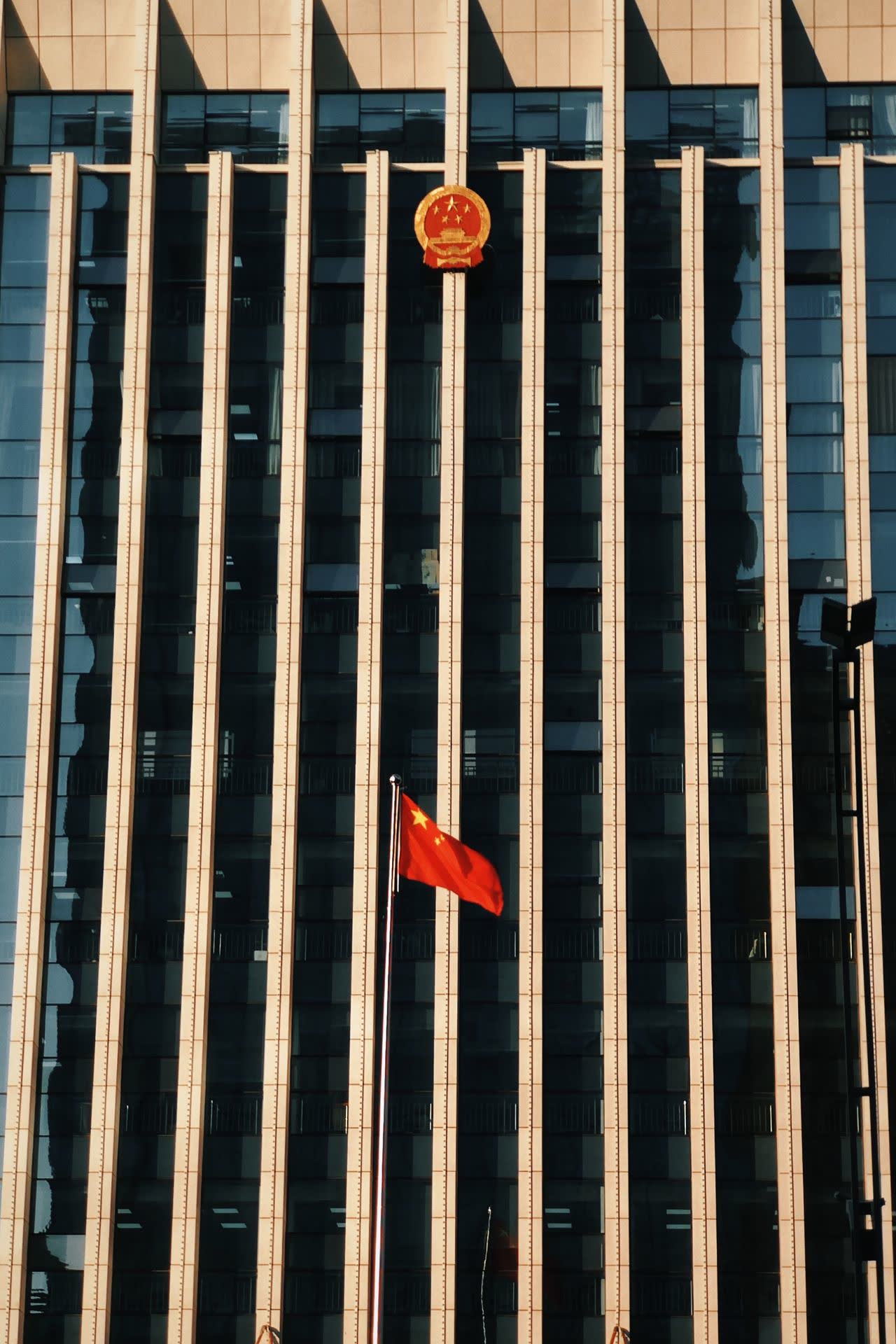
Because the transaction changes who controls those Chinese assets and operations, it required Beijing’s security-review clearance — the same mechanism China used in April to order Meta to unwind its $2 billion acquisition of AI startup Manus. As Retail News Asia reports, Beijing treats manufacturing hardware, motion controllers and precision assembly equipment as critical infrastructure rather than simple commercial assets, and the veto prevents SoftBank from taking direct ownership of ABB’s mainland facilities and operating licences.
The data question that killed the deal
The stated concern — as the FT first reported and Reuters confirmed — was that information generated by ABB’s robotics operations in China could be transferred outside the country and used to develop advanced AI systems. Reuters reporting carried by PYMNTS adds the detail that gives this story teeth: those concerns extended specifically to AI models developed by OpenAI, the company SoftBank has backed with tens of billions of dollars.
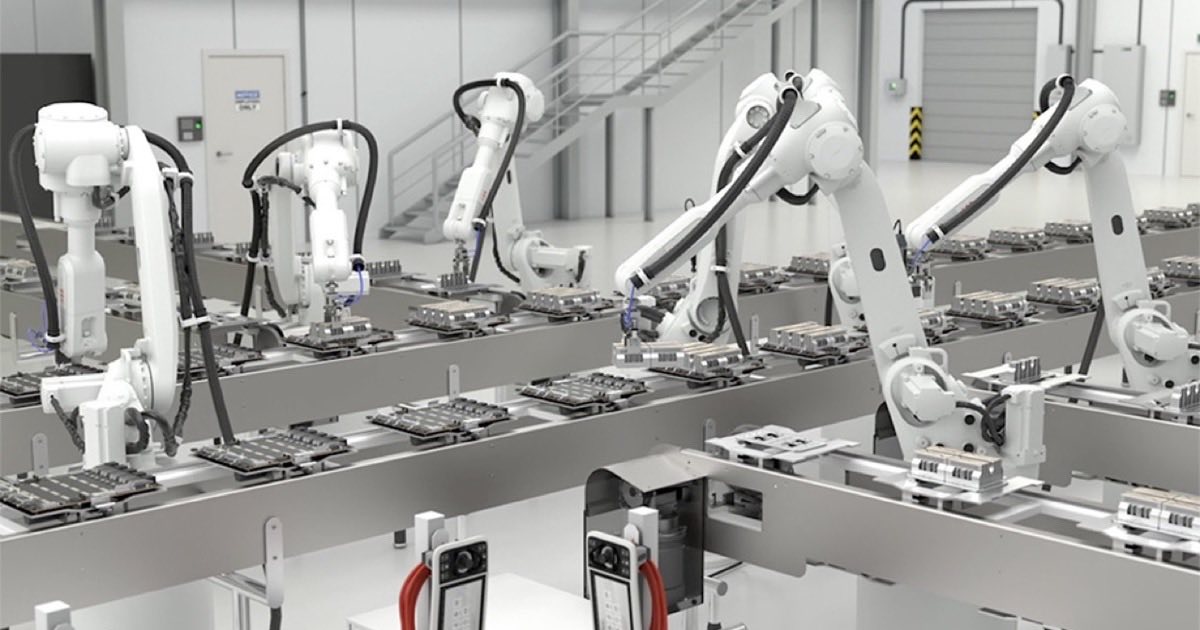
That framing turns an antitrust-shaped story into a data sovereignty story. An installed base of ABB arms across Chinese automotive lines, electronics factories and packaging plants is a sensor network as much as a machine fleet. Beijing has apparently concluded that SoftBank — whose chairman Masayoshi Son has staked the company on fusing artificial superintelligence with robotics — sitting upstream of that data pipeline is one bridge too far.
There is a deeper irony here, and it cuts both ways. Beijing’s own robotics flagship, Unitree, listed publicly this year on exactly the argument that physical AI is strategic infrastructure — and western regulators have been moving in the opposite direction with the same logic: the US FCC has already banned new Chinese-made humanoid and quadruped robots over cybersecurity and data concerns, and the White House’s Section 232 determination on foreign-made robots landed last week. The ABB veto suggests the era in which robotics M&A could wash across borders on commercial logic alone is closing in both capitals at once.
What happens to the $5.4 billion
Neither ABB nor SoftBank has terminated the deal. ABB’s statement Thursday said it had been informed by SoftBank that the review mechanism had prohibited the acquisition “in China,” and that both companies remained engaged in discussions. Reuters reports that China’s National Development and Reform Commission did not respond to a request for comment, and SoftBank declined to comment. Markets did react: SoftBank shares closed 6.8 percent lower in Tokyo on November 5, with ABB down about 1.1 percent.
The practical paths from here, as trade press has parsed them, are a carve-out that sells ABB Robotics without its China assets — an awkward structure for a division whose fastest-growing market is China — or abandonment of the deal and ABB proceeding with the standalone robotics listing it originally pursued before SoftBank’s October 2025 offer. Neither ABB nor SoftBank had announced a termination as of publication, and any resolution will still need the same security review that produced the veto.
❓ FAQ
Did China formally block the whole deal or just the China part? The security review prohibited the acquisition of ABB Robotics “in China” — blocking transfer of Chinese manufacturing assets and operational licences. Since those assets are integral to the division, the prohibition effectively stalls the full $5.4 billion transaction, though both companies say they are still working on it.
Why does China get a veto over a Japanese company buying a Swiss company’s division? Because the deal transfers ownership of major China-based assets — including ABB’s Shanghai factory, which builds most of the robots ABB sells to Chinese customers — China’s foreign investment security review applies to the transaction.
Is this really about AI training data? That is the stated rationale reported by the Financial Times and confirmed in Reuters coverage: concerns that robotics data could be transferred overseas and used to develop advanced AI systems, with specific reference to OpenAI models. Neither NDRC nor the security review office has published its reasoning.
What does this mean for industrial robot buyers in New Zealand? Little immediately — ABB’s operations outside China continue under its Swiss parent. The longer-term signal matters more: robotics is now treated as strategic infrastructure by major states, which will shape who can buy whom, and where robots and their data can flow, for years.
🔍 THE BOTTOM LINE
Governments on both sides of the Pacific have now decided the robotics industry is too strategic to trade on commercial logic alone. China’s veto of SoftBank’s ABB purchase, days after America’s Section 232 determination on foreign-made robots, marks the moment “physical AI” joined semiconductors as a sector where data sovereignty outweighs deal economics. The era of borderless robotics M&A is over.
📰 Sources
- The Robot Report
- Reuters (via PYMNTS)
- Financial Times
- Retail News Asia
- Supply Chain Digital Magazine