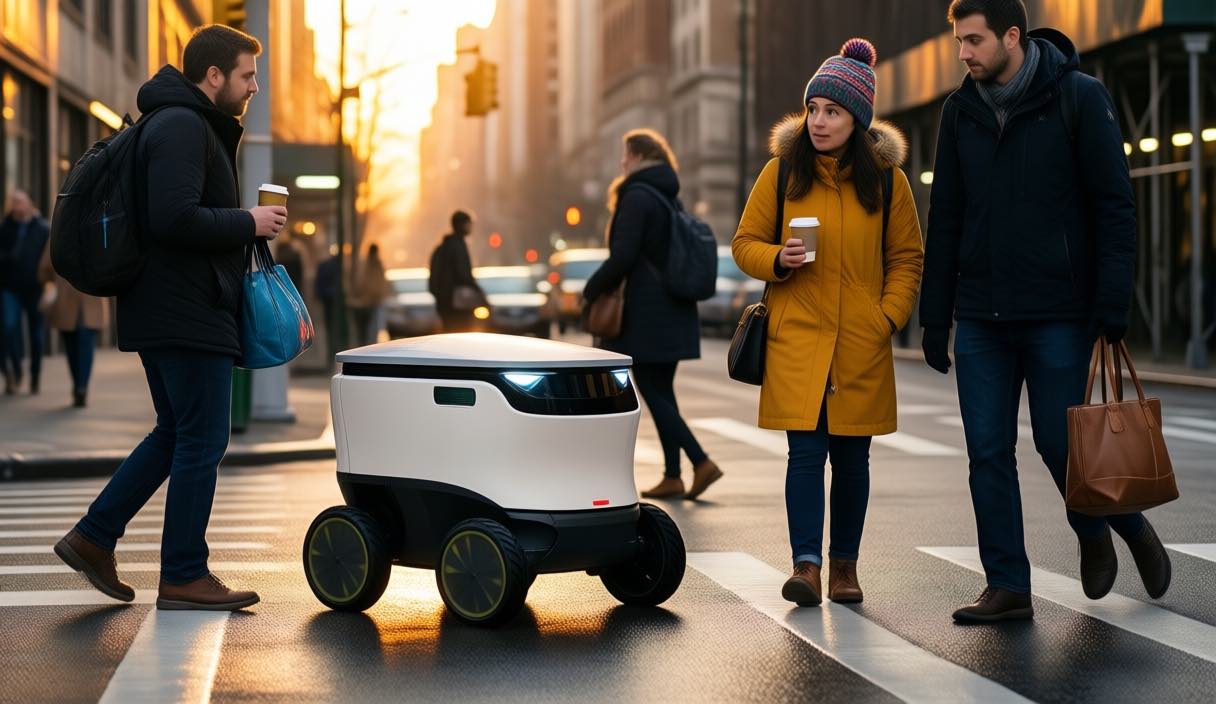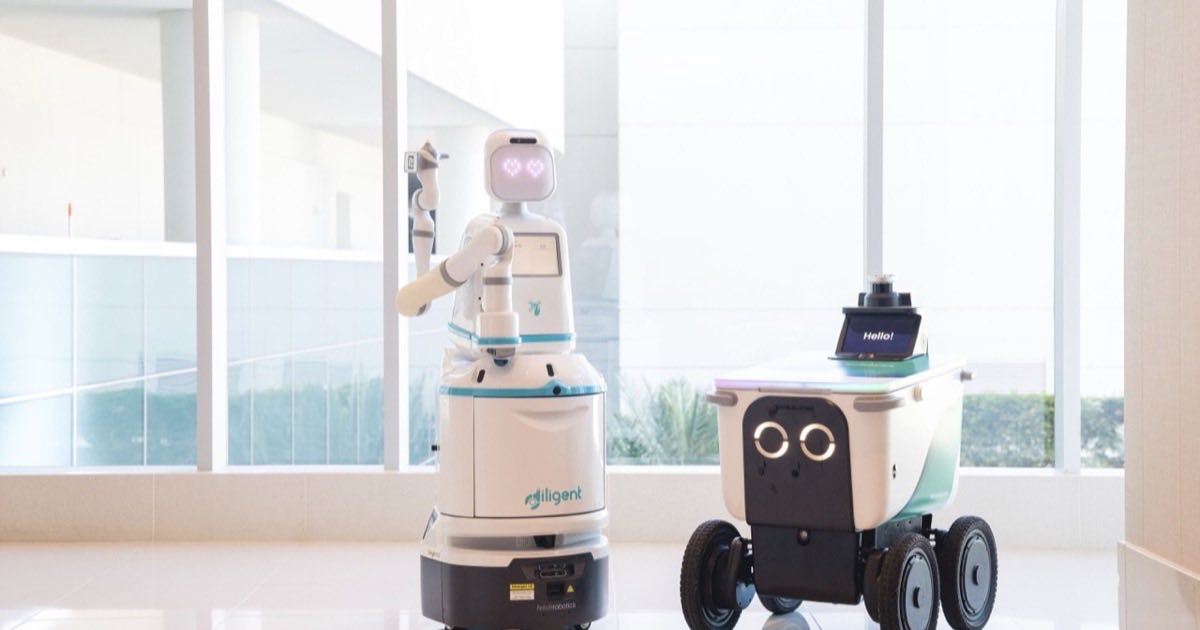
Serve Robotics, the Nasdaq-listed maker of googly-eyed sidewalk delivery robots, has launched a new business line called Physical AI Services — opening the connectivity, data and fleet-management technology it built for its own robots to other companies building robots for farms, warehouses, hospitals and construction sites. TechCrunch broke the news alongside the company’s Q3 earnings on November 5, with construction-autonomy startup Bedrock Robotics confirmed as a launch customer and T-Mobile partnering on edge AI compute.
🔍 THE BOTTOM LINE
A delivery robot company just told investors its future is selling infrastructure to robot companies that don’t exist yet at scale. It’s the Amazon playbook — survive the hard early years, then rent out what you were forced to build — and if Serve pulls it off, the most valuable thing it owns won’t be a single robot. It’ll be the petabytes of messy human-world data its fleet has already gathered.
Three products, one idea: robots need a nervous system
The new line ships as three products. Serve Link connects machines in the field to AI systems running in data centres — bonding Wi-Fi, LTE, 5G and satellite links so a robot stays connected across unreliable networks, with remote assistance for the moments autonomy can’t handle. Serve Data Curator turns petabytes of fleet sensor logs into searchable, visualisable data so engineers can find edge cases and failures without manually reviewing footage. And the Serve Data Catalog is a licensed library of real-world training data from Serve’s own sidewalk deployments — millions of hours of what streets actually look like, complete with the topology, infrastructure and unpredictable humans that models trained on showroom footage never see.
The connectivity piece is less sexy than a data catalog but might be the real product. “Any robotic application generally needs to connect the robots to some offline intelligence, whether it’s to collect data or do exception handling,” CEO Ali Kashani told TechCrunch. “It’s the connectivity piece that has to be really high performance. You need to be able to manage really unreliable networks and still reliably connect, and that’s what we solve.”
Kashani made the platform ambition explicit: “I kind of think of it as the AWS moment where we are taking the technology we’ve built for us, and we’re opening it up for more people to build on.” That playbook is straight from Amazon’s history — as Kashani put it, “when the technology is so nascent, you have got to build the end-to-end application because that’s the only way you know what to build,” then open the machinery once the market matures.
The money behind the pivot
The numbers explain why Serve is diversifying. Its Q3 2026 results, released the same day, showed revenue of $2.8 million — more than quadruple the year-ago quarter, but down from Q2’s $3.2 million — against a net loss near $59 million, with full-year guidance raised to about $12 million. The delivery business is growing, and Serve has deployed more than 2,000 robots across 40-plus cities and 27 hospitals — a footprint that has grown fast since its Grubhub-era sidewalk fleet and the Diligent acquisition it closed this year, but delivery alone is not closing a gap that wide. The company says Physical AI Services already powers thousands of vehicles across a dozen industries, including construction, mining and autonomous trucking — revenue that doesn’t show up in the delivery line at all.
Investors sent mixed signals on the same day’s news: SERV closed down more than 12 percent, then recovered most of that after hours — the market reading “new business line with real external customers” and “still burning $59 million a quarter” at the same time, which is precisely the tension.
The infrastructure gamble, and why it might work
There is a pattern here that keeps repeating in robotics. Agility just listed as the first pure-play humanoid maker, and its bear case rhymes with Serve’s: the hardware is real, the deployments are real, the revenue is thin. The companies that escape that squeeze tend to be the ones selling something every competitor needs regardless of which robots win. Nvidia did it with chips. Serve’s fellow Traveller alum Bedrock chose the autonomy-stack route; Serve is now betting it can own the connective tissue — the link layer and the data layer — for an industry where almost nobody has solved either.
For New Zealand’s small but real robotics scene, the interesting bit is what this says about where value pools. A startup here is unlikely to out-Serve Serve on delivery robots — but fleet connectivity, exception handling and training-data curation are problems every robot operator faces, and they are software problems before they are hardware problems. the AWS-of-robots race just got its first dedicated entrant with a Nasdaq ticker, a public data room, and — unusually for this sector — a founder who can name the historical analogy.
❓ FAQ
What exactly is Serve selling? Three things: Serve Link (robot-to-datacentre connectivity that bonds cellular, Wi-Fi and satellite links), Serve Data Curator (a tool for mining fleet data for training-worthy edge cases) and a Data Catalog of real-world sidewalk training data licensed from Serve’s own fleet.
Who is already paying? Bedrock Robotics, which builds autonomous systems for heavy construction equipment, is a named launch customer using Serve Link. Serve also has a partnership with T-Mobile to bring edge AI compute closer to robots, and says the platform already serves thousands of vehicles across a dozen industries.
Does this mean Serve is stopping delivery? No. Kashani emphasised the delivery and hospital robot businesses continue; the new line sells the infrastructure those fleets forced Serve to build.
How does this compare with Nvidia’s robotics stack? Nvidia sells the compute and simulation layer; Serve is selling the operational layer — connectivity, exception handling, data curation. They’re more likely to stack together than compete, which may be exactly the position Serve wants.
🔍 THE BOTTOM LINE
Serve’s pitch is that every robot company is quietly rebuilding the same plumbing — fleet connectivity, data pipelines, exception handling — and a company that has already run thousands of robots through real human spaces can sell it to them. If physical AI becomes an industry, the data layer could be worth more than any single robot. If it doesn’t, Serve has bought itself a second story to tell investors while delivery scales.
📰 Sources
- TechCrunch
- Unite.AI
- Stock Titan (GlobeNewswire release)
- Serve Robotics investor relations