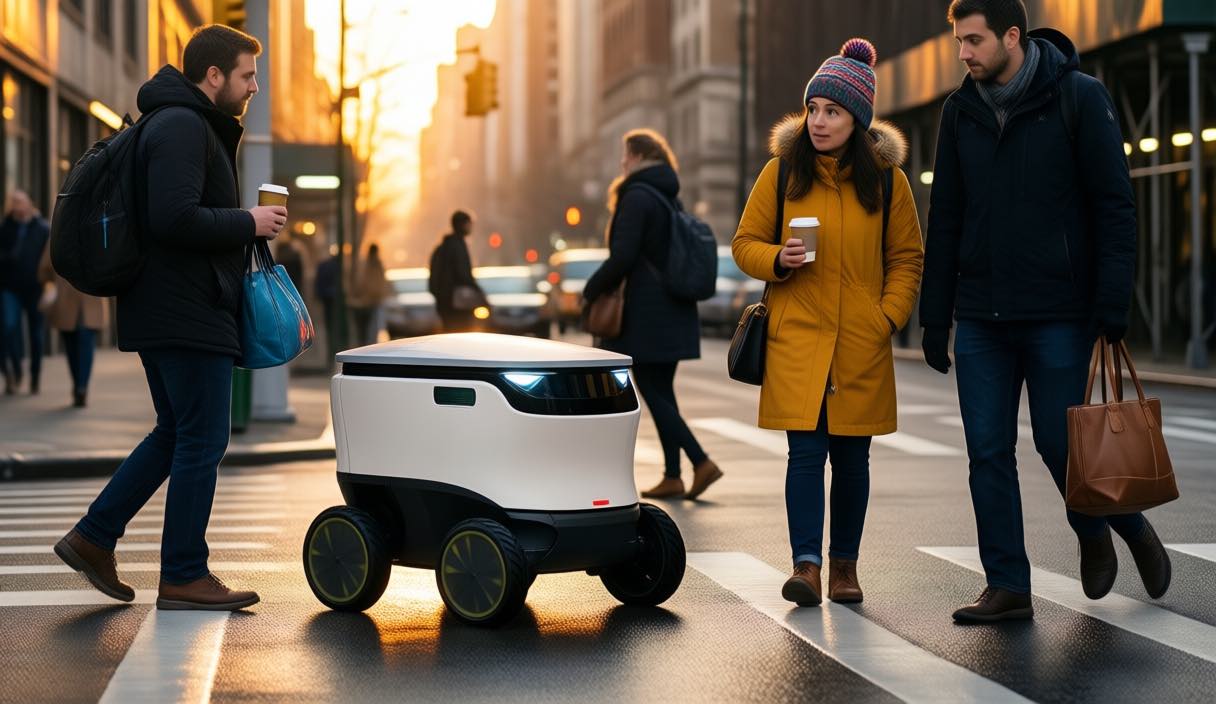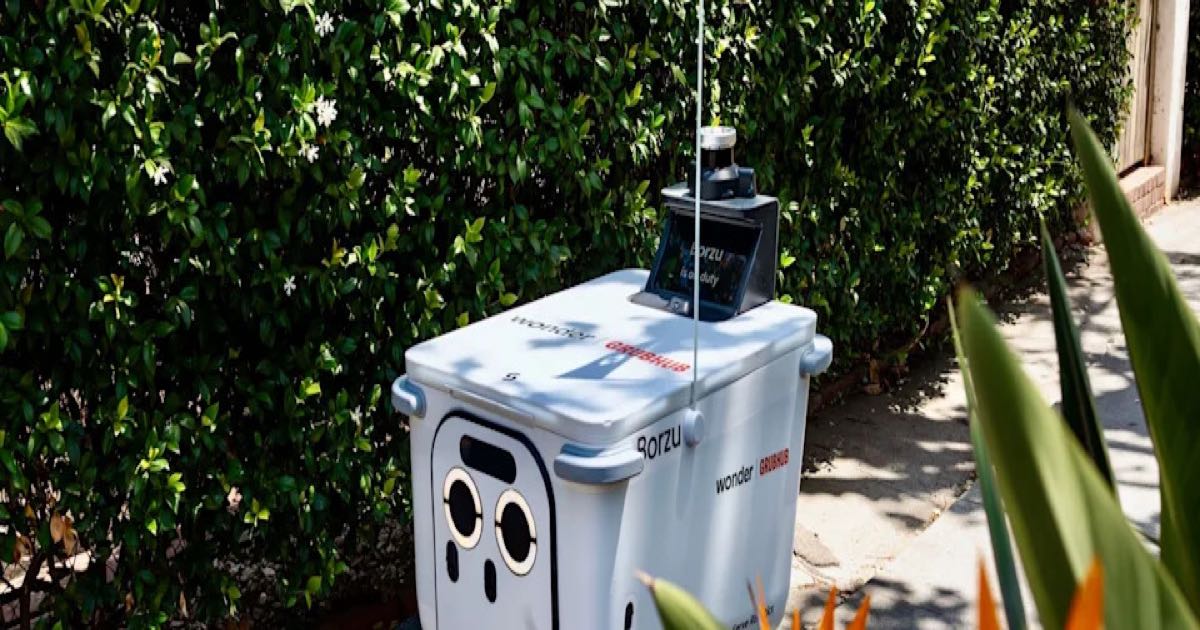
Serve Robotics announced a partnership with Grubhub on Monday that brings autonomous sidewalk delivery to the Grubhub marketplace, starting in Chicago and Los Angeles. The deal headlines a broader expansion that includes two new markets, a micro-depot model in Miami, a new countertop product for restaurants, and the rollout of Moxi 2.0 — a next-generation hospital robot from Diligent Robotics, a Serve company.
The full announcement covers a lot of ground. Here is what actually matters.
The Grubhub Deal
Serve’s robots will deliver from more than 100 participating Grubhub merchants in Chicago and nearly 200 in Los Angeles, with additional restaurants expected over time. The partnership also extends to Wonder — Grubhub’s parent company — with robot delivery available from Wonder’s Alexandria location.
This is not Serve’s first platform integration. The company already operates with DoorDash, and is simultaneously announcing launches in Washington, DC and San Jose — its seventh and eighth major US markets — both through the DoorDash partnership. The pattern is clear: Serve is positioning itself as the delivery infrastructure layer, not a consumer brand. Every platform integration widens the set of restaurants and neighborhoods the fleet can serve.
CEO Ali Kashani framed it as accumulation: “Every new partner puts more robots to work, and every delivery makes the whole fleet smarter.” That last clause is the real claim. Serve’s robots share a learning system — each delivery contributes data that improves the entire fleet’s navigation and autonomy.
Moxi 2.0: The Hospital Robot Grows Up
Diligent Robotics, which Serve acquired, is rolling out Moxi 2.0 to three health systems: Endeavor Health Edward Hospital in the Chicago area, Providence Saint John’s Health Center in Los Angeles, and Children’s Hospital Los Angeles.
The upgrade is substantial. Moxi 2.0 processes its surroundings up to 15 times faster than the original, has 10 times the onboard compute, improved autonomy and decision-making, upgraded sensors and storage, and can operate for up to 18 hours with 30 per cent faster battery charging. It also introduces what Diligent calls a “robotic World Model” — a fleet-level learning system where every robot improves from the collective experience of all Moxi units across 25-plus US hospitals.
The original Moxi spent five years in hospitals doing logistics work — fetching supplies, delivering medications, running lab samples. That operational runway matters. Hospital corridors are unpredictable: crowded hallways, opening elevator doors, shifting foot traffic. Five years of real-world data is the moat.
The Micro-Depot Strategy
Serve is launching its first micro-depot in Miami — a small-footprint site that handles robot staging, charging, dispatch, and maintenance without the build-out time of a full-scale facility. The concept is designed for rapid neighbourhood-level expansion: minimal infrastructure, fast standup, repeatable.
This is the kind of operational detail that gets buried in a multi-announcement press cycle but matters strategically. The bottleneck for sidewalk delivery robotics has never been the robot — it’s been the deployment infrastructure. If micro-depots work, Serve can enter new neighbourhoods at a fraction of the previous cost and time.
Beacon: Extending the Funnel
Serve previewed Beacon, a standalone countertop product that connects restaurants to the robot network. It has built-in cellular, alerts staff when a robot arrives for pickup, and requires nothing beyond a power outlet — no tablet, no additional hardware, no changes to existing systems.
This addresses a real friction point. Restaurants whose back-of-house setups cannot support a tablet integration have been excluded from robot delivery. Beacon is Serve’s answer to expanding the addressable market beyond tech-forward restaurants.
What This Means
The sheer breadth of this announcement is the signal. Serve is not a sidewalk delivery company anymore. It is a robotics holding company with a delivery fleet, a hospital robotics division, a hardware product line (Beacon), and an advertising business (Characters — interactive brand experiences on robots, launching with a talking hamburger-wrapped robot co-created with Grubhub).
Machine Dawn noted that Moxi 2.0’s deployment follows five years of operational refinement, positioning the robot for broader healthcare adoption. The delivery side is scaling through platform partnerships. The hospital side is scaling through fleet learning. Both are built on the same underlying thesis: robots get better the more of them you deploy.
The competitive landscape is not standing still. Bedrock Robotics deployed fully autonomous excavators to commercial construction sites this week. Figure 03 is expanding trials with BMW. Agility Robotics is entering public markets. But Serve’s approach — building a multi-robot, multi-industry ecosystem rather than chasing a single form factor — is a different bet. It says the value is in the fleet intelligence layer, not the hardware.
For New Zealand, sidewalk delivery robots remain a distant prospect — the population density and regulatory frameworks do not support them yet. But the Moxi 2.0 hospital model is more transferable. NZ District Health Boards facing staffing shortages and rising logistics costs in hospitals could be a natural early adopter market for healthcare robotics, if the economics translate.