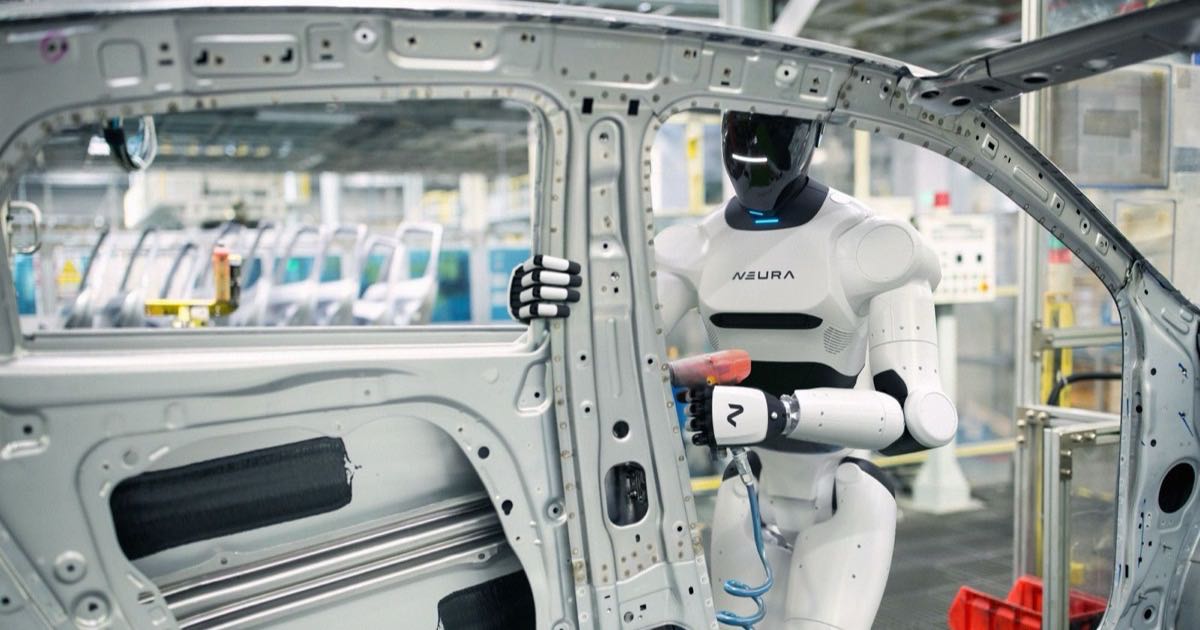
The International Federation of Robotics published its annual census on 24 September 2026, and the headline number is a record: 5 million industrial robots are now operational in factories worldwide, up 9% on 2024. Factories installed more than 600,000 new units last year, an 11% jump, and the stock has more than doubled in seven years.
🔍 THE BOTTOM LINE: Industrial robotics is not an emerging technology waiting for its breakthrough — it is a mature, compounding one. The question the 2026 numbers settle is where the growth lives: overwhelmingly Asia, increasingly the United States, and only fitfully Europe.
Where the robots actually are
China installed 354,000 units in 2025, a 20% year-on-year rise, which the IFR says accounts for 59% of every robot deployed on Earth that year. That is not a rounding-up of a leader — it is dominance of a kind no market has held before. Chinese manufacturers are also winning at home: domestic suppliers sold 195,000 units, a 55% domestic market share, outselling the foreign brands that once defined Chinese factory automation.
Japan, the country that invented industrial robot mass adoption, installed 36,219 units — down 19%, and enough to drop it to third place for the first time. The IFR expects “demand for robots is expected to grow slightly, but a major recovery is unlikely in the short to medium term.” South Korea was flat at 30,000 units, a market that has moved sideways since 2019.
The surprise is the United States, which passed Japan to become the world’s second-largest robot market: installations grew 12% to almost 38,500 units, the third-highest figure the IFR has ever recorded. Brazil grew 38%, driven almost entirely by Chinese carmakers building Brazilian plants — nearly 2,100 automotive robots, a 212% increase. Europe, by contrast, shrank: Germany fell 8%, Italy 11%, France 8%, Spain 15%.
The demand story underneath the census
“Industrial automation is progressing at high speed,” said Jane Heffner, president of the IFR. “The new mark of 5 million robots operational in factories worldwide is more than double the number seven years ago.”
The IFR’s own explanation is less about technology than arithmetic: labor shortages, supply-chain relocation after recent trade policies, and reshoring all push manufacturers toward machines. Jon Quick, CEO of Launchpad Build AI, put the hiring side bluntly to The Robot Report: “We have a problem where there are hundreds of thousands of open manufacturing and assembly jobs. It’s supposed to be 2 million by 2030. We just don’t have enough people willing to do these jobs.”
That is the same labor arithmetic driving Toyota’s plan to build 400,000 robots for its own factories, Japan’s two-decade demographic squeeze, and humanoid pilots on Chinese factory lines. The 5-million census is the aggregate of all of those individual decisions.
The IFR forecasts installations rising 9% to 655,000 units in 2026 and reaching 806,000 by 2029, with AI, machine vision, and easier programming expected to push automation into smaller factories that could never afford the old integration costs.
What it means for a country that builds very few robots
New Zealand manufactures roughly nothing in the robot sense — there is no domestic industrial-robot industry to protect and no scale of factory farming for robots to transform. But the report’s composition still matters here. The countries absorbing robots fastest are exactly the ones New Zealand exports to and competes with: China’s food and beverage processing, the US’s reshored assembly, Brazil’s auto plants. Automation is a cost curve, and the countries riding it hardest are lowering the cost of making things at a pace a labour-only economy cannot match.
The honest local takeaway is narrower: robots are not coming for New Zealand jobs in the way the global headline implies, because the deployment wave is flowing around us. The risk the report sketches is not displacement — it is irrelevance, factories being built where the robots already are.
FAQ
How many industrial robots are working in factories worldwide? A record 5 million, according to the IFR’s World Robotics 2026 report published 24 September 2026 — up 9% from 2024 and more than double the count of seven years ago.
Which country installs the most robots? China: 354,000 units in 2025, 59% of global installations. The US is now second with almost 38,500, having passed Japan (36,219, down 19%).
How fast is the market growing? Annual installations rose 11% to more than 600,000 units in 2025, and the IFR forecasts 655,000 in 2026 and 806,000 by 2029.
🔍 THE BOTTOM LINE
Five million robots is the clearest single number in industrial automation: adoption has doubled in seven years, the growth is concentrated in Asia and now the US, and the constraint is no longer capability or cost but people. Countries that automate are compounding; countries that don’t are choosing a smaller manufacturing future one hiring cycle at a time.
📰 Sources
- The Robot Report — 5 million robots are now at work in factories worldwide, reports the IFR (24 September 2026)
- International Federation of Robotics — World Robotics 2026 (published 24 September 2026)