Answer-First Lead
New Zealand will use AI as a “second reader” for breast cancer screening from early 2027, replacing one of the two independent radiologist reads currently required in mammogram assessment. Health Minister Simeon Brown confirmed procurement is underway, with around 270,000 people screened annually through BreastScreen Aotearoa. The government says AI will “support, not replace” clinicians — but one of the two human readers is being replaced. Privacy concerns about patient data have been acknowledged but not yet detailed.
🔍 THE BOTTOM LINE
AI is joining the breast cancer screening pipeline, taking over one of two human reads. The framing says “support,” the workflow says “replace.” Whether that’s progress or cost-cutting depends entirely on how well the AI performs.
What’s Happening
The NZ government first signalled interest in AI-assisted breast screening earlier this year, putting out a request for information in March. The tender closed on 4 March. Now procurement has moved to selecting a preferred tool for testing and validation, ahead of a planned rollout from early 2027.
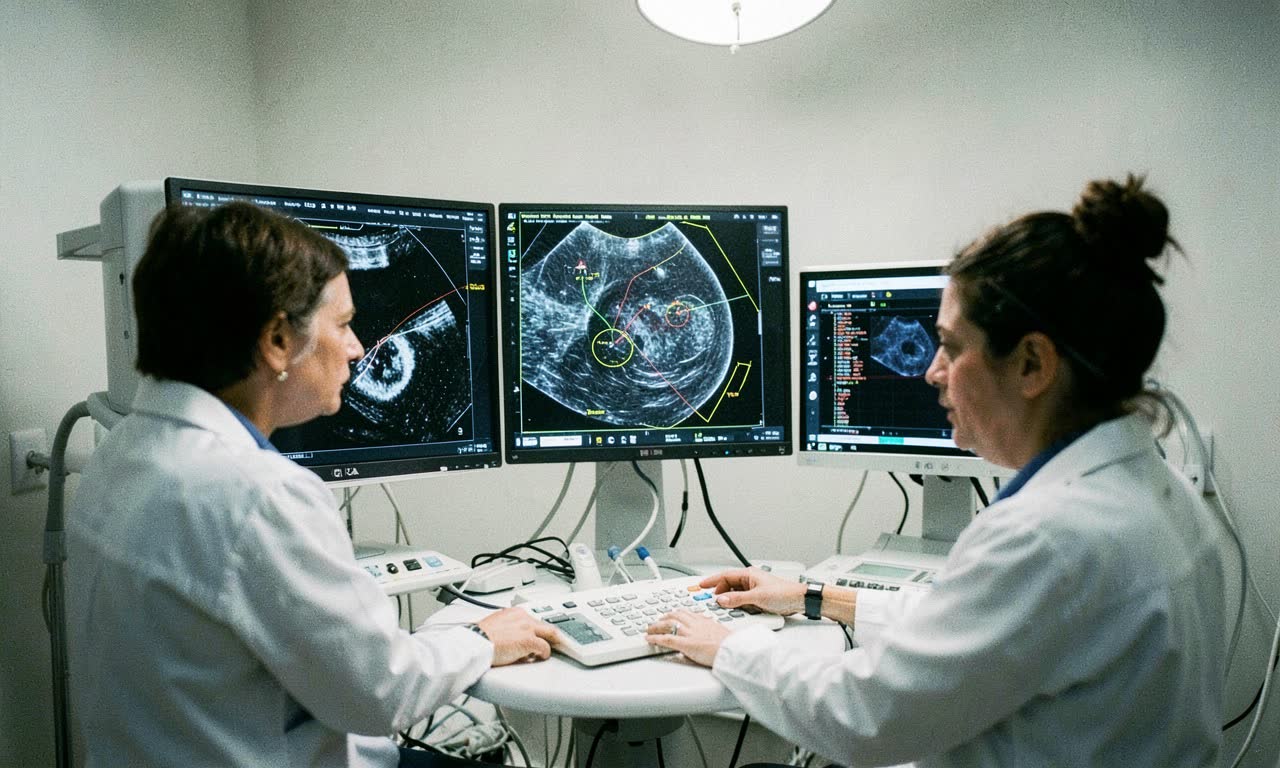
Here’s how it will work: currently, every mammogram in the BreastScreen Aotearoa programme gets two independent reads by qualified radiologists. Under the new system, AI will take on one of those reads. The other human read stays.
It’s a significant change to a screening programme that covers approximately 270,000 people aged 45-69 annually, with a phased age extension to 74 now underway. About 3,400 people are diagnosed with breast cancer each year in NZ — breast cancer is the most commonly diagnosed cancer among women.
Health Minister Simeon Brown: “Breast cancer is the most commonly diagnosed cancer among women in New Zealand, but we know that early detection significantly improves survival rates and treatment outcomes.”
True. The question is whether AI-assisted detection actually improves those outcomes compared to two human readers.
The Evidence for AI Screening
International studies have shown promising results for AI in breast cancer screening:
- Higher detection rates: Several large-scale European trials, including the SCanORIS trial in Sweden, found AI-assisted screening detected more cancers than standard double-reading by radiologists.
- Reduced workload: The same trials found that AI could safely reduce the screening workload for radiologists by up to 44% without missing more cancers.
- Consistency: AI doesn’t get fatigued, distracted, or inconsistent — it applies the same analysis to every scan.
But there are important caveats. The Swedish trials used AI as a triage tool — flagging the most suspicious cases for human review — not as a replacement reader. NZ’s proposed model is different: AI takes one reader’s slot entirely.
And the training data matters enormously. AI trained predominantly on one population’s mammograms may perform differently on another. NZ’s population, including Māori and Pacific peoples who have different breast cancer profiles and earlier onset, needs a tool validated on data that reflects that diversity.
”Support, Not Replace” — But One Reader Is Being Replaced
Brown’s language is careful: “Importantly, AI will support, not replace, our skilled clinicians. Every diagnosis and follow-up decision will continue to include qualified health professionals.”
But the workflow change tells a different story. One of the two human readers is being replaced by AI. The current standard is two independent human reads. The new standard will be one human read plus one AI read.
That’s not “support” in any meaningful sense — it’s a substitution. The remaining human reader still makes the final clinical decision, which is the safeguard. But the second pair of human eyes that currently serves as an independent check? Gone.
This isn’t necessarily wrong. If the AI is as good as or better than a second human reader, it’s a rational change — especially in a country with radiologist shortages. But the framing deserves scrutiny. “Support, not replace” is how you sell a substitution.
The Privacy Question
Brown said patient data privacy was “critically important” as Health NZ worked through procurement. He said patient advocates and the Breast Cancer Foundation had been involved in discussions about privacy and access.
What he didn’t say is what happens to the data. Mammogram data is some of the most sensitive health information there is. When an AI system processes 270,000 scans annually, it needs that data to function — and potentially to improve. Questions that remain unanswered:
- Where is the data processed? Onshore or offshore? If the AI tool is developed by an overseas company, does the data leave NZ?
- Is the data used for training? Does the vendor retain mammogram data to improve its model? If so, for how long, and who controls it?
- What about Māori data sovereignty? Health data for Māori is subject to specific governance expectations under Te Tiriti o Waitangi. Has this been addressed in procurement?
- Can patients opt out? If a patient doesn’t want AI reading their scan, can they request two human readers instead?
These are not hypothetical concerns. As the Spinoff recently argued, NZ has no AI-specific regulation and no individual rights to challenge AI decisions. The government’s approach to AI in healthcare needs more than a privacy reassurance — it needs governance specifics.
Cost and Timeline
Brown said details on cost would come after the procurement process. Health NZ is working with clinicians, radiologists, and screening providers through testing and validation.
The phased timeline:
- Now: Procurement underway, selecting preferred tool
- Testing and validation: Coming months
- Rollout: Early 2027
That’s an ambitious timeline for deploying AI in a national health screening programme. The testing and validation phase will be critical — and it needs to be genuinely independent, not vendor-driven.
Why This Matters Beyond NZ
NZ isn’t the first country to go down this path. The UK’s National Health Service has been trialling AI breast screening for years. Sweden’s trials have been running since 2021. But most deployments have been additive — AI alongside two human readers — not substitutive.
NZ’s approach of replacing one human reader is more aggressive. If it works — if detection rates hold or improve, and false positives don’t spike — it becomes a model for other health systems facing radiologist shortages. If it doesn’t, it becomes a cautionary tale.
The stakes are literal: breast cancer screening is about finding cancer early enough to treat it. A false negative — cancer missed by the AI — isn’t a metric. It’s a person.
❓ Frequently Asked Questions
Q: Will AI replace all human readers? A: No. The current plan is for AI to replace one of two human readers. Every mammogram will still get at least one human read, and all diagnosis and follow-up decisions remain with clinicians.
Q: Can I request two human readers instead of AI? A: The government hasn’t addressed this. The question of patient opt-out from AI screening is an important one that needs a clear answer before rollout.
Q: What AI tool is being used? A: Procurement is still underway. Health NZ hasn’t named the preferred vendor or tool yet.
Q: Is this safe? A: International evidence suggests AI-assisted screening can be as effective as human double-reading. But most trials have used AI alongside humans, not replacing one. NZ’s approach is more aggressive, and the evidence for the specific substitution model is thinner.
Q: What about my data? A: The Minister says privacy is “critically important.” Specifics about data processing, storage, training use, and Māori data sovereignty haven’t been detailed yet.
🔍 THE BOTTOM LINE
AI is joining NZ’s breast cancer screening programme, and it’s taking one of the two seats at the reading table. The evidence for AI-assisted screening is encouraging, but NZ’s model — replacing a human reader rather than supplementing both — is bolder than what most countries have tried. The “support, not replace” framing papers over a genuine substitution. Whether that substitution improves outcomes or just saves money depends on the tool they choose, the data it’s trained on, and whether the validation process is rigorous enough to catch the errors that matter. Breast cancer screening is not the place to discover that your AI was trained on the wrong population data. Get that right, and this is progress. Get it wrong, and it’s a story about saving money at the cost of finding cancer.
Sources
- RNZ
- NZ Government