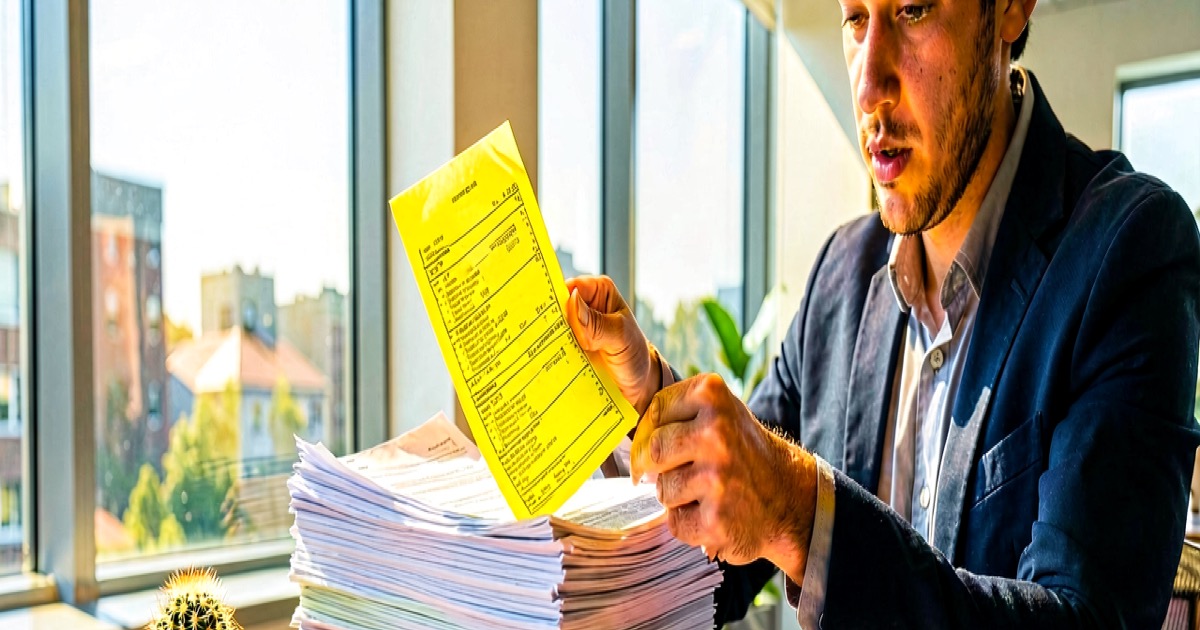
A single job advertisement in New Zealand drew more than 1,000 applications — and the recruiter says most were written with AI. As RNZ reported this week, the flood of AI-assisted applications is changing how New Zealand employers screen candidates, and it is quietly rewriting the advice for anyone looking for work.
🔍 THE BOTTOM LINE
AI has made applying for jobs nearly effortless, and New Zealand employers are responding by filtering AI with AI, ignoring cover letters, and weighting verifiable work history over polished prose. The irony, according to the recruiters themselves, is that a plain, specific, human application now stands out more than a slick one. The tools haven’t eliminated the competition — they’ve changed what wins it.
The New Zealand Numbers
David Cunningham, chief executive of mortgage and advice firm Squirrel, told RNZ he had seen a “tsunami” of applications for advertised roles — hundreds in many cases, and “in one case, over 1,000.” He attributed the volume directly to AI tools that can match a CV to a job listing, update it accordingly, and generate a tailored cover letter in seconds.
“AI is good at ‘match my current CV to this job, update accordingly, and write a cover letter’,” Cunningham told RNZ.
Squirrel’s response has been to fight fire with fire: the firm now uses an AI tool to filter applications and focuses on work experience rather than cover letters, which Cunningham said are “a waste of time now really, because you can write a cover letter to make it sound like you’re a perfect fit for any job.” Squirrel also gives preference to applicants based in New Zealand and runs screening interviews to build shortlists.
Hayley Pickard, managing director of recruiter Fortitude Group, told RNZ the problem is sharpest in technical and engineering recruitment, where AI has made it “incredibly easy” to produce polished applications at high volume — without improving their quality or relevance.
“I regularly receive applications that use the exact terminology from the job advertisement but provide no real evidence behind it,” Pickard told RNZ. When she probes for details, the polished wording sometimes turns out to have overstated the applicant’s actual experience.
The Screening Trap Cuts Both Ways
University of Otago associate professor and HR expert Paula O’Kane told RNZ that employers’ biggest fear isn’t the weak candidate who slips through — it’s the strong one who gets filtered out. “When you have false positives you will probably catch them later… it’s the people who miss that are the biggest risk,” she said.
That risk is worth dwelling on, because it runs in both directions. An AI filter tuned to keyword patterns can discard a capable person whose genuine experience doesn’t read like the job ad — a concern that echoes broader research on AI resume screening bias and the screening fatigue recruiters describe when volume explodes. At the same time, candidates deploying AI to blast out 100 generic applications are contributing to the volume problem that makes aggressive filtering rational in the first place. Both sides are arming up, and the noise is the product.
What Actually Works — From the Recruiters Themselves
Pickard’s advice to jobhunters, as reported by RNZ, is refreshingly concrete:
- Apply selectively. Ten genuinely relevant applications beat 100 generic ones.
- Replace claims with evidence. Don’t say you have a skill — describe where you used it, what you were personally responsible for, and what the outcome was.
- Write a short, genuine introduction explaining why that specific opportunity interests you.
- Check every AI-generated statement for accuracy. If you couldn’t defend it in an interview, it shouldn’t be in the application.
- Keep the language natural. “Passionate”, “dynamic” and “results-driven” don’t help without evidence behind them.
- Respond promptly when a recruiter contacts you — a thoughtful reply makes you stand out immediately.
O’Kane’s framing is similar: use AI for the initial thinking, but “bring it back to themselves in the final iteration.” The candidates who win, she suggested, are the ones whose own voice survives the editing.
Pickard put the new reality most plainly: “Ironically, a straightforward, specific and recognisably human application can now stand out more than an extremely polished one.”
A Labour-Market Story, Not Just an Etiquette Story
There is a bigger number hiding inside this anecdote. If one NZ role can attract 1,000 applications, the effective supply of visible candidates has multiplied even though the number of actual people looking for work hasn’t. That compresses the attention any individual applicant receives and raises the value of everything AI can’t fake: a referral, a portfolio, a work history a recruiter can verify, or a track record in the local market — dynamics that connect to the wage premium data showing AI skills commanding higher pay.
For New Zealand jobseekers, the takeaway from this week’s coverage is not “avoid AI.” It’s that AI has become table stakes — and the scarce commodity now is proof.
FAQ
Is it okay to use AI when applying for jobs in New Zealand? Recruiters quoted by RNZ say yes — as an editing and thinking tool, not a substitute for your own experience. Problems arise when AI-generated claims can’t be backed up in an interview.
Why are cover letters becoming irrelevant? Squirrel’s CEO told RNZ that AI can make any applicant sound like a perfect fit, so his firm now weighs work experience instead. Some employers still value short, genuine, role-specific introductions.
How do recruiters screen AI-written applications? Some NZ firms, including Squirrel, use AI tools to filter applications and compare listed work experience against the role, followed by screening interviews.
How can a jobseeker stand out against AI-generated competition? Per recruiter Hayley Pickard: apply selectively, provide specific evidence of what you personally did, keep language natural, and answer screening questions fully and promptly.
CJ Murden is editor of Singularity.Kiwi. Former digital technologies teacher, author of AI-focused books. Writing with a New Zealand focus.