OpenAI just turned ChatGPT from a chatbot that answers questions into an agent that does your job. The new ChatGPT Work, announced July 9, can take on complex, multi-step tasks across your connected apps and workflows — building finished spreadsheets, slide decks, documents, and web apps — and stay with a project for hours while you review and steer.
🔍 THE BOTTOM LINE
ChatGPT Work is OpenAI’s most aggressive push yet into the agentic AI market. It’s not a better chatbot — it’s a worker. The agent can pull data from Slack, Google Drive, Outlook, and Salesforce, turn it into deliverables, and even run on a schedule while you sleep. Combined with GPT-5.6’s rollout the same day, this is OpenAI’s answer to the question every enterprise is asking: “Can AI actually do the work, not just talk about it?”
What ChatGPT Work Actually Does
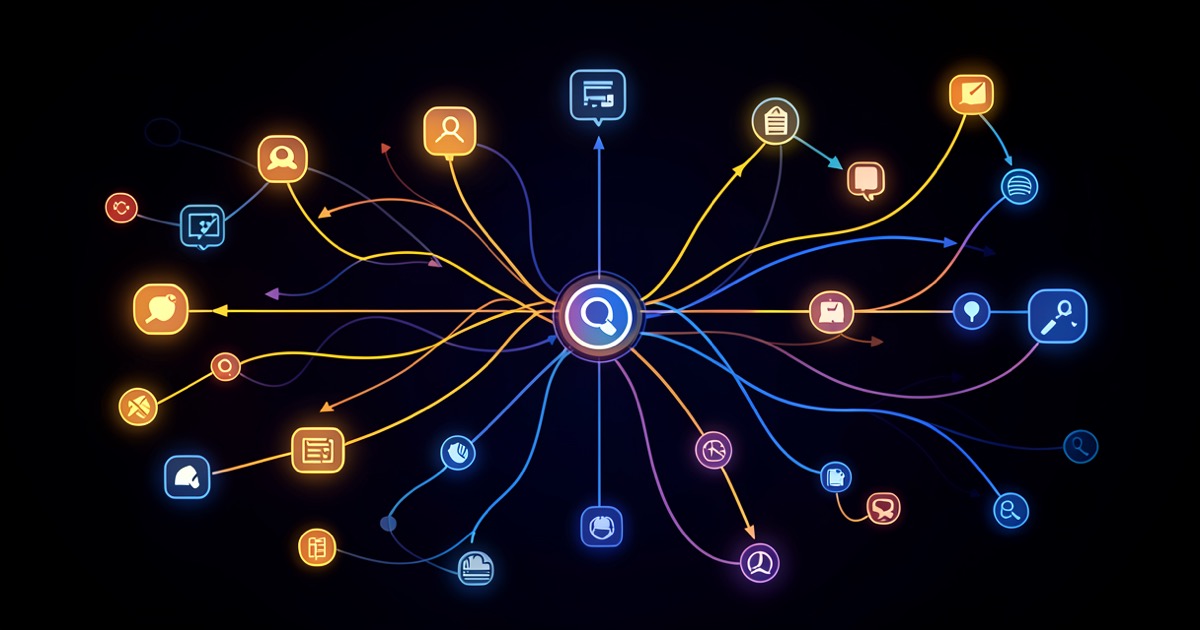
The agent operates across three surfaces: web, mobile, and a rebuilt desktop app that merges the old Codex coding agent with the new Work mode. The core capability is cross-app orchestration — ChatGPT Work connects to your tools via a plugins directory (Google Drive, SharePoint, Teams, Slack, Salesforce, Adobe Acrobat, email, calendars) and can pull context from all of them simultaneously.
You can ask it to “turn customer research into a campaign brief, use that brief to create marketing assets, and adapt those assets for different markets” — and it carries context through every step. According to Bloomberg’s reporting, the agent is “meant to field a wider range of complex tasks for hours at a time, bolstering its push to appeal to more business professionals.”
The desktop app goes further with Computer Use — ChatGPT can literally click, type, and move files on your machine to execute tasks in the background across your local apps. A built-in browser lets it gather information from the web and refine web-based work in one place.
Scheduled Tasks: The Autonomy Question
This is where it gets interesting — and slightly unnerving. ChatGPT Work includes Scheduled Tasks, which let you set up recurring actions:
- Review new Slack messages each week and refresh a meeting agenda
- Check websites and dashboards every morning, summarize what changed
- Monitor customer feedback and turn recurring themes into prioritized product ideas
- Update a presentation when new feedback arrives by email
The agent keeps running while you’re away. You can ask it to start a task from your phone, review a draft on the go, and pick up the same work on desktop when you return. OpenAI says “you remain in control” — you decide what it can access, when it should check in, and when it needs your approval before taking action.
GPT-5.6 Under the Hood
ChatGPT Work is powered by GPT-5.6, which launched the same day. OpenAI says GPT-5.6 makes ChatGPT “state of the art at reasoning through multi-step tasks and creating materials that follow your templates and reference files.” More than 5 million people use Codex weekly, and over 1 million now use it for work outside software development.
The auto-review safety layer is worth noting: OpenAI’s most advanced models review important actions involving connected tools and APIs before they execute. During adversarial red teaming, auto-review reportedly blocked 100% of attempts to extract protected data, including attacks the reviewing model hadn’t seen during training.
Enterprise Governance and the Price Question
ChatGPT Work follows the same usage structure as Codex — more complex tasks consume more of your plan’s included usage. Enterprise and Edu admins can set spend controls, workspace-level defaults, group limits, and individual overrides. The Compliance API provides visibility into ChatGPT Work conversations and actions at scale.
Rolling out today for Pro, Enterprise, and Edu plans. Plus and Business plans get it “over the next few days.” The desktop app (with Chat, Work, and Codex) is available globally for every plan including Free — a notably aggressive distribution strategy.
The Competitive Landscape
This isn’t happening in a vacuum. Microsoft is already replacing OpenAI and Anthropic with its own AI in Excel and other products, and Cognition’s SWE-1.7 nearly matches frontier coding models at a fraction of the cost. The agentic AI space is crowded: Anthropic has Claude Cowork, Google has Gemini Workspace integrations, and a wave of startups are building specialized agents for specific workflows.
What sets ChatGPT Work apart is distribution — 5 million weekly Codex users, a unified desktop app, and plugins that span the major enterprise tool stacks. The question is whether the execution matches the ambition. OpenAI’s own sales team reportedly used ChatGPT Work to turn a discovery conversation into a tailored proof of concept within 24 hours — a process that “normally takes weeks.” In finance, it reduced month-end close and forecasting “from days to hours.”
❓ FAQ
Will ChatGPT Work replace my job? OpenAI’s framing is “delegate repetitive tasks to focus on work that matters.” In practice, if your job is primarily assembling spreadsheets, building slide decks from templates, or monitoring Slack for updates, ChatGPT Work is designed to do exactly that. The real question for knowledge workers is what the “work that matters” looks like when the mechanical layer is automated.
How is this different from regular ChatGPT? Regular ChatGPT answers questions and generates text. ChatGPT Work connects to your apps, pulls data across them, creates finished deliverables (sheets, slides, docs, web apps), runs on a schedule, and can use your computer via the desktop app. It’s the difference between a search engine and an employee.
What about data privacy? Enterprise and Edu admins can manage who has access, what company context ChatGPT can use, which tools it connects to, and what actions it can take. Auto-review checks important actions before execution. The security foundation is built on ChatGPT Enterprise’s existing compliance framework.
Is this available in New Zealand? The web and mobile rollout is global for Pro, Enterprise, and Edu plans. The desktop app is available globally for Mac and Windows. No regional restrictions were mentioned in the announcement.
🔍 THE BOTTOM LINE
ChatGPT Work is the clearest signal yet that the AI industry’s ambitions have moved beyond chatbots to autonomous agents that operate inside your workflow. OpenAI is betting that the combination of GPT-5.6’s reasoning, cross-app plugins, scheduled tasks, and free-tier desktop distribution will make ChatGPT the default agentic layer for enterprise work. Whether businesses trust an AI agent with their Salesforce credentials and email inbox is the adoption question — but the technology is here today, not in five years.