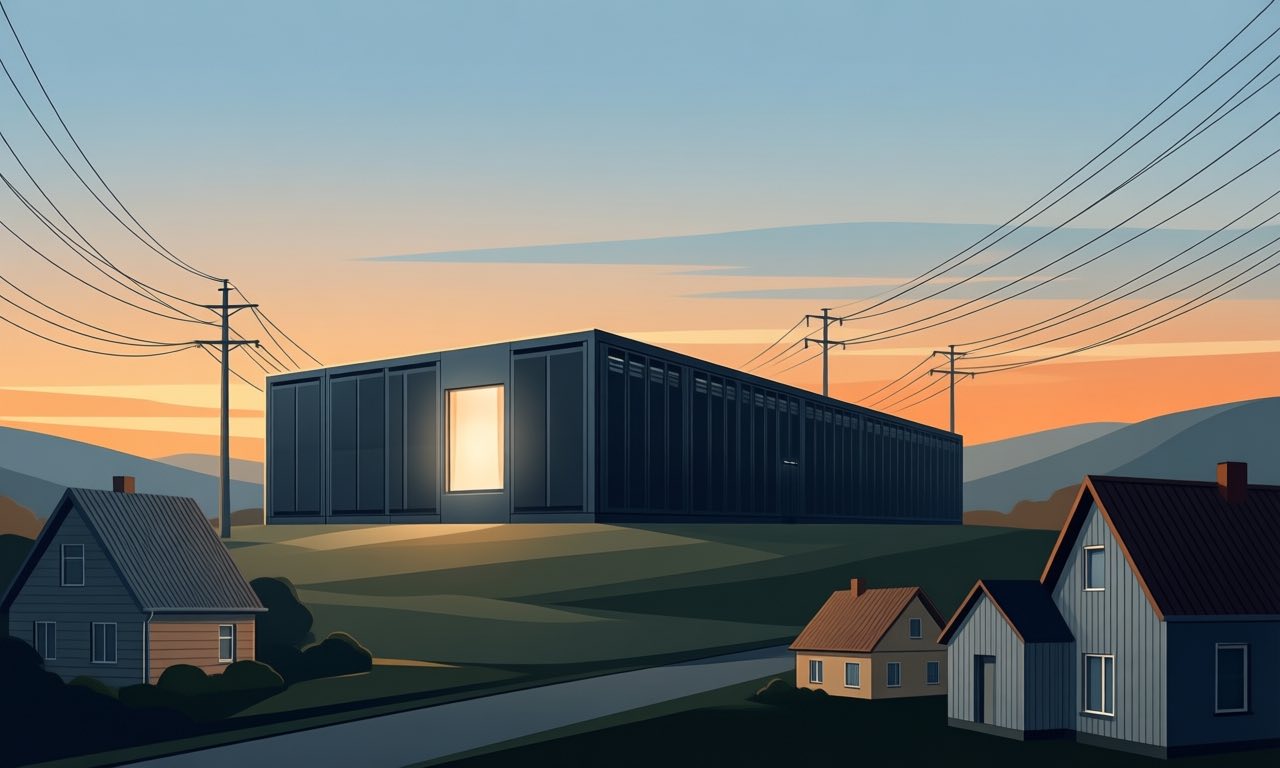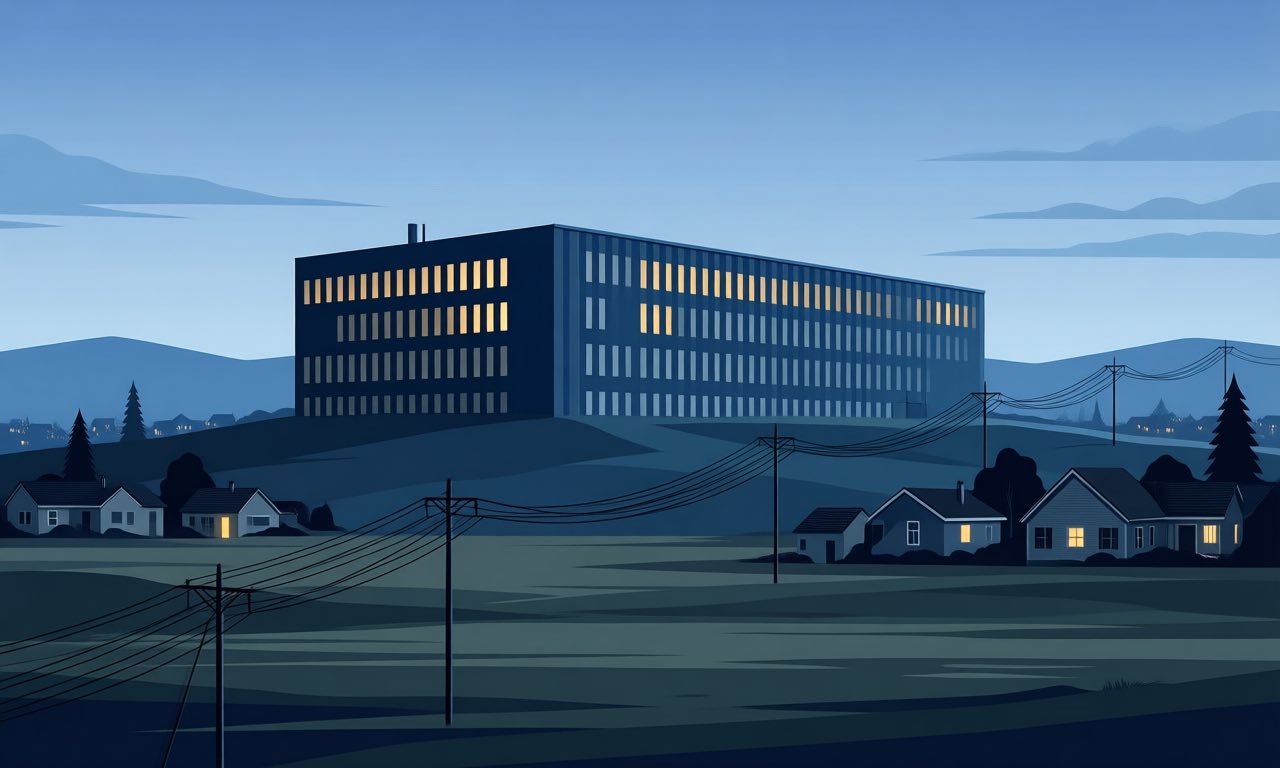
Two days after American voters delivered what CNBC called a stinging rebuke of data centres at the ballot box — 40 of 41 local measures went against the industry — OpenAI has published its answer: a National Community Compact and a Compute Campus Policy Blueprint that the company says will govern every campus it owns and operates. The pledges include paying the full cost of the electricity its campuses draw, publishing construction plans and independent noise studies before operations begin, developing water plans with published site-level usage, and — the headline item — no longer using non-disclosure agreements with public officials beyond narrow security and trade-secret carve-outs.
The timing was not subtle. Bloomberg Law reported the framework’s release as a direct response to “an outcry” after voters backed candidates at all levels of government supporting curbs on data centres. Chief Global Affairs Officer Chris Lehane told reporters the blueprint had been in the works since August, but the company published it two days after Tuesday’s midterms, in which per Reuters’ account of the charm offensive, Democrats flipped governorships in Texas, Georgia and Ohio on candidates promising to pause new data-centre permits. Exit polling found 56 per cent of voters said AI data centres were a crucial or major factor in their congressional vote. Lehane’s framing: the commitments create “a very high floor in terms of how people move forward,” with work already done before the new Congress sits in late January.
What is actually in it
Beyond the NDA pledge — a real reversal for an industry that negotiated site deals behind closed doors for years — the OpenAI announcement commits to financial assurances so other electricity customers are protected if a project is delayed or cancelled, load-smoothing so campuses can cut demand when the grid is strained (the Georgia agreement allows Georgia Power to curtail OpenAI’s supply by up to 1,000 megawatts), and annual public reporting on hiring and apprenticeships alongside local investment priorities selected with residents. The company points to existing examples: a $4.8 million grant for free school meals for all 14,000 students in Effingham County, Georgia, shaped by residents, and a $6 million childcare commitment in Pike County, Ohio.
Politico’s coverage of the framework notes the second half is the more consequential ask: OpenAI wants state utility commissions to require all large electricity customers to cover the costs they add to the grid, wants lawmakers to mandate public reporting on water, energy, noise and hiring, and wants tax-incentive terms made public with clawback provisions when developers fall short. Data Center Dynamics’ analysis flagged the obvious gap too: the compact covers only sites OpenAI owns and operates, leaving unclear how much of its leased and partner-built capacity — much of the Stargate buildout — falls under any of it.
The read: codify your own concessions
There is a sharp commercial logic here that the diplomatic language does not advertise. OpenAI can afford the terms it just promised — it has the balance sheet, the $600 billion compute target it has told investors about, and the biggest podium in the industry. Its dozens of smaller rivals funding hyperscale-adjacent campuses on thinner margins cannot necessarily absorb full power-cost recovery, published noise studies, clawback-backed incentives and a resident point-of-contact regime. If the blueprint becomes law, OpenAI will have written rules that function as a compliance moat, the way large incumbents have historically welcomed regulatory floors in industries from food safety to emissions.
The political logic is equally legible. With Democratic governors now holding permit veto power in Texas, Georgia and Ohio — three states anchoring the US data-centre map, and New York already through the door with the first statewide moratorium — OpenAI needs those administrations to see it as the compliant builder, not the opponent. Lehane’s “these projects are not a black box in a pasture” line to reporters is aimed precisely at the exit-poll majority that voted as if it were. (We covered the vote itself, and the $173 million ad war behind it, yesterday, and OpenAI’s October election war room setup reads, in hindsight, as the rehearsal for this week’s pivot.)
For New Zealand and other small-grid countries watching the US pendulum swing from permissive to conditional in one election cycle, the durable lesson is that community consent is now a priced input, not a press release. The next test is behavioural: whether OpenAI’s first campus under this compact discloses water and power figures that embarrass its neighbours, or sets the floor it claims to want. The company publishes its first annual compact reports within twelve months — that is when the pledge meets the spreadsheet.
❓ FAQ
Did OpenAI’s NDAs change apply retroactively? No. The pledge covers future negotiations and sites OpenAI owns and operates; the company said proprietary, security-related and competitively sensitive information stays protected under narrow carve-outs. Past agreements with public officials were not addressed in the announcement.
Does this bind the whole AI industry? Not by itself — these are OpenAI commitments plus a policy ask. The blueprint proposes that governments make such rules mandatory, including full utility-cost recovery and public reporting; until legislatures act, rivals face only the competitive and PR pressure of OpenAI’s example.
What did the midterms actually change for data centres? Of 41 local data-centre ballot measures, all but one went against the industry (per Ballotpedia counts cited by CNBC and Reuters), Democrats who campaigned on permit pauses won governorships in Texas, Georgia and Ohio, and exit polls found 56 per cent of voters calling AI data centres a major factor in their vote.