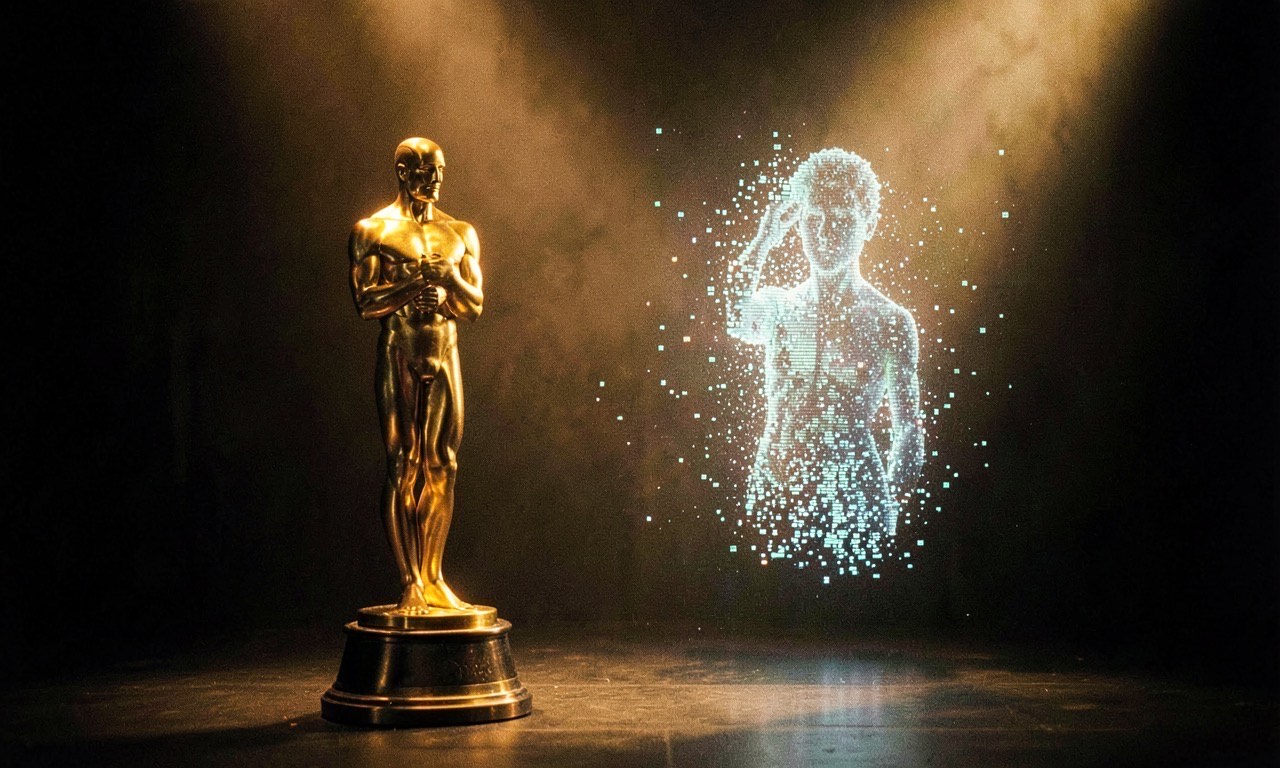
The Academy of Motion Picture Arts and Sciences just made it official: AI-generated performers and AI-written screenplays cannot win Oscars. No gray area. No “it depends.” Just a flat, unambiguous “no.”
The rule change, announced Friday as part of a broader set of updates for the 99th Academy Awards (March 2027), states that only performances “demonstrably performed by humans with their consent” are eligible for acting awards. And only “human-authored screenplays” qualify for writing categories. The Academy also reserves the right to request detailed information about any AI use in a submission.
Why This Matters Now
This wasn’t a theoretical exercise. The rule was prompted in part by the posthumous completion of Val Kilmer’s performance in Deep as the Grave using AI — a move that raised uncomfortable questions about consent, authorship, and what “performing” even means when the actor is no longer alive.
The WGA and SAG-AFTRA strikes of 2023 already established that Hollywood’s creative workers see AI as a legitimate threat to their livelihoods. But those deals left room for AI as a tool — just not as a replacement. The Academy’s new rule goes further: it says that even if you can generate a convincing AI performance or script, the highest recognition in film won’t reward it.
The Line They Drew
Here’s what’s significant: the Academy didn’t ban AI tools entirely. Films that use AI for visual effects, editing, or sound design can still compete. What’s excluded is specifically AI replacing human creative authorship in the two categories that matter most to Hollywood’s identity — acting and writing.
That’s a surgical cut, not a blanket ban. It says: use AI for your production pipeline all you want. Just don’t pretend a machine wrote your script or performed your lead role and expect us to hand you a statue for it.
What This Means for the Industry
This is a big deal for several reasons:
- It sets a precedent. The Oscars are the most visible awards in entertainment. If the Academy says AI-generated work doesn’t count, other awards bodies, festivals, and guilds will follow.
- It gives creatives leverage. When producers push to use AI-generated actors or scripts to cut costs, the response is now: “That film won’t be Oscar-eligible.” That’s a real financial disincentive, because awards drive box office.
- It’s enforceable. By requiring disclosure and reserving the right to investigate AI use, the Academy has teeth — not just principles.
The Other Shoe
Of course, this only covers the Oscars. The Golden Globes, BAFTAs, and independent festivals haven’t all followed suit yet. And the real battleground isn’t awards — it’s employment. AI-generated performers and scripts can still appear in films that make money. The Oscars rule doesn’t stop a studio from releasing an AI-written movie. It just says that movie won’t get a gold statue.
But here’s the thing: awards are Hollywood’s prestige currency. An Oscar nomination can add tens of millions to a film’s revenue. Banning AI from that ecosystem isn’t symbolic — it’s economic.
The NZ Angle
New Zealand’s film industry — worth roughly $3.4 billion annually — has its own reckoning coming. The NZ Screen Industry Workers Act already covers some digital performance rights, but there’s no specific AI performer regulation yet. The WGA/SAG-AFTRA deals and now the Oscar rule provide a template. Expect NZ guilds to push for similar protections, especially as local VFX houses increasingly experiment with AI-generated crowd scenes and digital doubles.
The Bottom Line
The Academy drew a line in the sand, and it’s the right one. AI is a tool. It can assist, augment, and accelerate. But the moment a machine replaces the human at the centre of a creative act — whether that’s writing a scene or performing it — it stops being art and starts being output. The Oscars just said they know the difference.
That’s not anti-technology. That’s pro-human. And in an industry built on the power of stories told by people, it’s the only stance that makes sense.