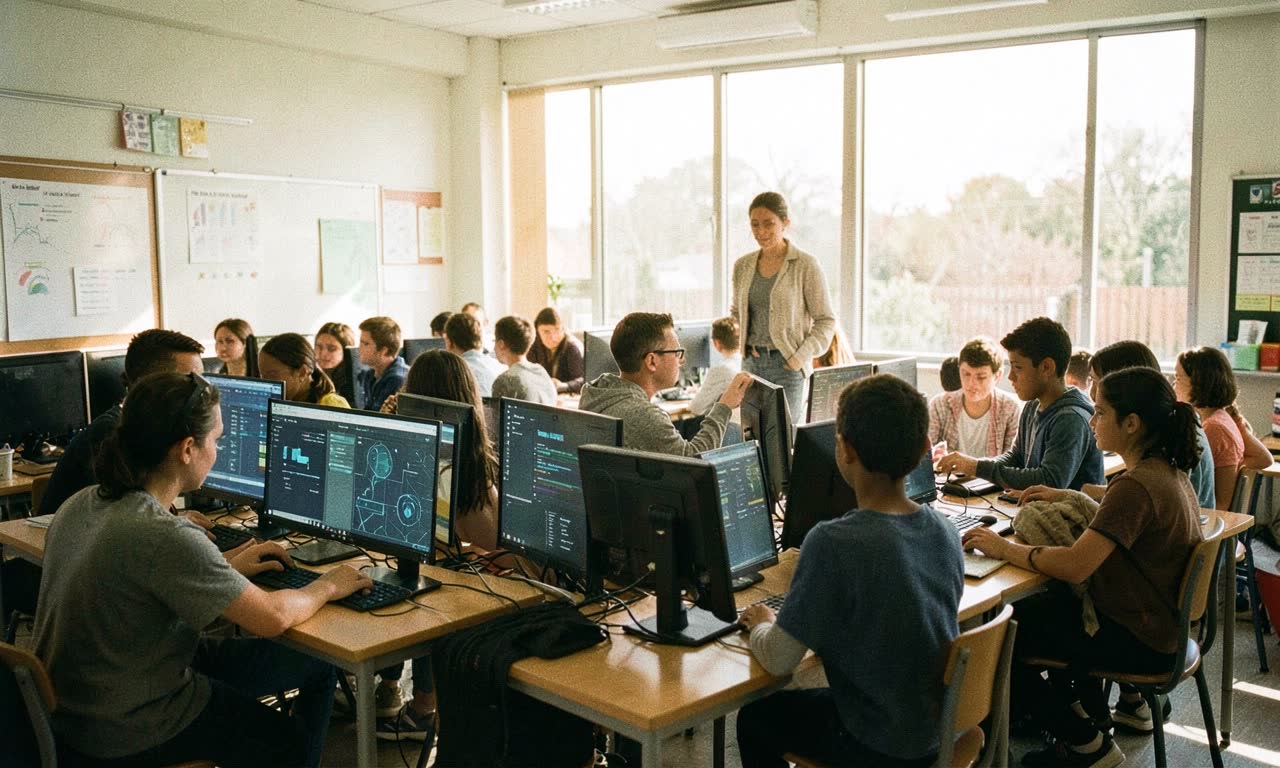
While states across the US race to mandate AI literacy in classrooms, Pennsylvania’s educators are pushing in the opposite direction — demanding restrictions on how AI is used in schools, not just how it’s taught.
The Pennsylvania State Education Association (PSEA), representing over 178,000 educators, released a statement April 21 urging schools to actively educate students on AI ethics while prohibiting generative AI in final student assessments and banning its use in charter school evaluations.
What PSEA Is Actually Calling For
The union’s position is more nuanced than “ban AI.” Their three-part framework:
- Educate students on AI ethics — Teach critical thinking about AI limitations, bias, and misuse
- Prohibit generative AI in final assessments — Students should demonstrate their own work, not AI-generated output, on graded assignments
- Ban AI in charter school evaluations — Charter school performance shouldn’t be measured or evaluated using AI-generated metrics
The distinction matters. PSEA isn’t saying “keep AI out of schools.” They’re saying “teach AI literacy, but draw hard lines around where AI replaces human demonstration of knowledge.”
The Pushback Narrative
Most AI education coverage in 2026 follows a familiar arc: state introduces AI literacy mandate → advocates celebrate → schools implement. Pennsylvania’s educators are introducing a different story: AI adoption without guardrails is itself the risk.
Their concerns are specific and grounded in classroom experience:
- Students using AI to write essays they haven’t read, let alone understood
- Charter schools using AI-generated performance metrics that may embed systemic biases
- Teachers feeling pressured to adopt AI tools without training on limitations
- Assessment systems that can’t distinguish between student work and AI output
Why This Matters Nationally
Pennsylvania is taking a different approach than states like Louisiana (which just mandated AI literacy from 6th grade) or Mississippi (which just required AI education in law school). Instead of accelerating AI integration, PSEA is pumping the brakes on specific applications.
This isn’t just a Pennsylvania story. It reflects a growing tension in education policy:
- Integration advocates say: AI is the future, students need exposure and skills
- Restriction advocates say: AI without boundaries undermines learning itself
Both are right. The question isn’t whether AI belongs in education — it’s already there. The question is where the lines are drawn, and who gets to draw them.
Bipartisan Support
PSEA’s position has attracted bipartisan support from Pennsylvania lawmakers, who are drafting guidance to regulate AI classroom use. Pittsburgh-area superintendents have separately called for a unified state policy — suggesting the pushback isn’t just union politics, but reflects genuine concern from school administrators.
When both union leadership and school management agree that AI needs more guardrails, the policy direction is clear. The debate has moved from “should we use AI?” to “where are the boundaries?”
The Bigger Picture for Singularity.Kiwi Readers
We’ve covered 31 states introducing 134 AI education bills this year. Most mandate adoption, literacy, or integration. Pennsylvania’s approach is the counterweight — the “yes, and” rather than the “yes.”
Educators themselves are the ones calling for restrictions. This isn’t tech skepticism from outside the system. It’s professional judgment from the people responsible for student outcomes.
The states that get both sides of this equation right — teaching AI literacy while protecting assessment integrity — will have the most durable education policies. Those that only push adoption may find themselves undoing damage in a few years.
SOURCES
- Pennsylvania State Education Association (PSEA) — Press Release, April 21, 2026