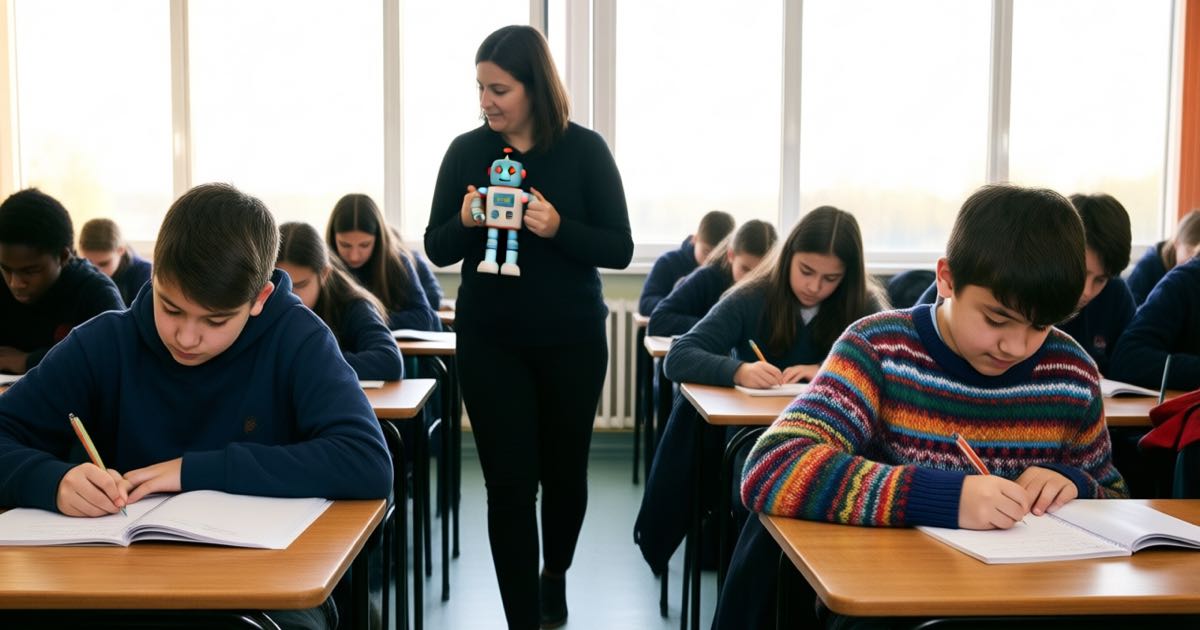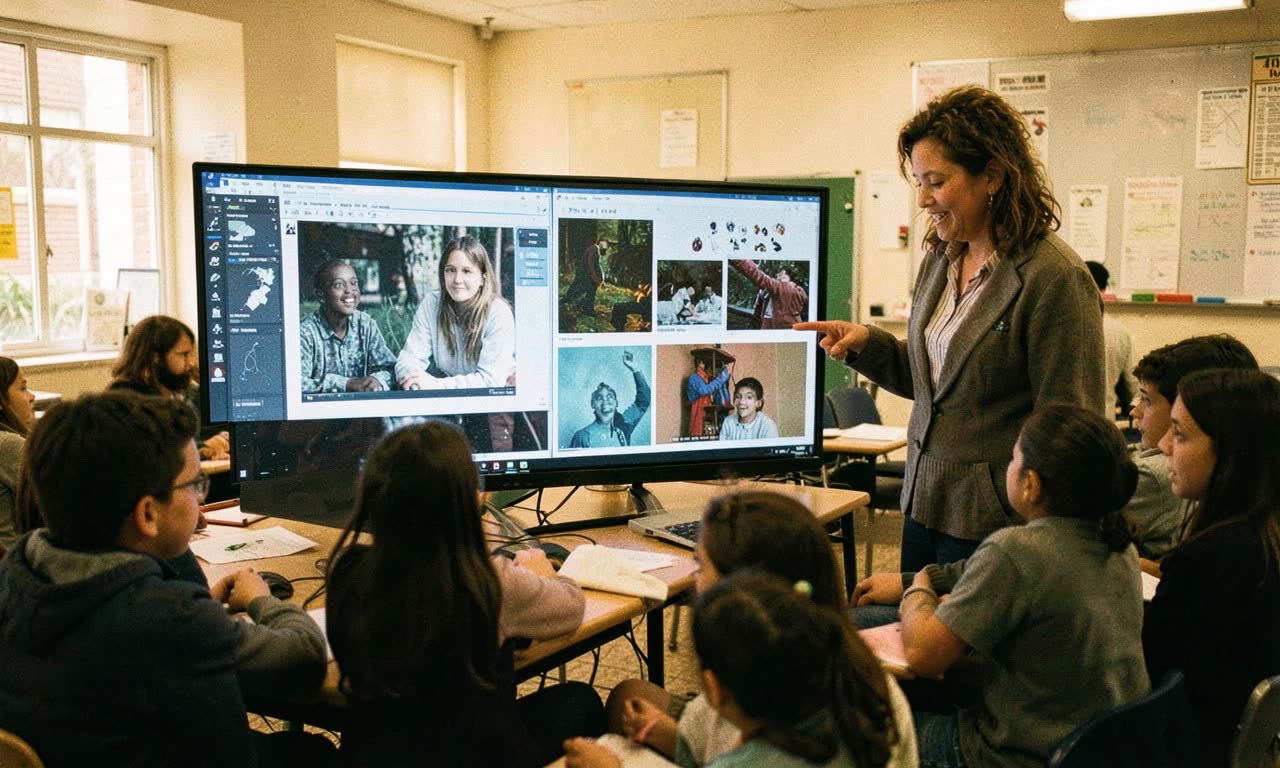
The classroom used to teach kids how to spot biased sources. Now it’s teaching them how to spot fake reality.
Education Week reported this week that schools across the United States are urgently rewriting media literacy curricula to address AI-generated content — and the need is more acute than most adults realize. A survey found 61% of elementary educators say their students have difficulty distinguishing AI-created material from human-made work.
The Scope of the Problem
It’s not just deepfakes. Students are encountering AI-generated text, images, videos, and even interactive experiences at an accelerating pace. The tools that create this content are getting better — and more accessible — every month.
At least half of U.S. states now have media literacy laws on the books, but most were written for an era of misleading news articles and doctored photos. They weren’t designed for a world where an entire essay, image, or video can be generated in seconds and look indistinguishable from the real thing.
The result: curricula that were barely keeping up with social media now face a challenge that evolves faster than textbook publishing cycles.
What Schools Are Doing
The response varies widely:
- Integrated critical thinking: Some districts are weaving AI detection skills into existing media literacy units, teaching students to ask “who made this and why?” rather than just “is this true?”
- Ethics alongside detection: Forward-looking programs pair detection skills with ethics education — not just spotting AI, but understanding when and why it’s used
- Hands-on practice: The most effective approach gives students experience both creating and detecting AI content, so they understand the capabilities from the inside
But these programs are the exception. Most schools are still figuring out where to start.
The 61% Number
The statistic that 61% of elementary educators report student difficulty with AI content detection is telling. These aren’t high schoolers falling for obvious fakes — these are younger students encountering increasingly sophisticated AI output in their daily online lives.
Teachers report that even assignments themselves are becoming unreliable: did the student write this paragraph, or did they prompt an AI to write it? The line between “using AI as a tool” and “having AI do the work” is blurrier than most policy discussions acknowledge.
The Global Context
This pitch landed on the same day that 250+ experts called for a five-year moratorium on student-facing AI in schools, and that Pakistan launched an AI Education Authority deploying 24/7 AI teachers across 46 pilot schools.
Three very different responses to the same reality: AI is in the classroom, whether anyone invited it or not.
The media literacy approach occupies the pragmatic middle ground — not banning AI, not embracing it uncritically, but giving students the tools to navigate a world where the line between human and machine creation is increasingly blurred.
Why It Matters for New Zealand
New Zealand’s own media literacy landscape is evolving. With the rapid adoption of AI tools across education globally, the question isn’t whether Kiwi students will encounter AI-generated content — it’s whether they’ll be prepared when they do.
The international trend toward mandatory media literacy education suggests that detection skills will become as fundamental as reading comprehension. Schools that wait for perfect curricula may find the AI landscape has moved on entirely.
SOURCES
- Education Week — “Schools Play Game of Media Literacy Catch-Up as AI Use Rises” (April 20, 2026)