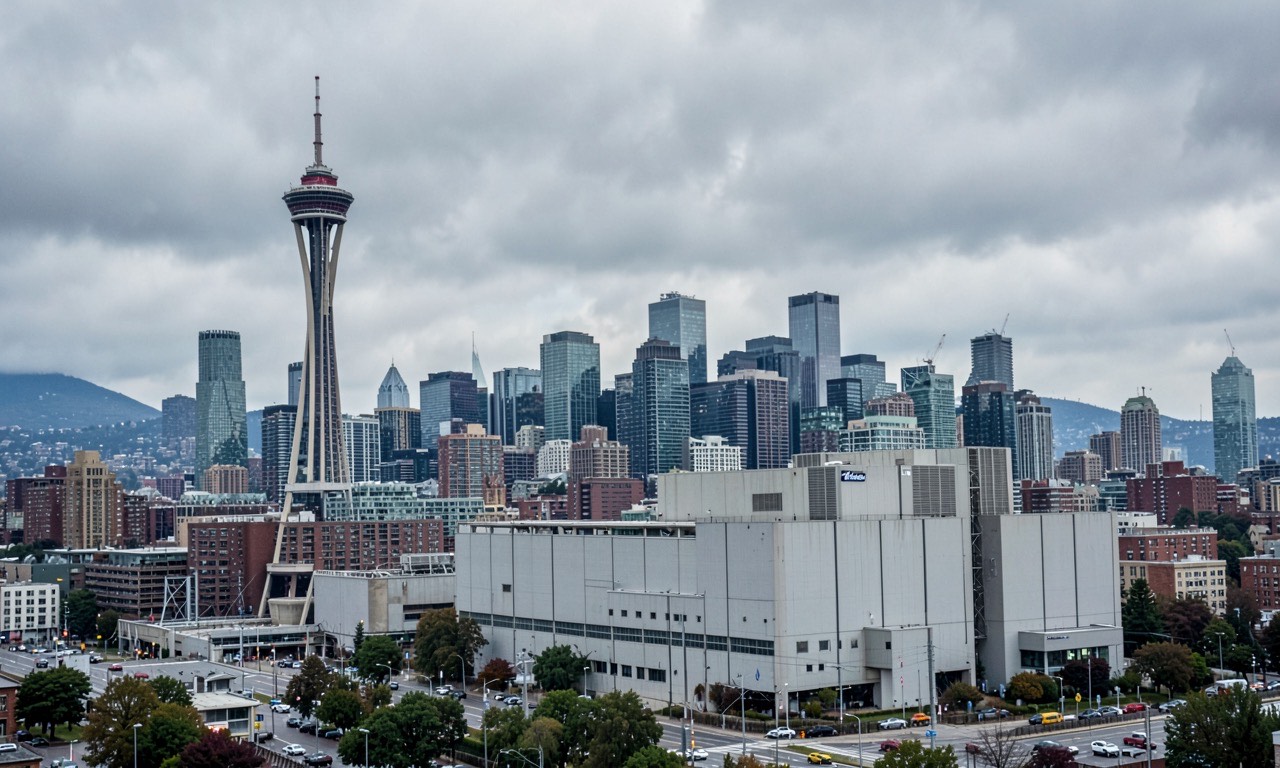
The Seattle City Council voted unanimously Tuesday to impose a one-year moratorium on new large-scale data centers, GeekWire reported, citing concerns over energy consumption, environmental impact, and infrastructure strain. “This is Seattle’s position on AI,” one councilmember said during the vote.
🔍 THE BOTTOM LINE: For years, the AI buildout was treated as an inevitability — of course data centers would multiply, of course they need power and water. Seattle just became the first major city to say “hold on.” If more cities follow, the AI industry’s infrastructure plans could face a patchwork of local resistance that no amount of VC funding can solve.
What the Moratorium Does
The emergency legislation, detailed on the Seattle City Council blog, creates a 365-day ban on permitting and siting new data centers over a certain size threshold. The council also passed a resolution calling for comprehensive impact studies on infrastructure, economic effects, and public health.
Notably, the vote was unanimous — Councilmember Debora Juarez and Councilmember Eddie Lin co-sponsored the original legislation in April, and it moved through committee without significant opposition.
Why the Council Acted
Seattle is the corporate home of Amazon and Microsoft, two of the world’s largest consumers of data center capacity. But the city itself has seen a surge in data center development proposals that residents and councilmembers say is outpacing infrastructure planning.
Key concerns include:
- Energy consumption: Data centers are projected to consume up to 9% of US electricity by 2030, straining local grids.
- Water usage: Many data centers use millions of gallons of water daily for cooling.
- Land use: Large facilities compete with housing and commercial development in a city already facing a housing crisis.
- Noise and environmental justice: Several proposed sites are near residential areas that already bear disproportionate environmental burdens.
The Timing Matters
The moratorium arrives as the national narrative on data centers is shifting. Earlier this year, our coverage highlighted that half of US data centre projects were already delayed or cancelled, as power availability and community opposition challenged the industry’s growth plans.
Seattle’s move is also connected to the wider conversation about AI’s energy footprint. The International Energy Agency has warned that AI data center energy demand could double by 2028, and local governments are increasingly worried about being left to manage the infrastructure consequences while tech companies capture the economic benefits.
The NZ Angle
New Zealand is watching these dynamics closely. The country has seen its own data center investment boom, with global hyperscalers looking to build facilities to serve the Asia-Pacific market and take advantage of New Zealand’s renewable energy mix.
But New Zealand faces similar tensions: relatively constrained power grids, strong environmental regulation, and communities wary of large-scale industrial development. The advantage is that New Zealand’s AI infrastructure buildout is still early enough that lessons from Seattle et al. can be applied proactively.
❓ FAQ
Does the moratorium affect existing data centers? No. It applies only to new permits for facilities above a specific size threshold.
Could this spread to other cities? Likely yes. Several US cities are studying similar measures, and Northern Virginia — the world’s largest data center market — has already seen community pushback.
How will this affect AI development? A single city’s moratorium won’t meaningfully slow the global AI buildout, but if it becomes a trend, hyperscalers face longer timelines and higher costs.
What happens after the year is up? The council will use the year to study impacts and develop permanent zoning rules for data centers.
🔍 THE BOTTOM LINE: Seattle’s unanimous vote is the first major local-government pushback against the AI infrastructure buildout. It’s not going to stop data centers — but it signals that cities expect a seat at the table when decisions about power, water, and land use are being made. The AI industry can build almost anything, but it can’t build everywhere.
📰 Sources
- GeekWire — ‘This is Seattle’s position on AI’: City Council votes unanimously to pause big new data centers
- Seattle City Council Blog — Emergency data center moratorium and policy framework
- KOMO News — Seattle Council unanimously backs temporary moratorium
- The Center Square — Seattle enacts one-year ban on data centers
- Seattle Times — Data center moratorium moves forward