Japan’s AI Server Pivot
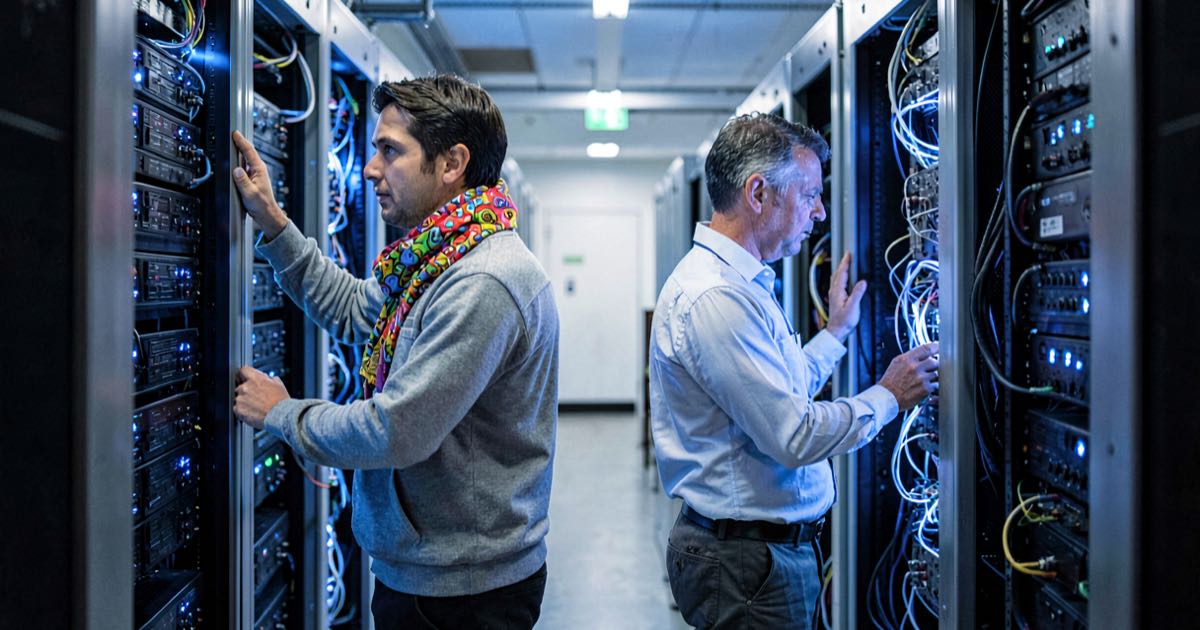
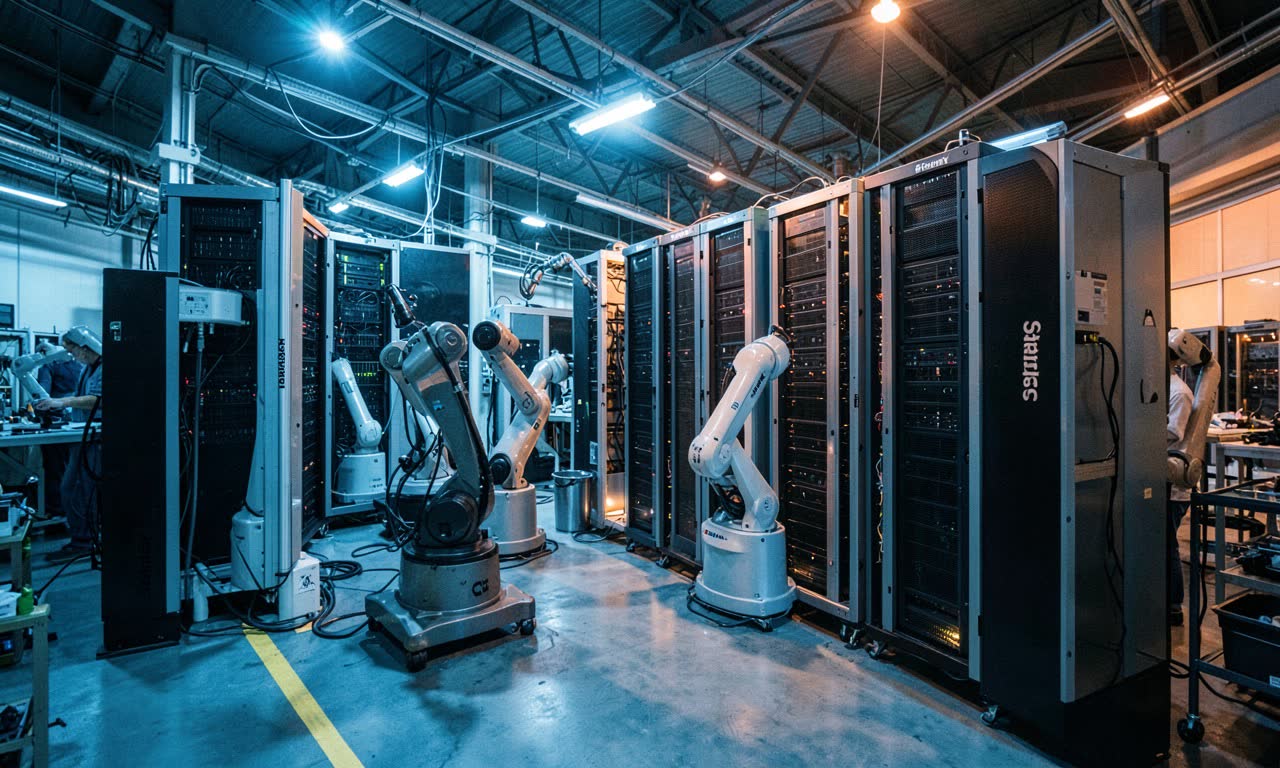
SoftBank Corp is in early-stage talks with Nvidia and Foxconn to build homegrown AI servers, according to a Nikkei report published Thursday. The proposal would see SoftBank design and operate the servers, Nvidia supply the GPUs, and Foxconn handle the manufacturing.
This isn’t a side project. It’s the most significant attempt yet by a major Asian tech company to break dependence on US hyperscalers for AI compute.
Here’s what we know:
- SoftBank would own and operate the servers, offering GPU-as-a-service to Japanese enterprises
- Nvidia would supply chips (likely GB200 NVL72 or next-generation Blackwell Ultra)
- Foxconn would manufacture the units, leveraging its massive supply chain in China and Southeast Asia
- Target market: Japanese enterprises that currently rely on AWS, Azure, or Google Cloud for AI training
Nikkei reports the talks are still early-stage, with no firm timeline or volume commitment. But the direction of travel is unmistakable: Japan wants sovereign AI compute.
🗾 Why This Matters for Asia
The SoftBank move is the latest in a wave of national and regional AI infrastructure plays across Asia:
- India: Government-backed AI compute mission, 10,000+ GPU cluster planned
- South Korea: National AI computing centre announced with Samsung and SK Hynix
- Singapore: Multiple data centre build-outs with sovereign cloud requirements
- China: Massive domestic AI chip and compute buildup (despite US export controls)
- Japan: This SoftBank initiative, plus existing government AI strategy
The common thread: every major Asian economy is trying to build AI infrastructure it actually controls.
Currently, the vast majority of Asian AI training runs on US-owned cloud infrastructure. AWS’s Asia-Pacific region spans 13 availability zones, Azure has 10 regions in Asia, and Google Cloud covers 8. Every inference call, every training run, every piece of data flows through US-controlled systems.
For countries with growing tech ambitions — and geopolitical concerns about data sovereignty — that’s increasingly uncomfortable.
📊 The Numbers Game
SoftBank already has skin in the AI infrastructure game:
- Launched an AI data centre GPU server cloud in March 2026 featuring liquid-cooled NVIDIA GB200 NVL72 systems
- Invested deeply in Arm (which powers many AI inference chips)
- Masayoshi Son has been one of the most aggressive AI investors globally via the Vision Fund
Building their own servers is the logical next step. Instead of renting compute from hyperscalers with 30–40% margins, SoftBank can own the infrastructure and offer it at competitive rates while still profiting.
For Japanese enterprises — from automotive giants like Toyota to electronics conglomerates like Sony to financial institutions like Nomura — having a domestic AI compute option isn’t just convenient. It’s strategic.
🏭 Foxconn’s Role Is Telling
Foxconn’s involvement is the most interesting piece. The Taiwanese manufacturing giant already builds servers for Amazon, Google, and Microsoft. Building for SoftBank means Foxconn is diversifying its customer base away from pure hyperscaler dependency.
This matters because Foxconn sits at the intersection of multiple geopolitical pressure points:
- US-China tensions: Foxconn’s massive Chinese factories are becoming riskier supply chain nodes
- Export controls: Nvidia’s ability to ship high-end GPUs to certain customers is constrained
- Regionalisation: The compute market is fragmenting into US, China, and “everyone else” blocs
If Foxconn starts producing Nvidia-powered servers for Japan under SoftBank’s brand, it creates a new supply chain lane that bypasses the traditional hyperscaler path.
🌏 NZ Lens: What We Can Learn
New Zealand doesn’t have a SoftBank-sized company to pull this off. But the principle — sovereign AI infrastructure matters — applies directly.
- The Southland data centre projects are a start, but they’re just real estate. Without domestic server design and assembly capability, NZ is still renting compute from foreign providers.
- Partnership with existing Asian supply chains (like Foxconn or similar) could be a faster path than building from scratch.
- Our Pacific proximity could be a differentiator: Japanese and Korean enterprises might value NZ-located compute for redundancy and latency reasons.
The era of “just use AWS” for everything is ending. Countries that build infrastructure they control will have AI sovereignty. Countries that don’t will have AI dependency.
🤔 My Take: The Fourth Bloc Emerges
The AI infrastructure world is splitting into three blocs, with a fourth emerging:
- US hyperscalers — AWS, Azure, GCP (dominant, but increasingly expensive)
- China domestic — Baidu, Alibaba, Tencent, Huawei (isolated by export controls)
- Independent players — CoreWeave, Lambda, Vultr (growing but niche)
- Sovereign national/commercial — SoftBank Japan, India’s AI mission, EU-backed projects
We’re watching Bloc 4 being born. SoftBank’s move is one of the first major private-sector plays in this space. If successful, it could become a model for other mid-tier economies that want AI capability without handing their data to US or Chinese providers.
Masayoshi Son has never been subtle. He bet big on the internet, then mobile, then AI investing. Building actual AI servers is him betting that the next phase of AI isn’t about who has the best model — it’s about who controls the infrastructure underneath.
And he’s probably right.
🔍 THE BOTTOM LINE: SoftBank’s talks with Nvidia and Foxconn to build homegrown AI servers is the biggest signal yet that Asia wants off the hyperscaler teat. It’s early, but the direction is clear: AI sovereignty requires infrastructure sovereignty. Countries and companies that figure this out first will have a decade-long advantage.