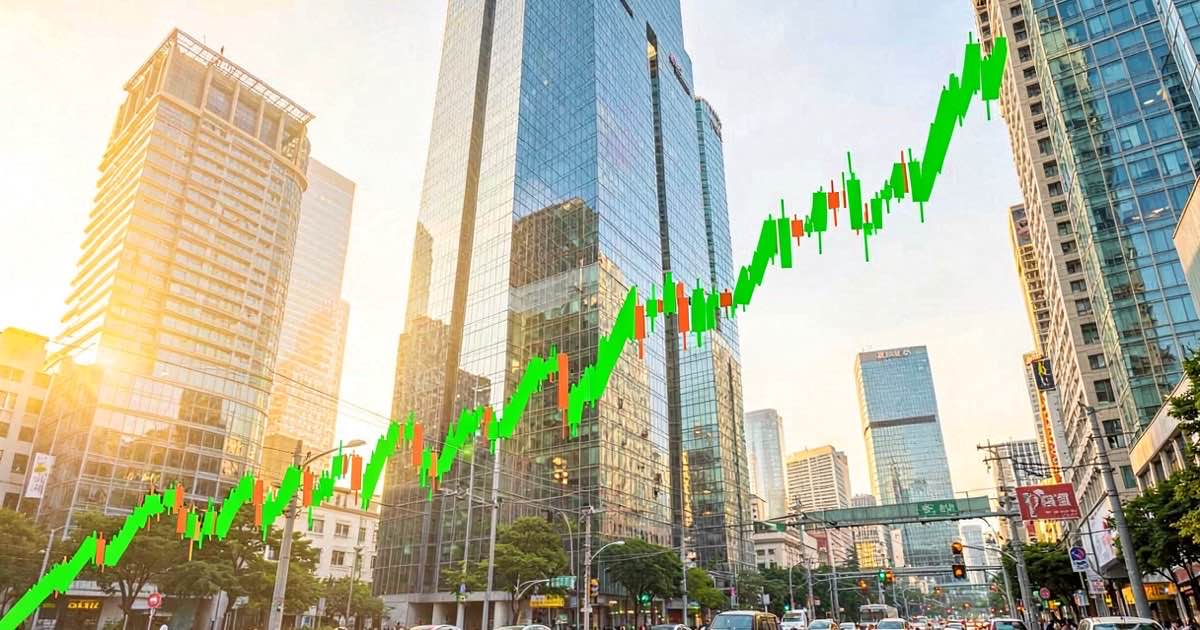
The benchmark KOSPI index closed nearly 18% higher on July 31, driven by explosive gains in chip makers SK Hynix and Samsung Electronics. SK Hynix, a major supplier to Nvidia, surged almost 30%. Samsung gained 28%. The rally partly reversed a three-day rout that had wiped hundreds of billions of dollars off the value of South Korea’s stock market.
🔍 THE BOTTOM LINE
South Korea has become the most volatile major stock market in the world, and AI is the reason. The KOSPI has more than doubled since early 2025, drawn by retail investors betting on the chip boom powering AI. A 25% tumble in July followed by an 18% single-day rebound is not normal market behaviour. This is a market hooked on AI infrastructure spending, where one earnings report can swing the entire index.
What Happened
The three-day sell-off that preceded Friday’s surge was triggered by disappointing SK Hynix earnings and a broader global rotation away from AI-exposed stocks. The KOSPI tumbled nearly 25% in July alone, breaking records for the severity of the decline. Leveraged retail investors were hit hardest.
Friday’s reversal was driven by earnings updates from US technology giants. Amazon jumped more than 9% in after-hours trading on Thursday, while Microsoft gained over 15%. Both companies signalled continued massive investment in AI infrastructure, which directly translates to demand for the memory chips that SK Hynix and Samsung produce.
South Korean regulators also announced measures aimed at curbing the sell-off, though the specifics of those measures were not detailed in initial reporting.
The Retail Investor Frenzy
What makes South Korea’s market different from other AI-exposed indices is the intensity of retail participation. The KOSPI has attracted enormous numbers of retail investors in recent months, many using leverage to amplify their bets. The index had more than doubled in value this year and, despite the July correction, is still more than 50% higher than at the end of 2025.
The KOSPI has been halted multiple times this year under circuit breaker mechanisms designed to calm panic selling. A market that gets halted multiple times in a year is not functioning as a stable price discovery mechanism. It is a casino where the house — AI capital expenditure — sets the mood.
SK Hynix and Samsung: The AI Chip Nexus
SK Hynix is the major supplier to Nvidia for high-bandwidth memory (HBM), the critical component in AI accelerators. When Nvidia’s customers buy more GPUs, SK Hynix sells more HBM. When Amazon and Microsoft signal deeper AI investment, the supply chain runs straight through Seoul.
Samsung’s position is more complex. The company posted an 18-fold jump in profit on surging AI demand for memory, but has also flagged supply constraints that could limit upside through 2028. Samsung’s chip division is one leg of a diversified conglomerate; SK Hynix is a purer play on the AI memory cycle.
Both stocks had seen their market value slump dramatically during the week’s sell-off. Friday’s 28-30% gains recovered a significant portion of those losses, but the underlying volatility remains.
The Global AI Stock Whiplash
South Korea is the most extreme case, but it is not isolated. The same forces driving the KOSPI are moving markets in Taiwan, Japan, and the United States. The broader AI stock sell-off earlier this year showed that the entire AI infrastructure trade is correlated — when Nvidia sneezes, SK Hynix catches a cold, and the KOSPI gets put on a ventilator.
The difference is one of magnitude. A 25% monthly decline followed by an 18% single-day rebound is the kind of volatility normally associated with emerging markets in crisis, not a G20 economy with a $2 trillion stock market. The Financial Times reported that the KOSPI’s July tumble made it the epicentre of both investment enthusiasm and anxiety related to AI.
Why This Matters for New Zealand
New Zealand investors with exposure to Asian markets through index funds or ETFs are riding this volatility whether they realise it or not. The KOSPI’s swings feed directly into broader Asia-Pacific indices. More broadly, the extreme volatility in Korean chip stocks is a leading indicator of whether AI infrastructure spending is sustainable. If the companies supplying the physical components of AI are swinging 30% in a day, the market is pricing in enormous uncertainty about the return on all that capital expenditure.
❓ FAQ
Why did the KOSPI jump 18% in one day? Earnings beats from Amazon and Microsoft signalled continued AI infrastructure spending, directly boosting demand expectations for Korean memory chips. South Korean regulators also announced measures to stabilise the market.
Is this volatility normal? No. A 25% monthly decline followed by an 18% single-day rebound is extreme even by emerging market standards. The KOSPI has triggered circuit breakers multiple times this year.
What is SK Hynix’s role in the AI supply chain? SK Hynix is a leading manufacturer of high-bandwidth memory (HBM), the memory component used in Nvidia’s AI accelerators. When AI companies buy more GPUs, SK Hynix sells more HBM.
Should NZ investors be concerned? Investors with exposure to Asia-Pacific index funds are indirectly exposed to KOSPI volatility. The swings reflect deep uncertainty about whether AI infrastructure spending will generate returns.
🔍 THE BOTTOM LINE
An 18% single-day surge is not a recovery — it is a symptom. The KOSPI is telling us that the market has no clear idea what AI infrastructure spending is actually worth, and is lurching between fear and greed on every earnings print. When a national index swings like a meme stock, the underlying story is not about fundamentals. It is about a market that has priced in a future nobody can confidently model.