Terence Tao — Fields Medalist, UCLA professor, and widely regarded as one of the finest living mathematicians — spent last weekend using AI coding agents to port decades-old Java applets into modern JavaScript and build entirely new mathematical visualization tools. The process, which he described as “vibe coding,” took hours for work that would have taken months by hand.
🔍 THE BOTTOM LINE
When a mathematician of Tao’s caliber casually reports that AI agents ported two dozen applets with only one minor bug — and actually found two bugs in his original code — it’s a signal that coding agents have crossed a threshold. This isn’t a junior developer automating boilerplate. It’s one of the world’s most exacting minds endorsing AI-assisted development for mathematical software, a domain where precision is non-negotiable.
What Tao Actually Built
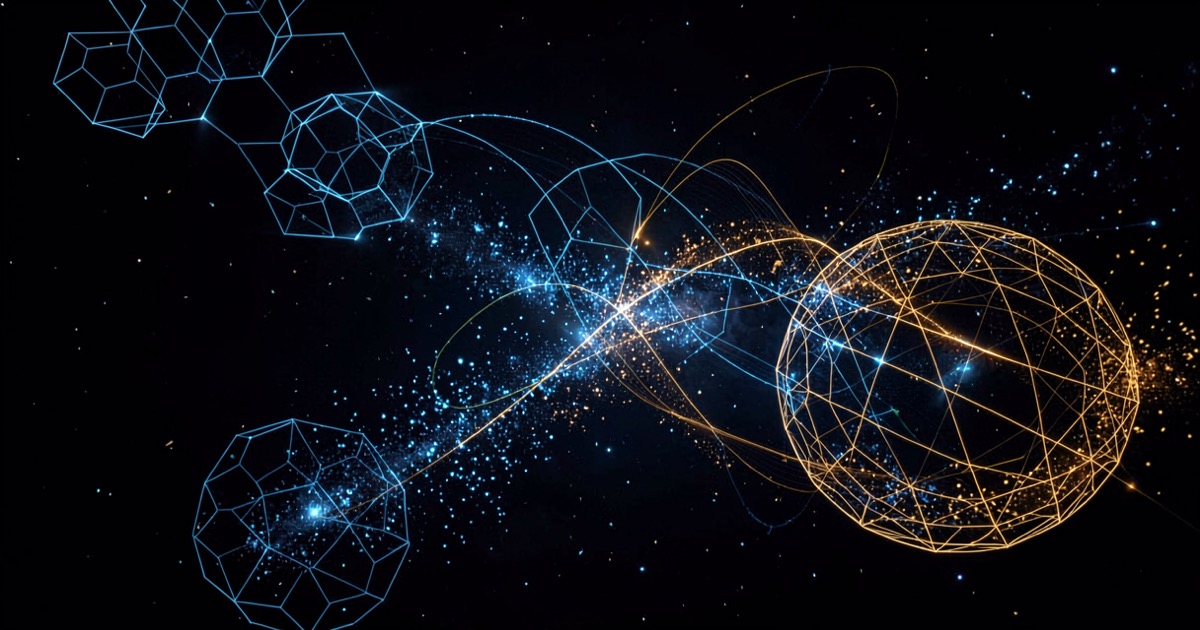
Tao’s blog post details two categories of work. First, he migrated his old web page and blog data to a more maintainable repository, using AI assistance to port approximately two dozen Java applets — some dating back to 1999 — into modern JavaScript. The applets, which visualize mathematical objects like Besicovitch sets and honeycombs, are now functional again with graphical upgrades. The Besicovitch set applet, originally monochrome, is now colorized.
Second, he used AI agents to build new applications from scratch. A special relativity visualization tool — an idea he had in 1999 but abandoned due to code complexity — was completed after “a couple hours of vibe coding.” He describes it as “Inkscape, but in Minkowski space.” He also built a Gilbreath conjecture visualization to accompany a paper published the same day, again in a few hours of conversation with the agent.
The Bug Count
Tao is careful about what this means. “Notoriously, LLM-based coding agents can create various blatant or subtle bugs in their code,” he writes. But across the porting of two dozen applets, he could only find one minor bug — a drag event handler with unwanted behavior when dragging outside the main box. More strikingly, the agent identified two bugs in Tao’s original code that he had not been aware of. “It ended up being a net wash as far as code quality was concerned.”
This is a meaningful data point. Tao’s applets are mathematical visualization tools — not mission-critical production systems, as he acknowledges — but they involve non-trivial geometry, event handling, and rendering logic. The fact that an AI agent matched a Fields Medalist’s hand-written code quality on a port of this complexity is worth paying attention to.
Why This Matters Beyond Mathematics
Tao frames the AI-generated applets as “secondary visual aids rather than critical components of a mathematical argument,” which keeps the downside risk low. But the broader implication is about who can now build interactive tools. A mathematician with a 1999-era idea that was too complex to implement alone can now ship it in an afternoon. The barrier between “I have a visualization idea” and “I have a working interactive tool” has collapsed.
This connects to a pattern we’ve been tracking. When AI helped solve a 42-year-old math puzzle, it was about computation. When GPT-5 tackled Erdős conjectures, it was about reasoning. Tao’s weekend project is about a different dimension entirely: agency. The AI didn’t solve a math problem. It built the tools that let a mathematician communicate his ideas interactively, at a speed that would have been unimaginable even two years ago.
The NZ Angle
New Zealand’s universities have world-class mathematics departments, but historically they’ve been resource-constrained when it comes to developing interactive educational tools. If a Fields Medalist can build a relativity visualization in an afternoon with AI assistance, the same approach could let University of Auckland or Victoria University lecturers create custom applets for their courses without a development team. The democratization of tool-building matters more in smaller academic communities where dedicated developer resources don’t exist.
What Tao Is Not Saying
He’s explicit about the limitations. The applets are “alpha” versions with likely bugs. He invites feedback. He notes that LLM-generated code is prone to subtle errors. And he’s careful to separate visualization tools — where bugs are cosmetic — from mathematical proofs, where a single error invalidates everything. The title of his post says “apps,” not “proofs.” The distinction is deliberate.
This is the same careful framing we saw when Anthropic’s research showed a gap between AI’s theoretical potential and real-world usage. The tool is powerful in the right context and dangerous when overextended beyond it. Tao knows exactly where the boundary is.
❓ FAQ
Is Tao saying AI can now do mathematics? No. He’s saying AI can build visualization tools for mathematicians. The math itself — the proofs, the conjectures, the reasoning — remains human. The AI is building the interactive aids, not doing the mathematics.
What coding agent did he use? Tao doesn’t name the specific agent in his post. He refers to “the agent” generically and links to transcripts of his conversations with it. The level of iterative back-and-forth suggests a conversational coding agent like Claude Code or a similar tool.
How is this different from normal software development? Tao calls it “vibe coding” — describing the desired behavior in natural language and letting the agent implement it, then iterating. No manual coding. The developer’s role shifts from writing code to directing, reviewing, and testing.
Should mathematicians be using AI coding agents? Tao’s post is an endorsement, but a qualified one. He emphasizes that these tools work best for non-critical components where bugs have low downside risk. For anything where correctness is essential — proofs, production systems, security-critical code — the same caution applies.
What was the Gilbreath conjecture visualization for? It accompanies a separate blog post where Tao discusses the Gilbreath conjecture, a number theory problem. The visualization lets readers interact with the conjecture’s structure directly.
🔍 THE BOTTOM LINE
Tao’s weekend experiment is a microcosm of where AI-assisted development has arrived: good enough that one of the world’s most brilliant minds trusts it for real work, humble enough that he’s transparent about its limits. The headline isn’t “AI replaces mathematicians.” It’s “AI lets mathematicians build things they couldn’t build alone.” That distinction — augmentation, not replacement — is the one that matters.