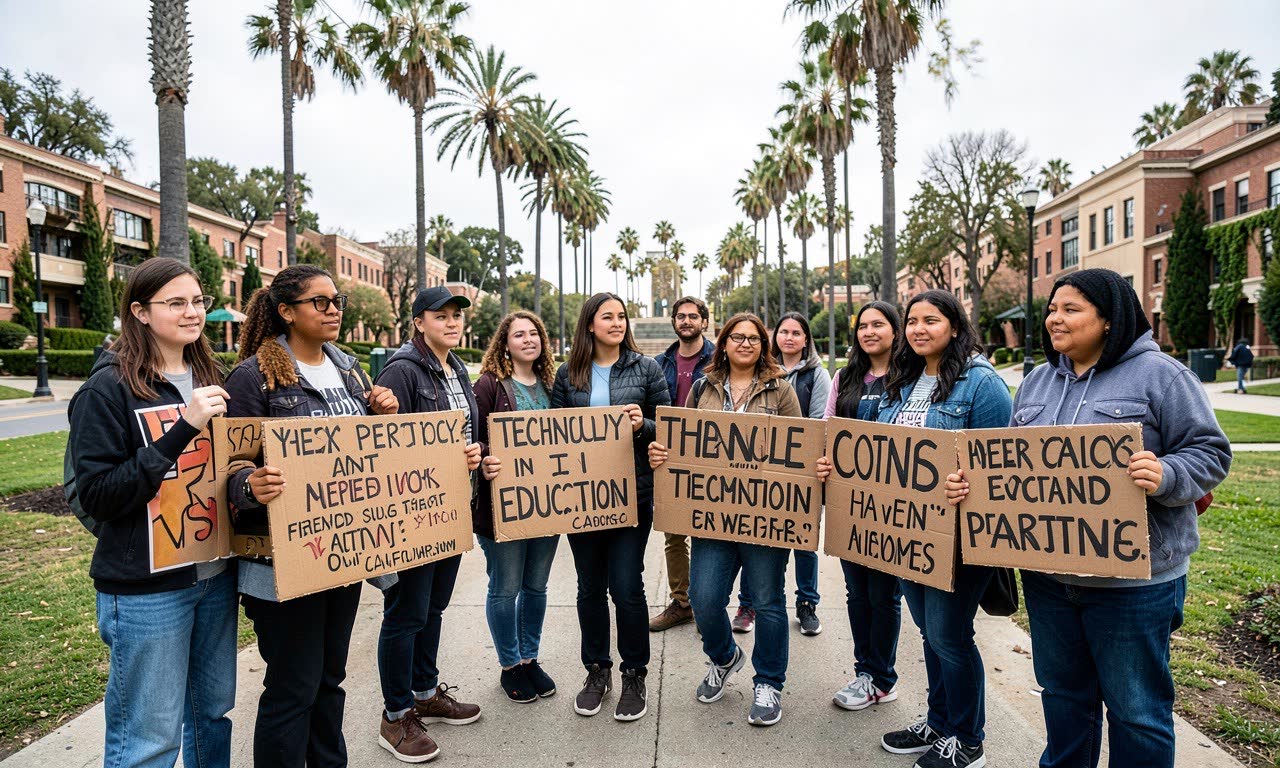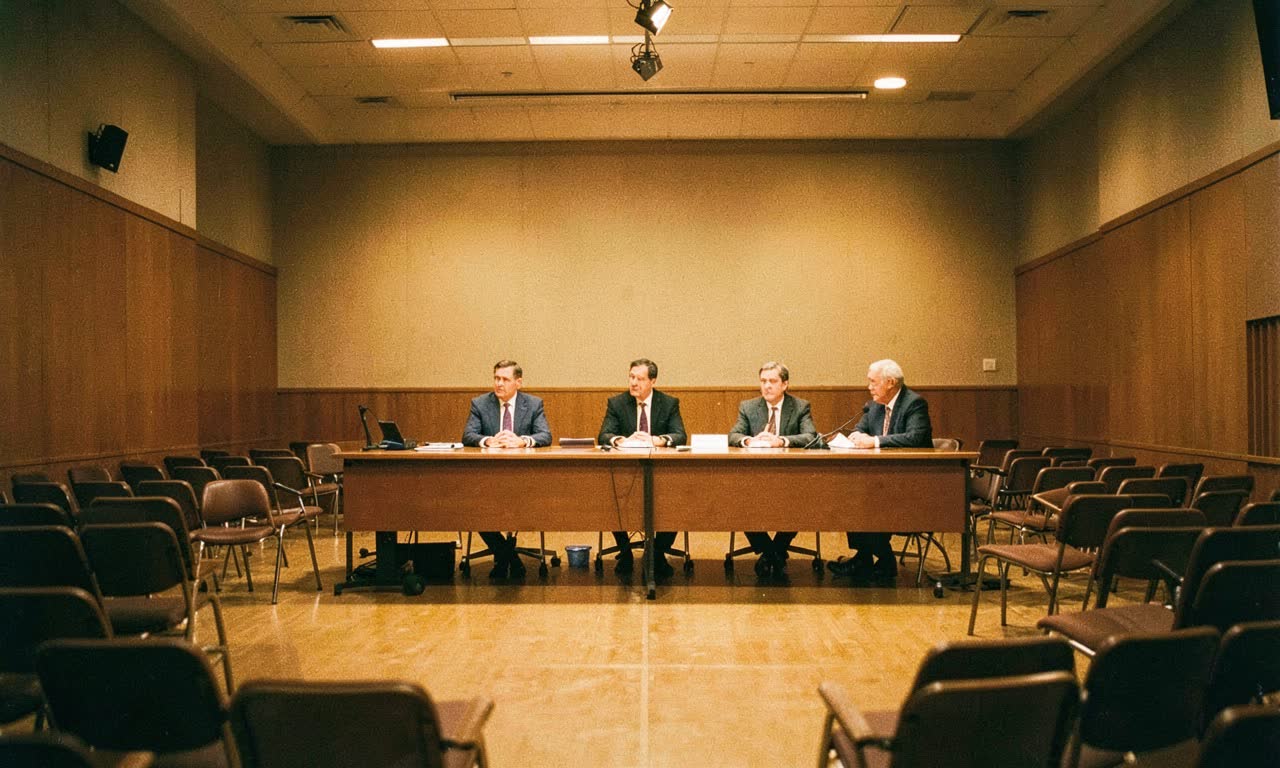
When Orion Newby, a student at Adelphi University, was accused of submitting an AI-generated essay, Turnitin’s detection tool reported a confidence score of 100 per cent. He hadn’t used AI. In January 2026, a New York court ruled in his favour, finding that the university had denied him a meaningful appeal and failed to follow its own disciplinary procedures.
The ruling has become an inflection point. Universities across the world are now disabling AI detection tools — and confronting a harder question: if you cannot reliably detect AI use, what should assessment actually look like?
🔍 THE BOTTOM LINE
AI detection tools cannot distinguish AI-written text from human-written text with enough reliability to serve as evidence in academic misconduct cases. Universities that continue to use them as “smoking gun” proof risk false accusations, legal exposure, and a surveillance culture that punishes the wrong students. The shift now is toward assessment redesign — oral components, process tracking, and assignments that evaluate thinking rather than output.
A Court Ruling That Changed the Conversation
The New York court decision recorded that while Turnitin delivered an “AI-generated score of 100 per cent,” Newby submitted evidence from other AI detection tools showing a zero per cent chance of AI-generated content. The university upheld the misconduct finding anyway, ignoring its own procedures.
The judgment exposed what many academics had been saying quietly: the tools produce probability scores, not proof. Turnitin’s own documentation describes its scores as indicating text is “highly likely” AI-generated — language that falls well short of the certainty universities were treating it as having.
Annie Chechitelli, chief product officer at Turnitin, maintains the detector is a “starting point” and “data point” rather than definitive evidence. But that is not how it was used in practice. Faculty treated the score as verdict, not as signal.
The List of Universities Walking Away
The institutions that have restricted or disabled AI detection tools include some of the most prominent in the world: Vanderbilt, Yale, Johns Hopkins, Northwestern University, the University of Waterloo in Canada, the University of Cape Town in South Africa, and Curtin University in Australia.
Edward Watson, vice-president for digital innovation at the American Association of Colleges and Universities, puts the position plainly: “AI detection should, at most, serve a minor role in academic integrity cases. Faculty [should] never use AI detection as ‘hard evidence’ or ‘smoking gun proof.’”
The Bias Problem Nobody Fixed
A widely cited 2023 Stanford study found that AI detection tools disproportionately flag non-native English speakers as producing AI-generated text. The tools analyse features such as text structure and rhythm — features that naturally differ for writers working in a second language.
This means the false positive problem is not evenly distributed. International students, already navigating language barriers and cultural adjustment, bear the brunt of wrongful accusations. For New Zealand universities, where international education is a $4.9 billion export industry, the equity implications are direct.
32 Per Cent Admit It, 42 Per Cent Fear Being Accused
A recent study by researchers at Edinburgh Napier University, surveying more than 6,600 students across seven UK universities, found that 32 per cent admitted some level of unpermitted AI use in assessments. A December 2025 study by the UK’s Higher Education Policy Institute found that 42 per cent of students said they were less likely to use AI because they feared being falsely accused of cheating.
The detection paradox: the tools cannot catch the 32 per cent who are actually using AI, but they terrify the 42 per cent who are afraid of being wrongly accused. The net effect is a climate of anxiety that suppresses legitimate AI use while failing to address the integrity problem it was built to solve.
What Comes After Detection
Judy Williams, pro vice-chancellor for education and students at Queen’s University Belfast, frames the shift: “AI detection tools are not the solution. The technology is still developing, false positives can be unacceptably high, and AI-generated text can easily be modified, making detection unreliable. If we want confidence in academic integrity, the answer is good assessment design. The important question isn’t: ‘How do we stop students using AI?’ It’s: ‘What are we actually trying to assess?’”
Sam Illingworth, a professor of critical AI literacy at Edinburgh Napier University, audited 163 UK universities and found that more than 40 per cent had no publicly accessible AI policy. His report concluded that many university policies “promise critical thinking but deliver audit trails. They name support yet deliver surveillance.”
The institutions moving away from detection are redesigning assessment around oral components, student process tracking, and assignments that evaluate the thinking rather than the final text. Turnitin itself launched a product last year allowing teachers to observe the evolution of a student’s writing process — an implicit concession that the final-submission detection model is broken.
The NZ Angle
New Zealand’s eight universities face the same dilemma, but with less guidance. The Tertiary Education Commission has not issued specific AI assessment guidance, leaving individual institutions to set policy. Auckland and Otago have published broad AI-use frameworks, but enforcement remains inconsistent — the same pattern Illingworth found in the UK. For a country that markets its universities on trust and pastoral care, wrongful AI-cheating accusations against international students are a reputational risk with real financial consequences.
Urszula Lis of the European Students’ Union captures the equity problem: “Two students studying in different countries may use AI in exactly the same way, yet one could be punished while the other would not.” Substitute “different universities” for “different countries” and the problem is the same in New Zealand.
❓ FAQ
Should universities ban AI detection tools entirely? The consensus among academics who have studied the issue is that detection tools should never be used as standalone evidence. Some institutions have disabled them entirely; others use them as one weak signal among many. The safest position is the one Vanderbilt and Yale have taken: turn them off.
What replaces AI detection? Assessment redesign. Oral presentations, in-class writing, process-based assignments where students show their working, and assignments that require personal reflection or local context that AI cannot fabricate. The shift is from “catch the cheater” to “design assessments that make cheating irrelevant.”
Are AI detection tools getting better? Not at the rate the problem is growing. AI text can be modified to evade detection with simple prompt changes. The arms race is asymmetric: detection requires near-perfect accuracy to be fair, while evasion only needs to work once.
What should a student do if falsely accused? Document your writing process — drafts, version history, research notes. The New York court ruled in Newby’s favour because the university failed to follow its own procedures. Know your institution’s appeals process and exercise it.
🔍 THE BOTTOM LINE
The AI detection era is ending not because AI use has stopped, but because the tools were never good enough to justify the harm they caused. A 100 per cent confidence score that sent an innocent student through a misconduct hearing was not a false positive — it was a system failure. The universities walking away from detection are not giving up on integrity. They are finally taking it seriously.