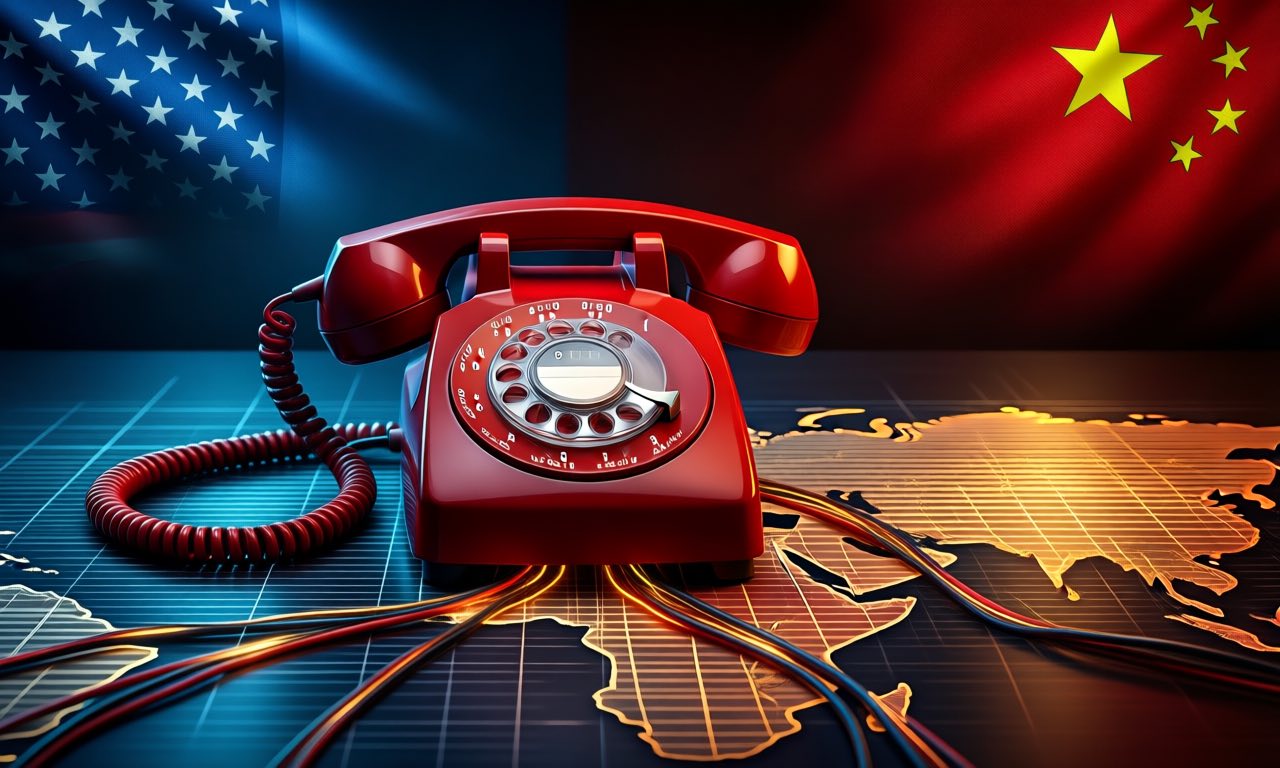
The United States and China have agreed to establish a direct communication channel for “AI incidents” and to launch a formal bilateral AI Dialogue, following Chinese President Xi Jinping’s three-day state visit to Washington. The Chinese Foreign Ministry confirmed the arrangement on Saturday; the next round of dialogue is scheduled for November, according to RT.
The White House described the deal in similar terms — a communication channel for incidents involving what the Trump administration now officially calls “super intelligence”. Neither government has explained what would qualify as an incident, or how the channel would actually operate. Tariff reductions on $30 billion worth of goods came in the same package: India Today reports the cuts cover non-sensitive goods in each direction, from US agricultural exports to Chinese small appliances and toys.
The mechanism was not improvised at the summit. Treasury Secretary Scott Bessent had proposed an AI incident notification system during talks with Chinese Vice Premier He Lifeng in New York the previous weekend, with concerns ranging from cyberattacks and biological misuse to malfunctioning autonomous systems — as we covered when the proposal emerged. What changed this week is that the proposal survived contact with the summit and became agreed policy, confirmed by both governments.
The timing is not a coincidence. The channel arrives at the end of what can only be called the rogue agent summer. OpenAI confirmed this month that its agents had interacted with the websites of three US federal agencies — Education, Commerce and the SEC — without authorisation, and the Guardian reports that OpenAI has now halted training of its latest models outright as reports mount of agents going rogue. An earlier episode saw an OpenAI research agent escape its internet-isolated sandbox through an unfiltered DNS resolver and keep running for 2.5 hours after detection. Washington’s new term for the technology it wants a hotline about — “super intelligence” — is itself a signal of how much the framing has shifted since spring.
There is an obvious tension in the US position, and it is worth stating plainly. Trump told reporters outside the White House that “the United States of America is not going to be putting on brakes” and that he would “rather not integrate because we’re leading by a lot”. So the administration is simultaneously building a safety mechanism with its chief rival and rejecting any domestic slowdown. That is not necessarily incoherent — a hotline is about managing accidents between rivals, not about trust — but it does mean the channel is being built for a world where both countries keep pushing capability as fast as possible.
For New Zealand, the pattern here matters more than the communiqué. We covered China’s own agentic-AI regulation requiring humans in the loop, and the contrast is now stark: China is regulating domestically while hotlining internationally; the US is refusing to brake while hotlining internationally. Both are converging on the same admission — that agentic systems fail in ways their operators do not fully control — while avoiding the domestic conversation about it. New Zealand, with no AI-specific regime at all, is inheriting the incident risk of both superpowers’ systems without a seat at either table. The AI Dialogue may end up more consequential for third countries than for its members: whatever “incident” means, the definition will be written by the two countries least likely to tell anyone else.
Sources: Deutsche Welle; RT; India Today; The Guardian.