The Washington Post Is Cheering Data Centers While Bezos Profits From Them
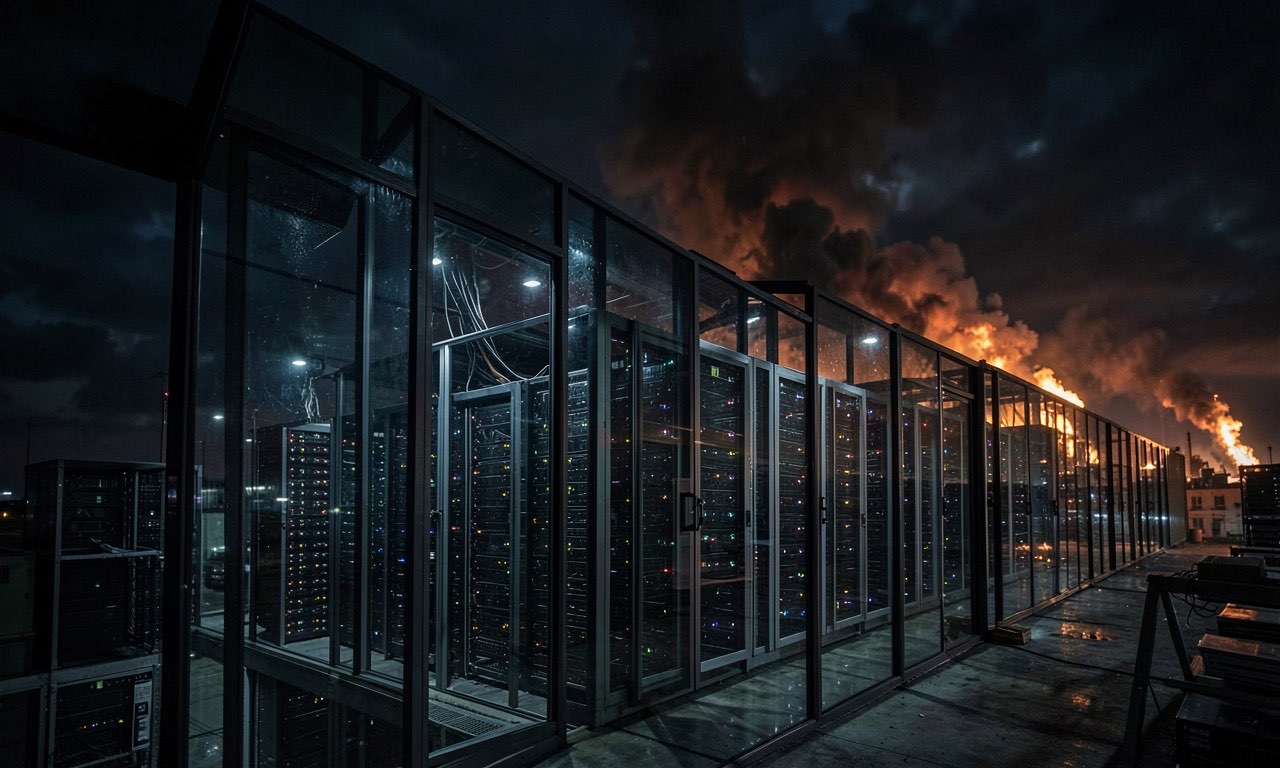
The Washington Post’s opinion pages have spent much of 2026 running an uncritical editorial campaign favouring the global data center buildout. What that campaign has not done is disclose that the paper’s owner, Jeff Bezos, is the single largest beneficiary of that buildout through Amazon Web Services. According to Paul Farhi’s investigation for the Washingtonian, the pattern is not subtle: dozens of editorials, op-eds, podcast episodes, and guest columns, all pushing one direction, all omitting the same obvious fact.
🔍 THE BOTTOM LINE
This is not journalism. It is infrastructure PR wearing a masthead. The Post’s editorial board has effectively become an unpaid lobbying arm for an industry its owner dominates, and the omission is the story. When a newsroom refuses to flag its owner’s direct financial stake in the policy it is promoting, the word for that is conflict of interest, not editorial independence.
What WaPo Is Saying
Farhi’s reporting lays out a consistent pattern across the Post’s opinion section. A June 8 editorial attacked politicians who question whether all this construction is necessary, framing scepticism as an attack on progress itself. A May 28 op-ed from a retired Air Force officer argued that data centers are “foundational” to modern military power, without noting that Amazon is one of the largest defense-cloud contractors in the United States. A 50-minute podcast episode titled “Why data centers don’t deserve so much hate” spent its runtime dismissing the energy, water, and local-community concerns that have made these facilities politically toxic across rural America.
Even the softer pieces carry the same framing. A March guest column argued that opposing data center construction guarantees only the wealthy benefit from AI — a neat rhetorical trick that converts local land-use disputes into a class-justice argument for the largest tech companies on earth. The volume and uniformity is the tell: no internal dissent, no serious counterweight, just a wall of opinion pointing one way.
What WaPo Is Not Saying
What is missing is the financial reality behind the editorial line. AWS owns or leases data center capacity across more than 50 countries. Amazon’s profit growth is now driven overwhelmingly by cloud infrastructure, not retail. The company has committed tens of billions of dollars to expanding that footprint, including the massive manufacturing-focused AI fund Bezos announced earlier this year — a move we covered in Jeff Bezos Raises $100 Billion to Transform Manufacturing with AI.
Every editorial that treats data center construction as an unalloyed public good is, functionally, an argument for more revenue into AWS. The Post does not mention this. It does not run disclosure lines. It does not append “the owner of this newspaper stands to profit materially from the policy we are endorsing here” to its editorials. The omission is systematic, not accidental.
The NZ Angle
New Zealand is currently wrestling with its own hyperscale data center proposals — facilities that would reshape local power and water demand for decades. The lesson from the Post is directly relevant: when the loudest media voices advocating for a buildout are owned by, funded by, or partnered with the companies building it, the public debate is already distorted before it starts.
The collapse of serious local scrutiny into press-release journalism is not an abstract risk here. It is what happens when commercial interests and editorial lines converge without disclosure. The broader AI infrastructure story — the one that connects data center buildouts to the market turbulence we tracked in The AI Bubble Just Sprung a Leak — and Kiwi Investors Are Exposed — needs reporting willing to name the interests involved, not launder them through opinion columns.
The Other Side
A Washington Post spokesperson told Farhi that editorials mentioning Amazon or Bezos “in a meaningful way” aim to disclose potential conflicts. That phrasing does a lot of quiet work. “In a meaningful way” is doing all the lifting, and it is doing it in the paper’s favour. If the editorial board decides a given piece does not mention Bezos meaningfully enough to trigger disclosure, then no disclosure happens. The threshold is self-assigned, self-applied, and conveniently opaque.
This is the same publication that struck a content-licensing deal with OpenAI, embedding itself financially in the AI supply chain it covers. The Post is not a neutral observer of the AI infrastructure boom. It is a participant. The recent episode where Anthropic’s Claude was caught tagging Slack coworkers, covered in Anthropic, is the kind of unflattering AI story that actually does get reported — because it does not threaten the owner’s balance sheet. Data center policy, which does, gets the cheerleading treatment instead.
❓ FAQ
Q: Is the Washington Post actually saying data centers are good? A: Repeatedly, and without meaningful counterweight. The opinion section frames them as national security necessities, economic imperatives, and engines of AI democratisation. Dissent is treated as Luddism.
Q: Does Jeff Bezos still financially benefit from AWS? A: Yes. Bezos remains Amazon’s largest shareholder. AWS is Amazon’s most profitable division and the primary driver of its current growth. Data center capacity expansion directly increases AWS revenue.
Q: What is the Post’s defence for not disclosing this? A: A spokesperson said disclosure happens when Amazon or Bezos are mentioned “in a meaningful way.” That standard is self-defined and gives the paper full discretion to decide when, or whether, to flag the conflict.
Q: Does the OpenAI partnership make this worse? A: It compounds the problem. The Post is both owned by the largest cloud operator and paid by a leading AI lab for content licensing. Its financial interests now align with the AI infrastructure industry across two separate revenue streams.
Q: Why should New Zealand readers care about a US newspaper’s disclosure practices? A: Because the same ownership-structure pressures exist locally, and because global media framing shapes the political environment in which NZ data center proposals are approved or rejected. Imported narratives become local policy arguments.
🔍 THE BOTTOM LINE
The Washington Post has positioned itself as the chief editorial evangelist for data center expansion while its owner is the single largest commercial beneficiary of that expansion. That is not a perception problem — it is a structural one. The paper’s selective, self-policed disclosure standard is a loophole designed to stay open. Readers, regulators, and anyone consuming English-language coverage of the AI infrastructure buildout should treat Post opinion on this subject as sponsored content until proven otherwise. The masthead does not neutralise the balance sheet.