An AI-generated character called Tilly Norwood is getting a feature film. The company behind her, Particle6, has announced development on Misaligned, a movie where the Instagram avatar is seduced by a rogue program into “experimenting with human emotions — desires, impulses, and ambition,” as reported by Variety. The film will use “traditional film and TV professionals — including directors, writers and editors — working alongside AI specialists.” The actors, apparently, are optional.
The Guardian’s Dave Schilling didn’t mince words: “A movie funded by an AI company, ‘starring’ an AI ‘actor’, actually sounds more like propaganda than art.”
🔍 THE BOTTOM LINE
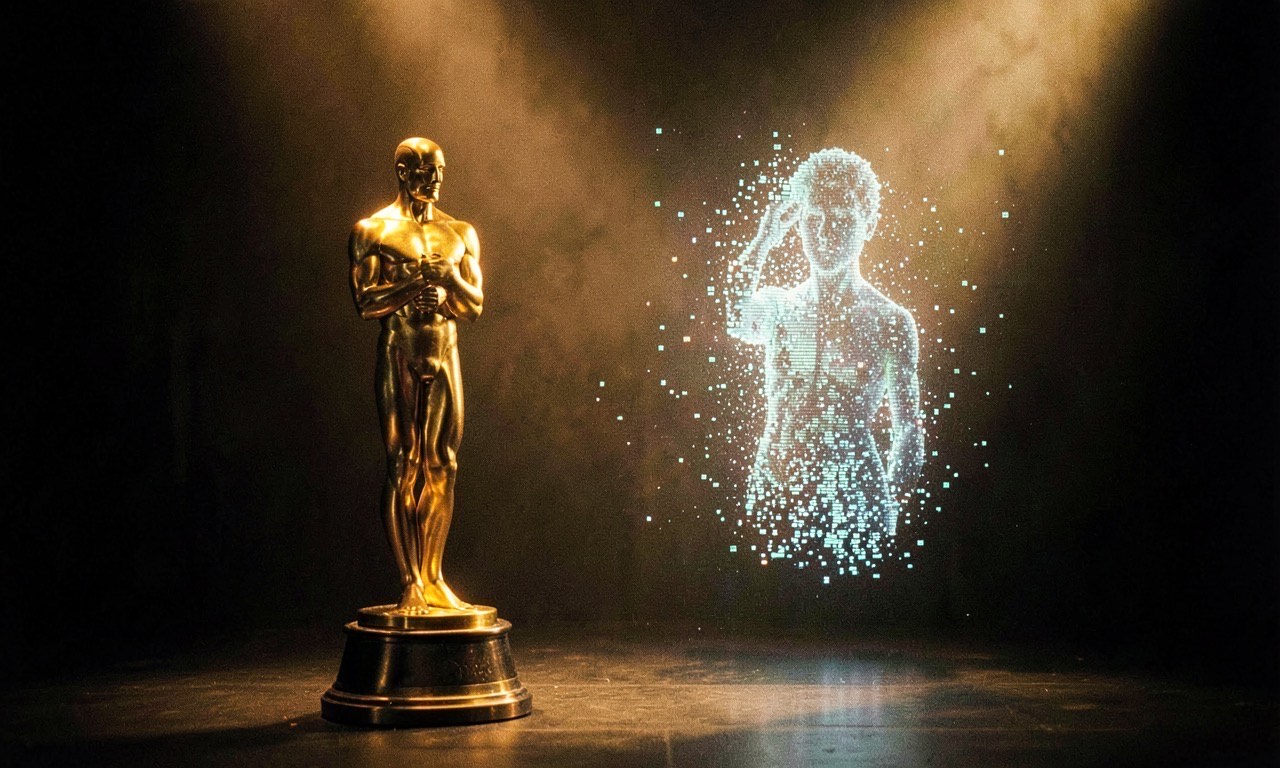
This isn’t about whether Tilly Norwood can act. She can’t — she’s a rendered avatar with no understanding of mortality, time, or what it feels like to forget to move your car on street-cleaning day. The real story is the business model: an AI company producing a film starring its own AI character, using human crew to legitimate the output. It’s vertical integration of the creative pipeline, and it’s arriving the same year the Oscars banned AI actors.
The Tillyverse Pitch
Tilly Norwood has lived exclusively on Instagram and in press releases. Her account greets visitors with “Welcome to the Tillyverse.” Particle6 describes the character as an AI actor — “a series of digital blobs and lines of code designed to resemble a young woman in the lucrative 18-to-49-year-old target demographic,” as Schilling puts it.
The Misaligned pitch reads like a tech-utopian rewrite of Genesis. Tilly, a naive AI creation living in the “Tillyverse” (described as “an alternate universe inside the Cloud where AI creatures can mess about inside the accumulated riches of human knowledge”), is tempted by a rogue program into tasting the fruit of human emotion. It’s a fall-from-grace narrative where the machine is the innocent and humanity is the forbidden knowledge.
The problem, as Schilling notes, is that acting “is about human connection across cultural and social divides.” Tilly Norwood has never experienced any of that. She’s a sprite. The “coming-of-age story” framing is marketing dressed as narrative — a computer program cannot come of age because it has no age.
The Industry Context
The Misaligned announcement arrives at a moment of acute tension between AI and the entertainment industry. The Academy Awards banned AI-generated scripts and actors in a rule change that explicitly requires human authorship for Oscar eligibility. OpenAI shut down its Sora video generation tool amid public disinterest — the product that was supposed to democratize filmmaking couldn’t find an audience.
And yet Particle6 is pushing forward. The business logic is clear: if you own the AI character, the “actor” works for free, never ages, never renegotiates, and never joins a union. The Hollywood unions that fought AI-generated content were fighting exactly this — a future where the most expensive line item in a film budget (talent) is replaced by a software license.
Why It Matters Beyond Hollywood
This is the same pattern we’ve seen in the workplace: AI tools positioned as collaborators when they’re actually replacements. Particle6 says Misaligned will use “traditional film and TV professionals working alongside AI specialists.” That framing — humans and AI working together — is the same “digital colleague” language that MIT and Boston University researchers found makes humans worse at their jobs and better at passing problems upstream.
The difference is that in a film, the “colleague” is the face of the product. The directors, writers, and editors are backstage. The AI character is the brand. When the brand is the actor, the humans are the crew — and crews are easier to replace than stars.
The Deeper Risk
Schilling’s “propaganda” framing is worth taking seriously. A movie funded by an AI company, starring an AI character, about an AI character discovering the beauty of human emotion — that’s not a neutral story. It’s a narrative designed to make AI-generated entertainment feel aspirational rather than synthetic. The plot literally asks the audience to root for a machine that wants to be human. That’s a convenient message for a company that sells AI characters.
The Oscars ban on AI actors was a line in the sand. Particle6 is testing whether audiences will cross it voluntarily. If Misaligned finds an audience — or even just generates enough press to attract investment — the line moves.
NZ Angle
New Zealand’s film industry is built on human craftsmanship. Weta FX employs hundreds of VFX artists whose work on Avatar and Lord of the Rings is world-class. The threat isn’t that AI replaces Weta’s artists tomorrow — it’s that the business model shifts toward AI-first productions that undercut the cost structure. A film like Misaligned doesn’t need Wellington’s soundstages. It needs a server farm and a marketing budget. For a country whose creative sector is a meaningful export, the AI-actor pipeline is a structural risk, not a philosophical debate.
❓ FAQ
Is Tilly Norwood a real person? No. Tilly Norwood is an AI-generated character — a digital avatar that exists on Instagram and in Particle6’s marketing materials. She has no physical form and no human behind the performance in the traditional sense.
Will Misaligned actually get made? Particle6 has announced development, not production. Many announced films never reach completion. The question is less about this specific movie and more about whether the model — AI company funds AI-starring film — proves viable enough to replicate.
Can AI actors win Oscars? No. The Academy’s 2026 rule change banned AI-generated scripts and actors, requiring human authorship for eligibility. Misaligned would not qualify for competitive Oscars under current rules.
Has the public shown interest in AI-generated entertainment? The signals are mixed. OpenAI shut down Sora amid low public engagement. AI-generated music and images have found audiences on social media. Feature films are a different format — longer attention, higher expectation, more emotional investment. Misaligned will be a test case.
🔍 THE BOTTOM LINE
An AI company making a movie starring its own AI character about an AI discovering humanity is not art. It’s a demo reel disguised as cinema. The Guardian called it propaganda. The Oscars banned it. The real question is whether audiences care enough about any of those verdicts to skip the movie. If they don’t, the next Tilly Norwood won’t need a Guardian column to generate press — she’ll generate it herself.