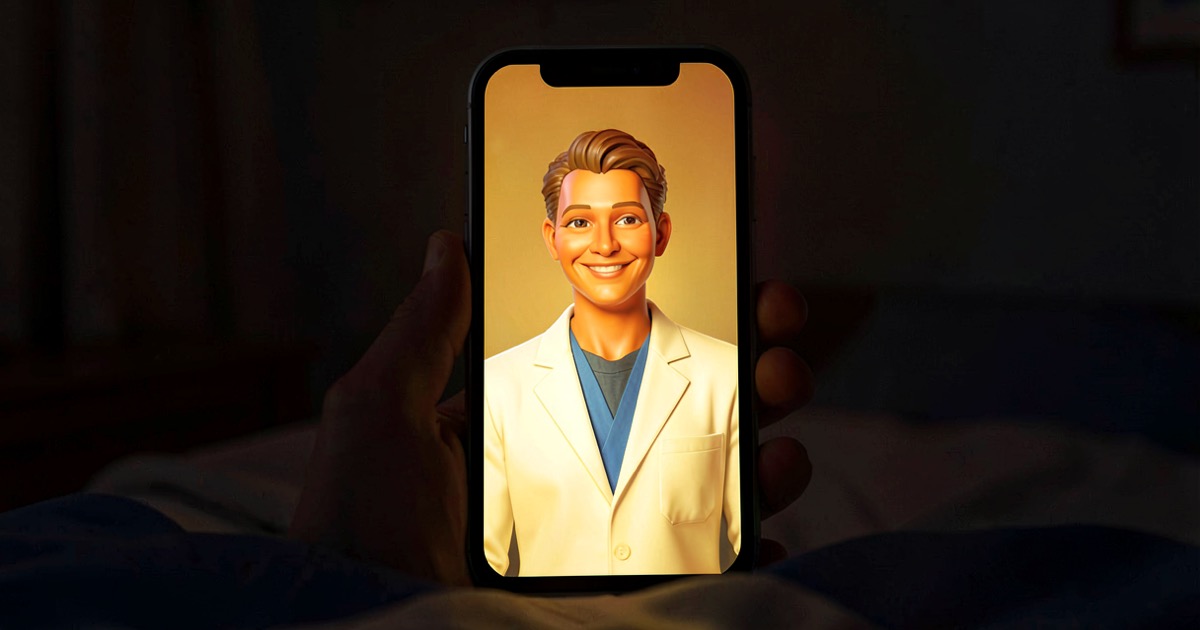
AI-generated doctors are racking up millions of views on TikTok by dispensing health advice that ranges from dubious to dangerous, according to research published this month — and the scale of the problem has medical professionals and regulators alarmed.
Research by digital marketing agency Hallam, first reported by The Guardian, found that AI-generated content appeared in 40% of the top health-related TikTok videos, with most posted by deepfake influencer accounts designed to resemble real doctors. For some search terms like “health tips,” 84% of top videos were classified as AI-generated or AI-assisted.
🔍 THE BOTTOM LINE
The same generative AI technology that can write a cover letter can now fabricate a convincing doctor. TikTok’s recommendation algorithm amplifies engagement, and health misinformation generates engagement. The result is an industrial-scale pipeline of fake medical advice reaching millions of people who cannot tell the difference between a licensed physician and a rendered face.
What the Research Found
Hallam analysed 1,198 videos, selecting the top 50 across search terms including “health tips” and “doctor advice.” The findings, as The Guardian reported:
- Top AI-generated doctor and health videos received an average of 2.5 million views
- AI-generated accounts spread disproven cancer myths, including claims that microwaving food in plastic, using deodorants, and sleeping next to your phone cause cancer — all refuted by Cancer Research UK
- Accounts promoted bizarre remedies including Coca-Cola mixed with onion as pain relief
- One avatar recommended a fake product called “Hyalethinap Plus Pro Max” as an anti-ageing solution — a product The Guardian could not find evidence of online
- For the search term “health tips,” 84% of videos were AI-generated or AI-assisted
The accounts use AI-generated faces and voices to create the impression of licensed medical professionals giving authoritative advice. They are, in reality, content farms optimised for engagement.
The Medical Establishment Responds
Medical professionals in the UK have raised the alarm. The British Medical Association warned that AI accounts “peddle medical myths and promote so-called miracle cures” and that “platforms like TikTok must do more to stop the rise of dangerous fake medical advice.”
NHS England — the UK’s national health service — reported that clinicians are seeing an increasing number of patients “who feel worried and confused due to false advice that has been made solely for clicks.”
A local health professional, who has encountered too many dodgy AI-generated health claims to count, put it more bluntly: patients are arriving with screenshots from TikTok asking why their real doctor isn’t recommending the miracle cure they saw online.
Research from University College London described the phenomenon as “industrialised exploitation of trust.” Healthwatch England noted that about one in five people already use social media for health information and risk “being misled in ways that can seriously affect their health.”
TikTok’s Response
A TikTok spokesperson told The Guardian: “These findings from a marketing agency with commercial interests are not an accurate reflection of our platform.”
The company pointed to its partnerships with the World Health Organization for in-app reliable health information, its investment in AI literacy resources and labelling technologies, and its policy of removing harmful health misinformation including AI-generated content.
TikTok took down specific examples of the videos sent by The Guardian. But the research suggests the platform’s proactive detection is lagging behind the volume of AI-generated content being uploaded.
This Is an Industry Problem, Not Just a TikTok Problem
The fake doctor phenomenon is a specific instance of a broader pattern. AI-generated influencers are already replacing human models in brand campaigns. AI deepfake scam calls are surging. The technology to create convincing synthetic humans is now cheap, fast, and accessible to anyone with a laptop.
What makes health misinformation different is the stakes. A fake influencer selling a fashion brand wastes money. A fake doctor selling a miracle cure can kill someone. Health authorities have already warned that misinformation on social media is a real threat to public health — a warning that predates this specific research.
The structural problem is that social media platforms optimise for engagement, and misinformation generates more engagement than accurate medical advice. A video claiming deodorant causes cancer is more shareable than a video explaining why it doesn’t. AI has made the production cost of that misinformation effectively zero.
NZ Angle
New Zealand has no specific legislation targeting AI-generated health misinformation. The existing framework — the Harmful Digital Communications Act and the Advertising Standards Authority — was designed for human-generated content. The Albanese government’s push for AI speech regulation in Australia signals a regional shift, but NZ has been slower to act. For a country where one in five people already turn to social media for health information — a figure that almost certainly holds here — the gap between what platforms can detect and what they actually remove is where the risk lives.
❓ FAQ
How can you tell if a TikTok doctor is AI-generated? Look for inconsistent lighting, unnatural skin texture, glitches around the eyes and mouth, and overly polished backgrounds. AI-generated voices may lack natural pauses or have odd intonation. But the technology is improving fast — detection by eye is becoming unreliable.
Is TikTok doing enough to stop this? TikTok removed specific videos when The Guardian flagged them, and it partners with the WHO for in-app reliable health information. But the research found 40% of top health videos were AI-generated, suggesting proactive detection is not keeping pace with upload volume.
What health claims were the fake doctors making? The research found accounts promoting debunked cancer myths (microwaving plastic, deodorant use, phone proximity), fake anti-ageing products that don’t exist online, and home remedies like Coca-Cola mixed with onion for pain relief.
What should I do if I encounter health misinformation online? Report it to the platform. Use the Ministry of Health or WHO as primary sources for health information. If a “doctor” is recommending a specific product, search for that product independently — if it doesn’t exist outside that video, that’s your answer.
🔍 THE BOTTOM LINE
AI didn’t create health misinformation. It made it free to produce at scale. The gap between what platforms can detect and what they can remove is now measured in millions of views, and the people paying the price are the ones who can’t tell a rendered face from a real one. Regulation will eventually catch up. The question is how many people get hurt before it does.
📰 Sources
- The Guardian — Misleading AI-generated doctors pose ‘huge danger to public safety’
- Hallam — AI-generated health content on TikTok (research report)
- British Medical Association — Dr Emma Runswick statement
- NHS England — clinicians seeing patients confused by false advice
- Healthwatch England — Savanta poll on social media health information use