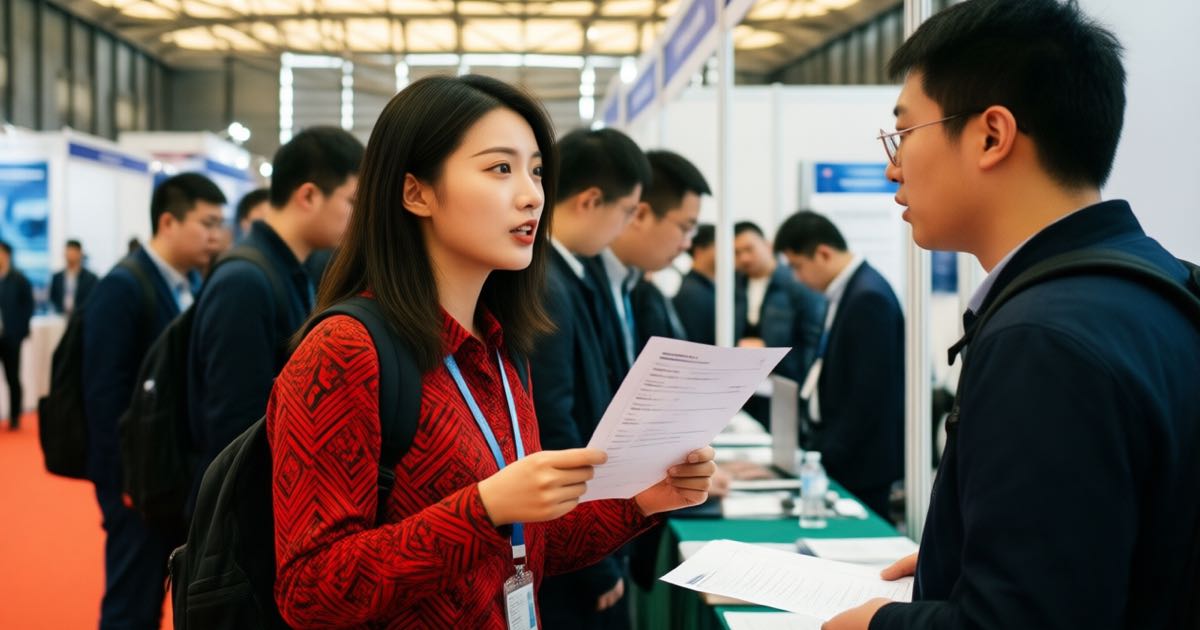
When Art Hebbeler, a 65-year-old IT programme director in the United States, answered his phone for what he assumed would be a routine recruiter screening, the voice on the other end turned out to be an AI bot conducting the interview itself. “You’ve got to be kidding me,” he told CNBC Make It, in reporting published on 15 September 2026. Hebbeler has since submitted more than 600 applications and says he would be reluctant to take another AI interview — though he expects there will be more.
His experience is becoming common enough that candidates are organising against it. According to an April 2026 Greenhouse survey of 1,200 US job seekers, roughly two-thirds have been interviewed by AI, and nearly 4 in 10 have withdrawn from a hiring process over an AI interview. Some candidates told CNBC they now refuse AI interviews outright, withdraw as candidates, or blacklist employers from future consideration — a striking choice in a hiring market widely described as a low-hire, low-fire economy where turning down any interview carries real risk.
What the numbers say
The Greenhouse data sits inside a wider gap between employer and candidate perceptions. In a separate Greenhouse report from 2025, 70 percent of hiring managers said AI helps them make faster and better hiring decisions with fewer recruiter resources, and one in two recruiters said AI had improved hiring overall. On the candidate side, only 8 percent believe AI makes hiring fairer.
That asymmetry — most employers convinced the tools help, most candidates unconvinced they are fair — is the tension the CNBC reporting captures. Job seekers described interviews that felt cold and stilted: no body language to read, no follow-up questions in response to answers, just a prepared script delivered by an automated voice. Hebbeler’s quote has become a shorthand for the problem: “We have AI tools talking to AI tools, not people talking to people.”
The resistance is not universal. Some candidates accept AI interviews as a fact of the market, and social media has produced a genre of lighthearted trolling and malfunction videos alongside the frustration. But the survey numbers suggest refusal has real costs for job seekers — and, increasingly, for employers, who lose candidates they may never know they lost.
The trust gap is not new — but the withdrawal numbers are
Surveys through 2026 have repeatedly measured scepticism about AI hiring. What the Greenhouse data adds is behavioural evidence: candidates are not just telling pollsters they dislike AI interviews, they are walking out of processes because of them. Nearly 40 percent withdrawal is a number hiring teams can ignore only if they never measure drop-off at the interview stage.
The US context is different from New Zealand’s — the American market added 162,000 jobs in August by CNBC’s account, even while hiring stayed sluggish. But the mechanism travels. New Zealand recruiters have been reporting their own version of the same dynamic from the candidate side: amid a flood of AI-assisted applications, recruiters are selling the human edge precisely because automated screening has made early-stage hiring feel impersonal. And local survey work has found a persistent trust gap on AI interviews — two-thirds of HR professionals willing to let AI run the interview, against about a third of employees who agree.
What makes the new numbers worth attention is what they measure. Trust-gap surveys capture attitudes; the Greenhouse figures capture behaviour — withdrawal, refusal, blacklisting. For a hiring team, the difference matters. A candidate who distrusts AI screening still applies. A candidate who withdraws over an AI interview is a vacancy that stays open, and at least some will never appear in any rejection statistics.
What it means for employers and job seekers
For employers, the CNBC reporting points to a design problem more than a verdict on AI hiring itself. The complaints cluster around implementation: interviews with no human fallback, automated voices conducting full first-round assessments without warning, and no opportunity for the two-way questioning that candidates experience as basic respect. Hiring teams that use AI for early logistics while keeping a human in the first substantive conversation appear in the reporting as the implicit contrast case.
For job seekers, the practical reading is more cautious. Refusing AI interviews is a position some candidates can afford and others cannot — Hebbeler’s own account suggests refusing has not been easy for him. Candidates who do face AI interviews can at least prepare for their known weaknesses: answers that stand alone without follow-up, and a recording that will be reviewed later rather than a conversation that adapts. New Zealand job seekers already navigating a market where a single listing can attract a thousand applications have their own view of how the screening stage feels; the US data suggests employers are now losing candidates over it.
Neither side of the story is simple. AI interviews exist because recruiting teams are stretched and application volumes are high; some of the same surveys show recruiters genuinely believe the tools have improved their work. But the candidates walking away are a measurable cost, and the 8 percent fairness figure is a warning about where the trust sits. The companies that treat AI as the screening layer rather than the conversation itself will, on this evidence, keep more candidates in the funnel than those that do not.
— CJ Murden, editor of Singularity.Kiwi. Former digital technologies teacher, author of AI-focused books. Writing with a New Zealand focus.
Frequently asked questions
How common are AI interviews? About two-thirds of 1,200 US job seekers surveyed by hiring platform Greenhouse in April 2026 said they had been interviewed by AI, according to CNBC’s 15 September 2026 report on the data.
How many candidates refuse or withdraw over AI interviews? The same Greenhouse survey found nearly 4 in 10 US job seekers had withdrawn from a hiring process over an AI interview. Some candidates told CNBC they now refuse AI interviews or blacklist employers from future consideration.
Do candidates think AI hiring is fair? Only 8 percent of candidates believe AI makes hiring fairer, against 70 percent of hiring managers who told a separate Greenhouse report that AI helps them make faster, better decisions.
Are AI interviews common in New Zealand? New Zealand survey evidence points the same direction: site coverage of a BambooHR survey found two-thirds of HR professionals would trust AI to conduct an interview alone, while only about a third of employees agreed — and NZ recruiters report selling the human edge as AI floods the application stage.