Amazon has spent the better part of a decade buying robots from other people. Its next big robotics bet is about making them itself. The company announced it will invest more than $100 million in a 585,000-square-foot advanced manufacturing facility in Greenwood, Indiana — creating 300 skilled manufacturing and engineering jobs, with production launching by 2028.
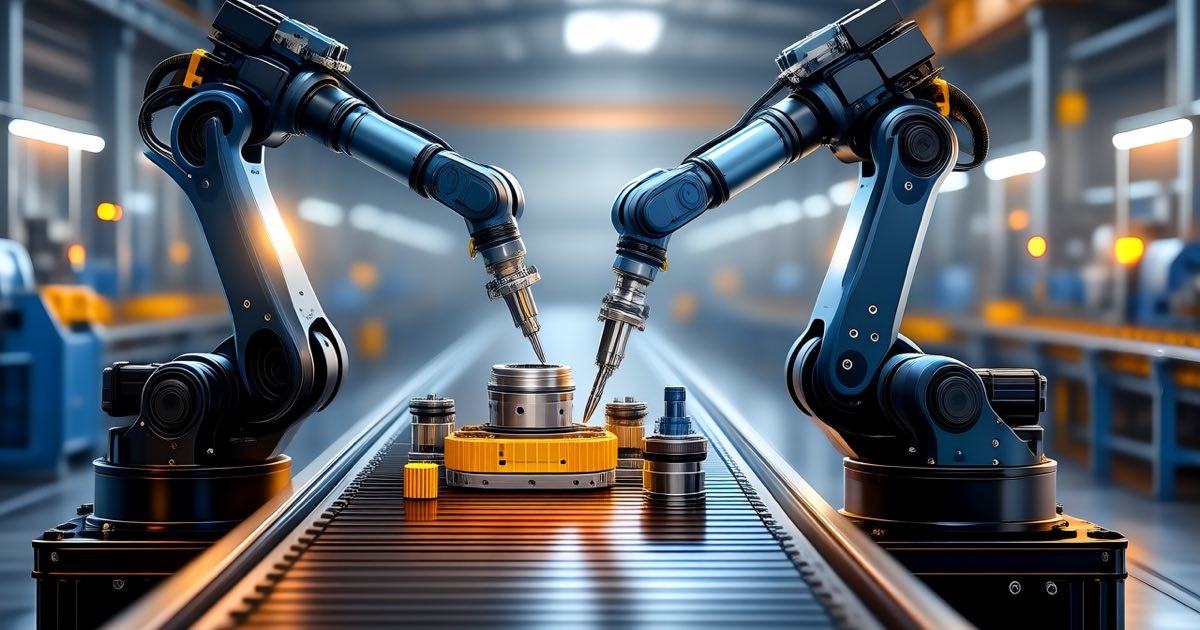
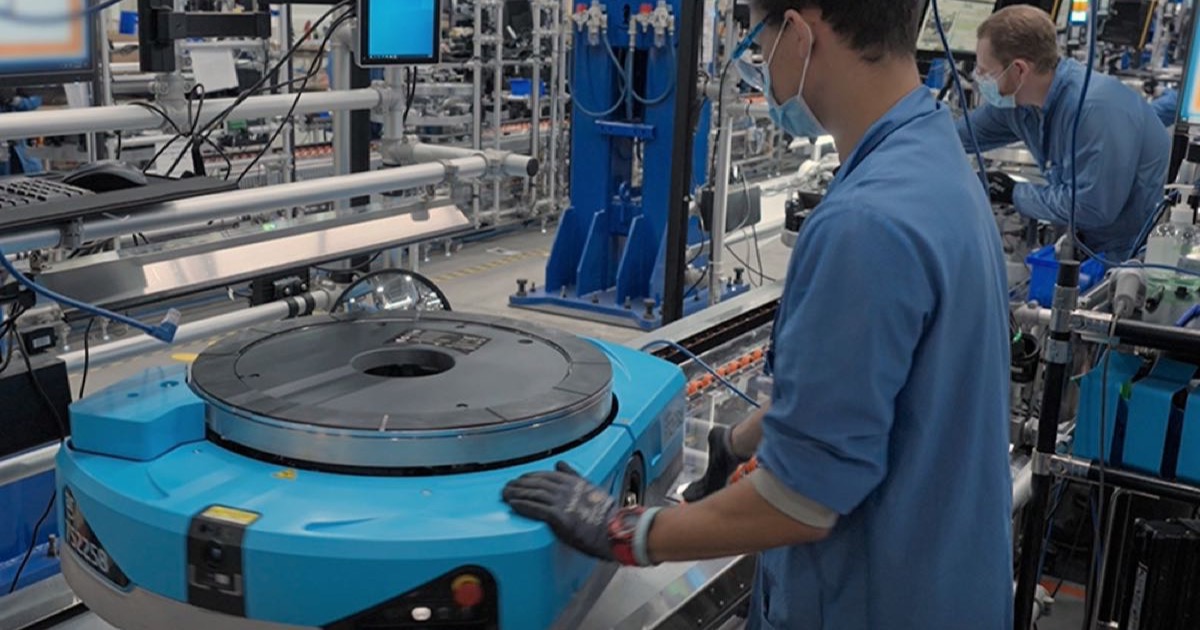
The stated purpose, per the announcement first reported by The Wall Street Journal and covered by The Robot Report and others on 24-25 September NZT: the site “will produce products that power Amazon’s fulfillment and robotics network across North America.” In plainer terms, this is where robots and the machinery that supports them get built — not just deployed. The facility plans to integrate advanced fabrication, robotic welding, automated powder coating and assembly, supported by AWS and what Amazon calls AI-powered smart manufacturing systems.
The announcement traces back to The Wall Street Journal, which first reported the plan; SiliconANGLE and The AI Insider both covered it on 24 September NZT, two days before our write-up. Until August, Amazon had just two robot factories, both in Massachusetts; the third opened in Austin, Texas that month, and Greenwood makes four — doubling the number of plants where Amazon builds robots inside two months. The Greenwood building will fabricate, weld and powder-coat parts before onsite assembly, with robots doing the welding, and Amazon says the 300 jobs should average close to $100,000 a year.
The corroboration also adds texture Amazon’s own release leaves out. SiliconANGLE notes the Kiva lineage: Amazon paid $775 million for warehouse robot maker Kiva Systems in 2012, and its Westborough, Massachusetts plant, opened in 2021, can reportedly turn out up to 1,000 robots a day. More pointed is the juxtaposition both outlets draw with internal Amazon documents The New York Times reported last October — plans to avoid hiring more than 600,000 US workers by 2033 through automation, which Amazon disputed as coming from “just one team.” Indiana’s governor called the plant “a powerful testament to the strength of our manufacturing workforce”; the tension between those two readings is exactly what makes this story more than a ribbon-cutting.
Scale context makes the announcement more than a press release. Amazon says it has manufactured more than one million robots in the United States to date, deployed across more than 300 facilities globally, involved in assisting with 75% of all customer orders delivered worldwide. The Indiana site follows an August investment in Texas robotics manufacturing, which fits a pattern: the company that once bought its robots from Kiva Systems (and rebranded them) is progressively onshoring and in-housing the production of its own fleet.
That pattern has an economic logic Amazon does not spell out in the release, and it connects to broader industry data. US factories installed robots at a record pace even as manufacturing hiring stalled — the trade being made across the sector is capital for labour, in facilities exactly like the one Amazon is describing. Amazon is unusual mainly in that it sits on both sides of that trade: it deploys the robots at unmatched scale, and now it will manufacture a growing share of them too.
There is a second thread here worth watching. Amazon brought back workers it had previously laid off into new AI-adjacent roles — the reshuffle inside big tech companies as automation changes which jobs exist. The Greenwood facility’s 300 jobs are the physical-side version of the same phenomenon: not fewer jobs because of robots, but different ones — fabrication, welding, robotics assembly — clustered around the machines. Whether 300 roles per $100M represents a durable template or a modest one-off is the open question; the comparable Toyota move, 400,000 factory robots announced at once, suggests the scale of ambition at the top of the market runs far larger.
The 2028 launch date is the honest part of the timeline: this is a three-year build, not a next-quarter announcement. By the time the Greenwood site ships its first products, Amazon’s fulfilment network — already the largest commercial robot fleet on the planet — will have grown again, and more of it will trace back to its own factory floor.