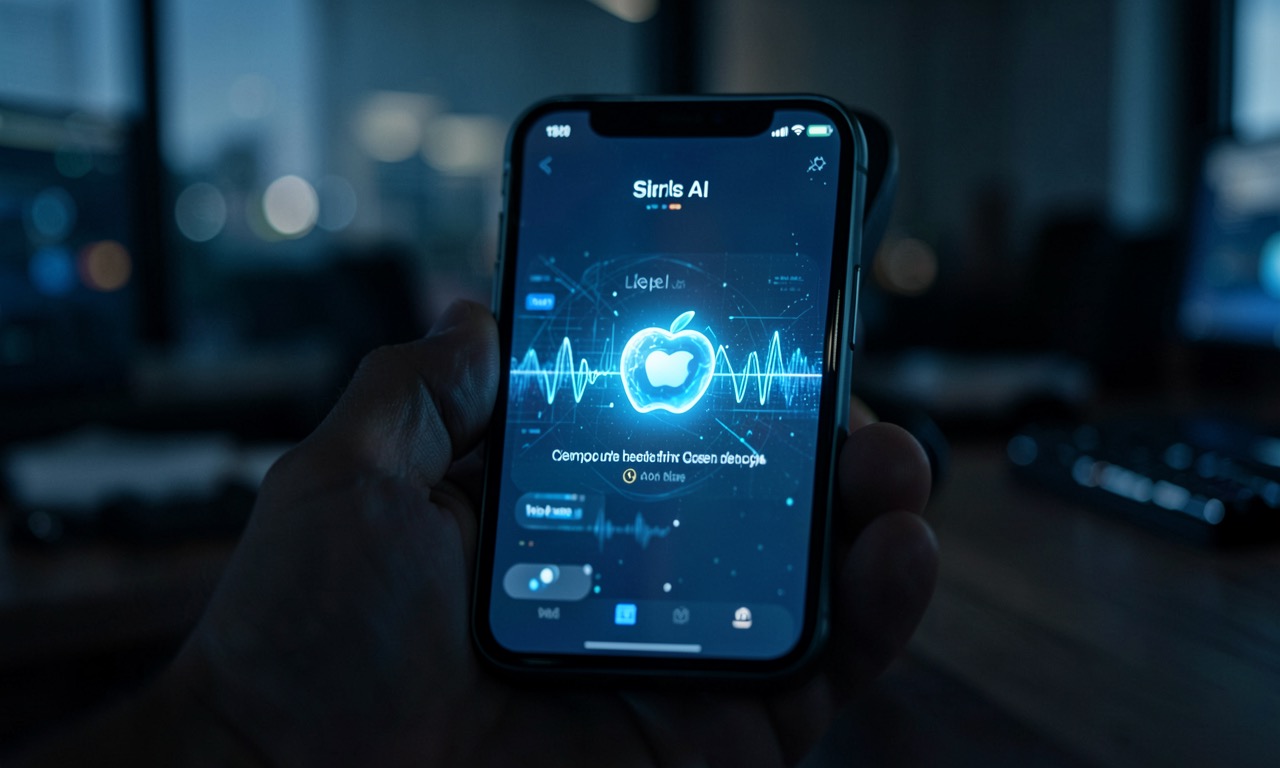
Apple has officially overhauled Siri into “Siri AI,” a deeply personalized assistant powered by native Apple Intelligence. Debuting today, the overhaul transforms it from a command-based tool into a context-aware system across iPhone, Mac, and iPad—effectively closing the gap with competitors while maintaining strict on-device privacy for the everyday user.
🔍 THE BOTTOM LINE Apple has finally moved Siri from “frustrating basic assistant” to “intelligent personal agent,” leveraging massive local processing power to win over the privacy-conscious crowd who are weary of sending every query to a cloud server.
The WWDC 2026 Turning Point
For years, we’ve watched Apple play catch-up in the LLM race. While OpenAI and Google were sprinting ahead with raw horsepower, Apple was refining its ecosystem. Today’s launch at WWDC 2026 marks the moment that “lag” ended. The new Siri AI isn’t just an app; it is a core OS layer that understands your calendar, your emails, and your personal habits to provide proactive assistance rather than reactive answers.
From Commands to Context
The old Siri was famous for its inability to handle complex instructions (e.g., “Find that email from my boss about the BBQ and add the date to my calendar”). The new Siri AI handles this effortlessly because it no longer treats commands as isolated events. It uses Apple Intelligence to understand intent across apps, making it a much more capable companion for Kiwi users who just want their tech to “just work.”
The Privacy Moat
Where Apple wins—and where they’ve built a massive competitive advantage—is privacy. While ChatGPT and Gemini rely heavily on cloud processing, Siri AI prioritizes on-device execution for personal data. By keeping the “personal” part of your life local, Apple is positioning itself as the safe haven for users who are wary of how other companies might use their conversational data. This aligns with the privacy-first positioning Apple has staked out — a stance we’ve covered before here at Singularity.Kiwi.
How it stacks up against the Giants
Let’s be honest: Is it as creative as Claude? Probably not yet. However, for 90% of users, Siri AI is more useful because it lives where they actually spend their time—in their texts, their photos, and their system settings. While Google’s Gemini is a powerhouse for information retrieval and OpenAI’s models excel at heavy-duty reasoning, Apple has won the “convenience” war by making AI invisible yet omnipresent.
❓ FAQ Is Siri AI replacing ChatGPT? Not entirely, but for most everyday tasks (scheduling, reminders, local data synthesis), it aims to make third-party apps less necessary for the average user.
Does it work on older devices? No. The heavy lifting of “Siri AI” requires the Neural Engine capabilities found in the latest iPhone Will it run on my iPhone 15? Yes — but with reduced capability. The full Siri AI experience requires an A18 Pro or newer chip for on-device intelligence.
Is my data safe? Yes for personal context — it stays on-device. Only complex queries that exceed on-device capability get sent to Apple’s Private Cloud Compute, which has been audited as not retaining data.
🔍 THE BOTTOM LINE
Apple’s Siri AI launch is the first credible signal that Cupertino can compete in the generative AI era without surrendering user privacy. It’s not the most capable model on the market — but for the 1.5 billion iPhone users who never installed ChatGPT, it might be the one that actually matters.