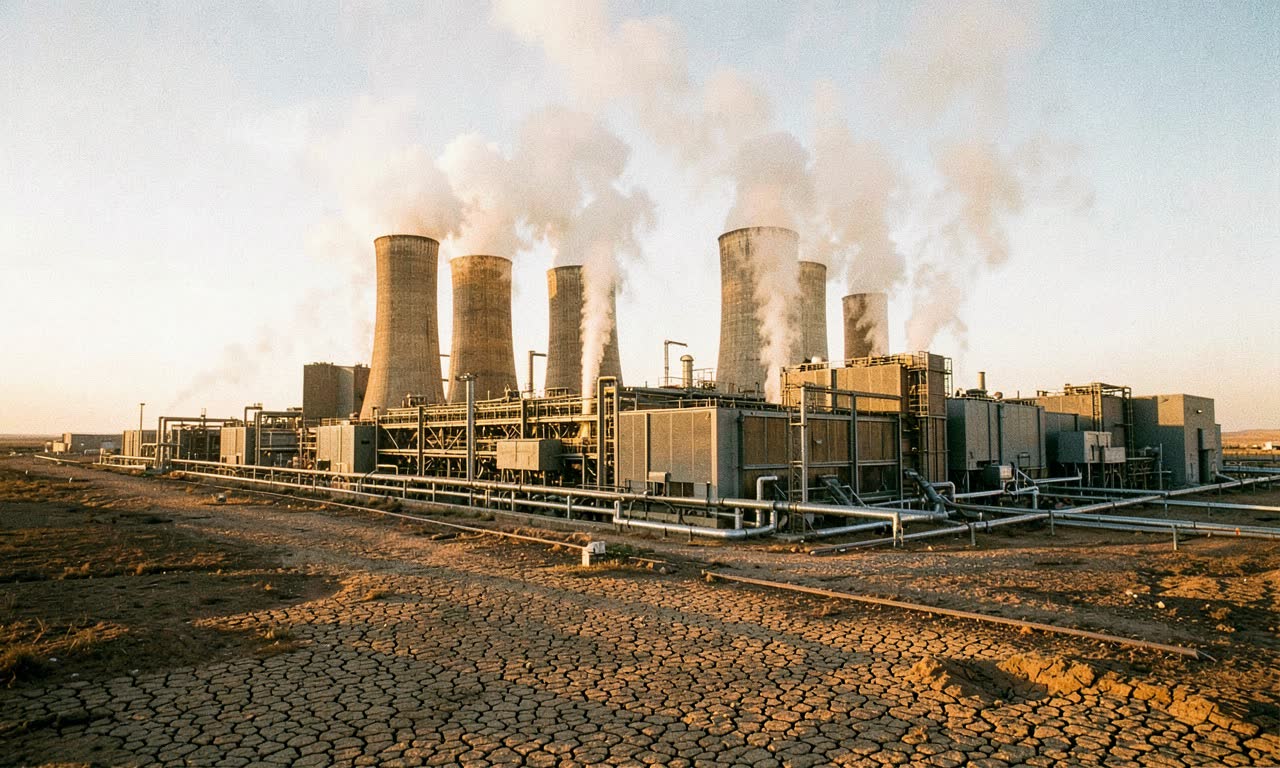
A deadly storm ripping through Chile’s northern mining belt has forced copper operations to halt, sending a jolt through a supply chain that the AI industry depends on more than most people realise.
The Financial Times reports that the storm has disrupted operations at high-altitude copper mines in the Atacama Desert region, the same arid plateau that produces roughly a third of the world’s copper supply. The metals boom driving AI infrastructure — data centre wiring, chip packaging, power grid expansion — is reliant on mines that sit above 3,000 metres and are increasingly exposed to weather volatility that climate scientists have been predicting for years.
🔍 THE BOTTOM LINE
The AI industry talks about compute in terms of GPUs and data centres, but the physical supply chain starts with copper — and Chile’s copper rests in mines that are geographically precarious. A single storm has exposed how thin the margin is between the metal the AI build-out demands and the weather that increasingly threatens it. The implication for New Zealand and other countries betting on AI infrastructure is that supply chain resilience is not just about chips — it is about the raw materials underneath them.
What Copper Has to Do With AI
What is copper’s role in AI? Copper is the invisible backbone of every AI system. A single large data centre uses thousands of tonnes of it — in electrical wiring, power distribution, transformer coils, printed circuit boards, and the interconnects that link GPUs into computing clusters. The shift from air-cooled to liquid-cooled data centres, driven by the heat output of modern AI accelerators, requires even more copper for plumbing and heat exchangers.
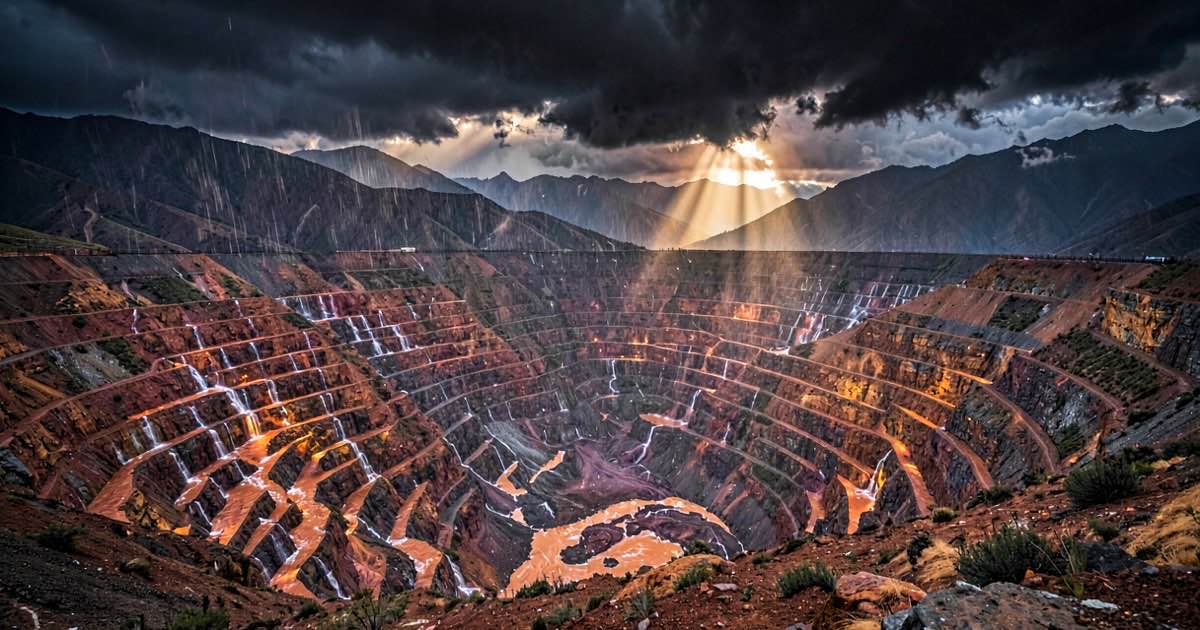
Chile produces approximately 5.5 million tonnes of copper per year, about 30% of global supply. The country’s largest mines — Escondida, Chuquicamata, Collahuasi — sit in the Atacama Desert at elevations above 3,000 metres. These are not underground tunnels. They are open-pit operations carved into mountainsides, exposed to whatever the sky delivers.
The FT describes a metals boom “reliant on high-altitude, declining mines that are exposed to increasing weather volatility.” The story is not that a storm hit Chile. Storms always hit Chile. The story is that the operations feeding the AI industry’s copper demand occupy a narrowing geographic and climatic band, and that band is becoming less stable.
The Storm and the Supply Chain
The storm that triggered the disruption brought heavy rainfall and flooding to regions that normally receive less than 15 millimetres of rain per year. For open-pit mines, the problem is not just water in the pit — it is landslides on the terraced walls, flooded haul roads, and the shutdown of the ore-processing plants that depend on dry conditions to crush and concentrate raw rock into refined copper.
The disruption comes at a moment when copper demand is climbing sharply. The energy transition alone is projected to nearly double copper demand by 2035, and AI infrastructure is layering a new source of demand on top of that. Data centre construction has surged, with hyperscale facilities requiring copper densities that rival traditional industrial consumers. The International Energy Agency estimates that AI data centres could account for over 1,000 TWh of electricity consumption by 2026, and every watt of that power flows through copper.
What makes the Chile situation particularly acute is that the mines are not just high-altitude — they are also aging. Ore grades at Chile’s largest copper mines have been declining for over a decade. Lower-grade ore means more material must be moved and processed to extract the same amount of copper, which means more water, more energy, and more exposure to whatever weather arrives on a given day.
The Climate Connection
The Guardian has documented separately how the data centre boom in Chile is exacerbating the country’s mega-drought, with hyperscale facilities drawing on aquifers in regions already under water stress. The irony is stark: AI infrastructure requires copper, copper mining requires water, and the same regions supplying both are running out of water.
The storm does not change the long-term drought. It adds a different kind of volatility — extreme precipitation events that damage infrastructure designed for arid conditions. Climate models for the Atacama region predict that while average rainfall will continue to decline, the intensity of individual storm events will increase. That means more days like this one: mines shut, supply interrupted, spot prices spiking.
This is not a Chile problem alone. Copper mining in Peru, the Democratic Republic of Congo, and Mongolia faces similar climate exposure. The Philippine copper industry has its own weather vulnerabilities. What is new is the AI industry’s growing dependency on a supply chain that climate change is making less reliable.
What This Means for New Zealand
New Zealand does not mine copper at scale. But the country is increasingly betting on AI infrastructure — the NZ Super Fund has flagged sovereign AI infrastructure as an investment priority, and the sovereign AI conversation has been gaining traction. Every one of those plans assumes that the physical inputs — copper, silicon, power grid components — will be available at something resembling current prices.
A storm in Chile pushing copper prices up 3-5% on the London Metal Exchange is a rounding error for a hedge fund. It is not a rounding error for a country building a data centre and trying to budget for the cabling. New Zealand’s geographic isolation already adds freight costs to imported materials. Climate-driven supply disruption in the source country adds a second layer of price volatility that infrastructure planners are not yet modelling.
The broader lesson connects to the distributed AI argument: if the supply chain for concentrated, hyperscale AI infrastructure is physically fragile, the case for distributed, smaller-footprint AI systems that use less copper per compute unit gets stronger. A data centre running 100,000 GPUs needs a copper backbone that a network of 1,000 edge nodes does not.
❓ FAQ
Does this storm actually affect AI compute? Not immediately. Copper supply disruptions take weeks to months to flow through to manufacturers. But spot price spikes affect procurement decisions, and repeated disruptions compound — mines that flood take time to dewater and resume full production.
How much copper does a data centre actually use? A large hyperscale data centre uses between 2,000 and 5,000 tonnes of copper, depending on size and cooling architecture. That copper goes into power distribution, grounding, interconnects, and cooling systems. AI-specific data centres with liquid cooling use more.
Is Chile the only source of copper for AI infrastructure? No. Peru, the DRC, China, and Mongolia are also major producers. But Chile’s 30% global share means disruptions there have outsized price effects. There is no surplus capacity elsewhere that can quickly replace Chilean output.
Could AI reduce copper demand? AI optimisation of mining operations, ore sorting, and supply chain logistics could improve extraction efficiency. But that is a long-term play. In the short term, AI is a net consumer of more copper, not less.
🔍 THE BOTTOM LINE
The AI industry has spent two years arguing about chips, models, and training compute. The Chile storm is a reminder that the supply chain does not start with NVIDIA. It starts with a hole in the ground in the Atacama Desert, and the sky above that hole is becoming less predictable. For countries and companies building AI infrastructure, copper is not a commodity story — it is a climate story, and the climate is not cooperating.