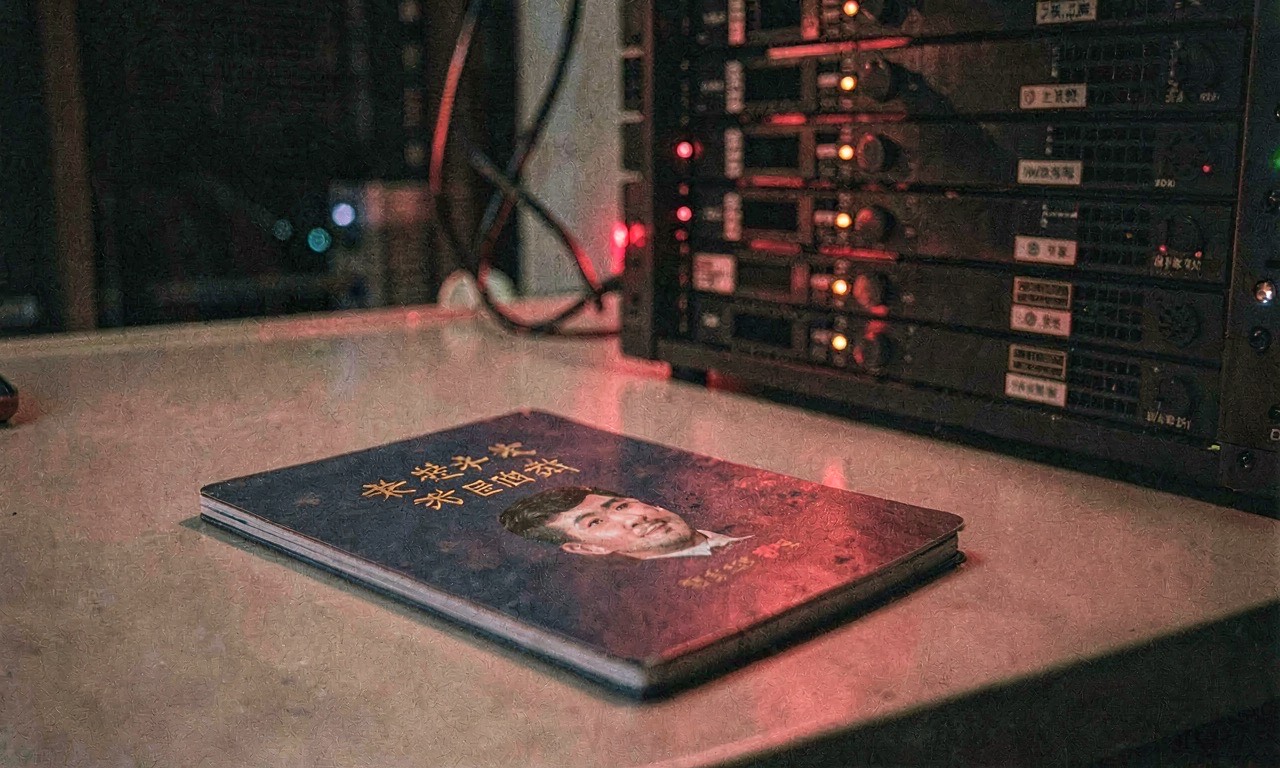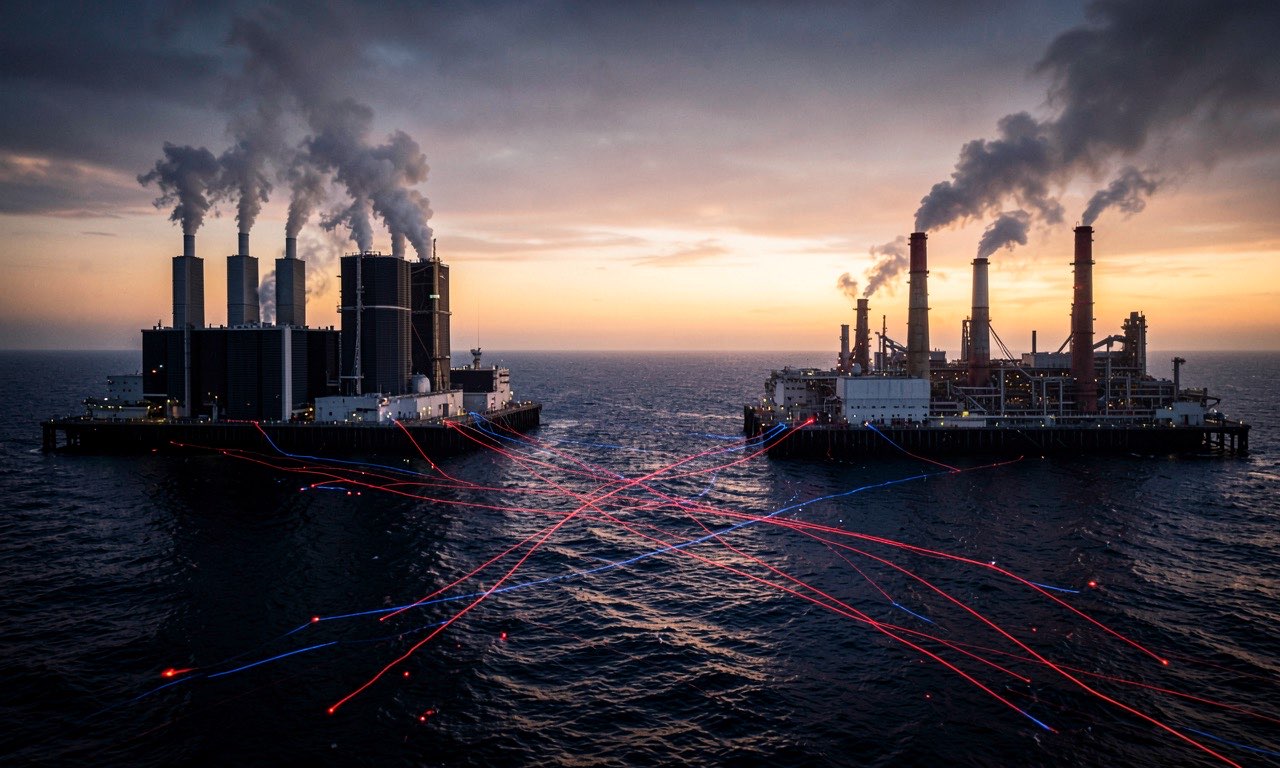
China builds AI the same way it builds cars — through shared platforms, coordinated investment, and national champions competing on top of common infrastructure. The United States is now responding with a Manhattan Project-scale mobilization. And both sides are quietly closing the doors on the open-source era.
This is not a prediction about what might happen. It’s a description of what is already happening.
🔍 THE BOTTOM LINE
China’s AI ecosystem mirrors its auto industry: government designates national champions, funds shared platforms, lets market competition sort out winners. The US has launched the Genesis Mission — 40,000 scientists, 17 national laboratories, explicitly modelled on the Manhattan Project. Both countries are now restricting AI exports. The open-source wave that defined AI in 2025 and 2026 may be the last era of genuinely borderless AI. What’s replacing it is national AI — and every country that doesn’t have one is about to find out what dependency looks like.
The Auto Parallel
China’s auto industry doesn’t work the way Western automakers do. Instead of every company building its own platform from scratch, the industry shares foundational technology and competes on top of it.
BYD’s e-Platform 3.0 underpins BYD, Denza, Fangchengbao, and Yangwang — and the Blade Battery is supplied to Tesla and Toyota. Geely’s SEA architecture supports 11+ brands: Zeekr, Polestar, Volvo, Smart, Lotus, Lynk & Co, even Waymo’s robotaxi. SAIC’s Nebula platform is shared across MG, Roewe, IM Motors, and Maxus. NIO’s NT platform underpins NIO and Onvo, with 1,300+ battery swap stations open to all.
The China Automotive Chip Alliance coordinates bulk procurement of chips, LiDAR, and sensors across all major automakers. The result: lower costs, faster iteration, and a coordinated assault on global market share that European manufacturers are now struggling to contain.
This isn’t a free market. It’s a coordinated market with competition layered on top. The government doesn’t pick the winner — it picks the playing field, builds the infrastructure, and lets companies fight it out on shared ground.
The Same Playbook in AI
China’s AI industry runs on the same model.
Open-weight models as shared platforms. DeepSeek releases MIT-licensed models — V2, V3, R1, V4 — that anyone can download and build on. DeepSeek trained V3 for approximately $6 million on older A100 chips, proving that US export controls on cutting-edge hardware accelerated efficiency innovation rather than blocking progress. Alibaba’s Qwen is Apache 2.0 for smaller models, scaling up to 235 billion parameters. Zhipu AI (ChatGLM), Baichuan, 01.AI (Yi), and Shanghai AI Lab (InternLM) all release open-weight models.
Shared compute infrastructure. Beijing, Shanghai, Shenzhen, and Wuhan all operate subsidised AI compute centres as part of the “East Data West Computing” national project. Companies don’t each need to build their own GPU clusters — they access shared national compute. DeepSeek reportedly shares 27% of its compute cluster externally.
National AI Teams. The government designated 15 “National AI Teams” — Baidu, Alibaba, Tencent, SenseTime, iFlytek, and others — each assigned a specialised AI sector to lead. It’s the same pattern as the auto industry: government designates champions, assigns domains, funds shared infrastructure.
Not everything is open. Baidu’s ERNIE is mostly proprietary. Tencent’s Hunyuan is closed, integrated into the WeChat ecosystem. SenseTime and Megvii are closed, focused on surveillance and security. The first companies to receive CAC regulatory clearance gain a moat. China’s AI ecosystem is dual-track: open-source pioneers coexist with closed giants.
The point isn’t that China is purely open or purely closed. It’s that the coordination is real, the sharing is strategic, and the government’s hand is visible throughout.
The Fragmented West
The Western AI industry is the opposite model. OpenAI, Google, Anthropic, Meta, and Mistral are each building redundant infrastructure, training similar models, and duplicating effort — every company rebuilding the same wheel independently, where in China those layers are shared.
Competition drives innovation — that’s the Western advantage. OpenAI’s urgency comes from Google. Anthropic’s safety focus differentiates against OpenAI’s speed. Meta’s open-source play undercuts the closed labs. The pressure is real and it produces results. But the duplication is staggering, and the strategic question is whether the West’s competitive model can keep pace with China’s coordinated model when the coordination is delivering results. DeepSeek’s $6 million training cost is the proof point. China’s shared compute infrastructure means no single company bears the full cost. The open-weight ecosystem means improvements propagate to everyone. The National AI Teams structure means each company has a designated lane and government backing.
This doesn’t mean China’s model is superior. The auto industry is running at roughly 50% factory utilisation, with duplicated investments across provinces and politically-directed capital allocation creating potential bubble conditions. The same risks exist in AI. But for now, the coordinated model is delivering exactly what it was designed to: rapid scale-up, cost leadership, and global market share.
The US Response: Manhattan Project Territory
The United States has already moved. What was theoretical a year ago is now policy.
November 2025: President Trump signed Executive Order 14363, launching the Genesis Mission. The order explicitly invokes the Manhattan Project as precedent, mobilising 40,000 Department of Energy scientists and 17 national laboratories toward AI-driven scientific dominance. The Department of Energy — the agency that descended from the original Manhattan Project — runs the programme.
January 2026: The Pentagon signed an AI Acceleration Strategy adopting explicit “wartime posture.” The document declares that “the risks of not moving fast enough outweigh the risks of imperfect alignment.” It mandates 30-day deployment timelines for new AI models in military contexts.
July 2026: The White House announced more than $5 billion in Genesis Mission funding. The proposed $1.5 trillion defence budget for FY2027 — a $500 billion increase — includes substantial AI spending.
The message is unmistakable: America is no longer merely competing. It’s mobilising. The framing has shifted from a commercial race to a national security imperative. AI is now treated the way nuclear technology was in 1942 — too consequential for the private sector to handle alone, too strategic to leave to market forces.
CSIS analysis frames the Genesis Mission as an attempt to replicate the Manhattan Project’s institutional model: concentrate talent, direct it toward a singular goal, and accept that the normal rules of research and development don’t apply when the stakes are existential.
Both Sides Are Closing the Doors
While the US mobilises, both countries are simultaneously restricting the flow of AI technology outward.
The US has been restricting chip exports since 2023. In July 2026, it went further — threatening sanctions against Chinese AI models over alleged IP theft through distillation. Palantir’s CTO publicly called Chinese open-source AI an “economic threat.” The US is not just restricting hardware — it’s now targeting the models themselves.
China is moving in the same direction. On July 7, 2026, Reuters reported that Beijing is in talks with Alibaba and ByteDance to restrict overseas access to China’s most advanced AI models. The government is considering classifying top AI models as national security assets. The Economist questioned whether China’s open-source wave was always strategic rather than ideological — “a trap” rather than a gift.
Both sides are restricting simultaneously. The US restricts chips going out. China is restricting models going out. The open-source era — the period when DeepSeek, Qwen, and Llama were freely available to anyone, anywhere — may be closing.
This is the signal. When both sides of an arms race start restricting exports, the technology is being reclassified from commercial product to strategic asset. That’s what happened with nuclear technology. That’s what happened with ballistic missiles. That’s what’s happening with AI.
The Prediction: National AI
The trajectory points toward national AI — not as a future possibility, but as a present direction.
If the US frames AI as a national security imperative (it has), mobilises government resources at Manhattan Project scale (it has), and restricts exports (it has), then the private AI companies become extensions of national strategy. OpenAI, Google, Anthropic, and Meta are already embedded in Pentagon classified networks and core military systems. The line between commercial AI and national AI is blurring.
If China sees its open-source models as strategic assets rather than public goods (it’s starting to), restricts overseas access (it’s moving to), and coordinates its AI industry through government-designated champions (it does), then the open-weight era was a phase, not a permanent state. The models that are freely available today — DeepSeek, Qwen — may not be freely available tomorrow.
The endpoint is national AI versus national AI. Not companies competing, but nations competing through their AI industries. Open models stop. Export controls tighten. The technology bifurcates into two ecosystems — a US-aligned stack and a China-aligned stack — with a shrinking zone of shared, open technology between them.
This isn’t a radical prediction. It’s the logical conclusion of decisions already made.
There is a counter-argument. The Coalition for a Baruch Plan for AI argues that the very scale of US mobilisation creates treaty leverage — if America demonstrates it is serious about winning at any cost, China has an incentive to negotiate rather than risk losing. The Baruch Plan of 1946 proposed the same for nuclear technology. It failed. The logic was sound — some technologies are too dangerous for uncoordinated national competition — but the political will didn’t exist. A treaty is possible. But the trajectory is heading the other way, and each month that mobilisation accelerates, the window narrows.
What This Means for New Zealand
When AI goes national, the countries that have none are exposed in a way that makes the data center as military target discussion look like the opening act.
If the AI stack bifurcates into US-aligned and China-aligned ecosystems, New Zealand faces a choice it has never had to make explicitly: which stack do we build on? The Five Eyes alliance points one way. Our trade relationship with China points another. Our economic dependence on both makes neutrality difficult.
As we reported in May, half of APAC governments are building sovereign AI infrastructure. NZ’s blueprint didn’t mention it. The sovereign AI build argument — that NZ should own its AI stack on renewable energy with open models — was framed as opportunity. The national AI trajectory reframes it as necessity.
When AI was a commercial product, you could buy it from anyone. When AI becomes a national asset, you buy it on terms set by the selling nation — or you don’t buy it at all. The countries with no domestic AI capability will be in the position of countries without oil reserves in the 1970s: dependent, vulnerable, and paying whatever price the producers set.
The open-source era gave every country a window to build domestic AI capability using free models. That window may be closing. NZ hasn’t walked through it yet.
❓ FAQ
Is AI really being treated like nuclear technology? The US government explicitly invoked the Manhattan Project when launching the Genesis Mission. The Department of Energy — the agency that descended from the original Manhattan Project — runs the programme. The Pentagon’s AI Acceleration Strategy adopts “wartime posture.” The framing is deliberate and the institutional parallels are intentional.
Would China really stop releasing open-source models? It’s already moving in that direction. Reuters reported in July 2026 that Beijing is in talks with Alibaba and ByteDance to restrict overseas access to advanced AI models. The Chinese government is considering classifying top models as national security assets. The open-source wave may have been a strategic phase, not a permanent commitment.
Can’t the West just cooperate like China does? The coordination mechanism is different. China’s government can designate national champions and mandate sharing. Western governments can’t order OpenAI to share infrastructure with Google. The competitive dynamics that drive Western AI innovation also prevent the kind of coordination China achieves through top-down direction.
Is a US-China AI treaty still possible? Some analysts argue that the scale of US mobilisation creates leverage for a negotiated settlement. The logic has historical precedent (the Baruch Plan for nuclear technology). But the trajectory is heading toward competition, not cooperation. The window is narrowing.
What does national AI mean for NZ? If AI becomes a national asset rather than a commercial product, countries without domestic AI capability become dependent on whichever stack they align with. NZ has no sovereign AI compute at scale. The open-source era gave every country a window to build domestic capability — that window may be closing.
📰 Sources
- White House — Launching the Genesis Mission (November 2025)
- White House — More Than $5 Billion for the Genesis Mission (July 2026)
- Department of Energy — The Genesis Mission
- CSIS — The Genesis Mission: Can the United States’ Bet on AI Revitalize US Science?
- CBPAI — The Pentagon Just Declared Wartime AI Mobilization
- Reuters — Beijing is looking at curbing overseas access to China’s top AI models
- Semafor — US grapples with rise of Chinese open-source AI
- TechCrunch — US threatens sanctions against Chinese AI models over IP theft
- The Economist — When China’s open-source AI is a trap
- CNBC — Iran threatens Nvidia, Apple and other tech giants with attacks
- TIME — China May Restrict Access to Its Most Powerful AI Models
- Axios — The secret Trump administration battle to fight Chinese AI
— CJ Murden, editor of Singularity.Kiwi. Former digital technologies teacher, author of AI-focused books. Writing with a New Zealand focus.