Meta just learned the hard way that in the AI race, your acquisition is someone else’s national security threat.
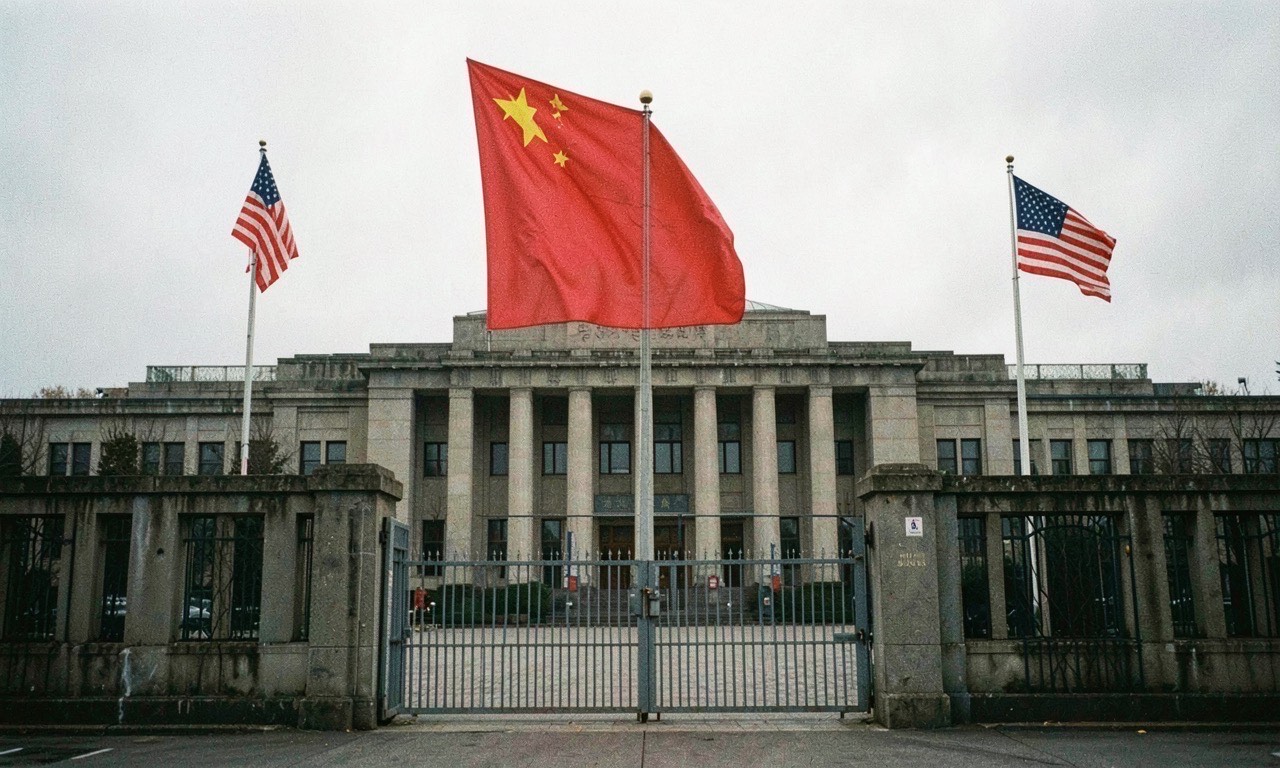
On April 27, China’s National Development and Reform Commission (NDRC) formally blocked Meta’s $2 billion acquisition of Manus AI, the Singapore-based startup behind one of the most capable AI agent platforms on the market. The deal is dead. The founders can’t leave China. And the implications go well beyond one blocked transaction.
How We Got Here
Meta announced the Manus acquisition in December 2025, aiming to supercharge its AI agent capabilities for ads, Instagram, and its broader consumer ecosystem. Manus, founded by Chinese entrepreneurs Xiao Hong and Ji Yichao (through their company Butterfly Effect/Monica), had built a “general AI agent” that could handle research, data analysis, and automation — the kind of agentic AI that every Big Tech company is racing to deploy.
The problem? Manus was incorporated in Singapore, but its founders, core tech, and talent were Chinese. China saw what was happening and intervened.
By January 2026, Chinese authorities had launched a formal probe. By March, the co-founders were barred from leaving the country. The investigation focused on three concerns: national security (AI agent technology leaving Chinese jurisdiction), talent outflow (key researchers moving to a US company), and what officials called “Singapore washing” — the practice of relocating Chinese companies to Singapore to evade Chinese regulations.
Now the NDRC has formally killed the deal, citing antitrust, security, and tech sovereignty concerns. Meta says it’s complied with all regulations and expects resolution, but nobody in the industry believes that’s happening.
Why This Matters
This is the first major AI acquisition blocked by China on national security grounds, and it sets a precedent that should make every tech M&A lawyer nervous.
Consider what’s at stake: Manus isn’t just another chatbot. Its AI agent platform can autonomously execute complex tasks — research, analysis, workflow automation. That’s exactly the kind of capability that military and intelligence agencies want. China blocking its transfer to Meta isn’t paranoia; it’s strategy.
But the implications are bigger than Manus:
For US tech companies: If you’re planning to acquire any AI company with Chinese founders, Chinese tech, or Chinese operations, you now have two governments to please — and they want opposite things. The US CFIUS process was already a headache. Now China has its own veto.
For Chinese AI talent: The message is clear — you can build in China, but you can’t sell to America. Expect more Chinese AI researchers to stay put, or to relocate earlier and more completely to avoid the jurisdiction trap. The “Singapore washing” strategy just got a lot riskier.
For New Zealand: This is exactly the kind of pressure we need to be watching. NZ has positioned itself as a neutral player in US-China tech competition, but neutrality gets harder when the two superpowers are actively weaponizing AI deals. If NZ companies develop AI that either side wants, we could face similar pressure — either to block sales or to force them. The Five Eyes alliance pulls one way; our trade relationship with China pulls the other.
The Bigger Picture
This blocking fits a pattern. China has been tightening control over its AI assets for months — export controls on AI models, restrictions on GPU shipments, and now acquisition blocks. The US has been doing the same from its side, with chip export controls and CFIUS reviews.
The result is an emerging bifurcation in AI development: American AI stays in America, Chinese AI stays in China, and the rest of the world gets to choose — or gets chosen for.
Meta’s loss is also a reminder that Zuckerberg’s AI ambitions aren’t just a technical challenge. You can have all the money and intent in the world, but if geopolitics says no, it’s no. Meta now has to build its agent capabilities internally or find a non-Chinese acquisition target — neither of which is fast or easy.
🔍 THE BOTTOM LINE
China blocking the Manus deal isn’t about antitrust. It’s about AI sovereignty. Both the US and China are now treating AI talent and technology as national security assets, and companies caught in the middle — including Manus itself — are collateral damage.
For NZ, this is a wake-up call. The AI cold war is no longer hypothetical. The question isn’t whether we’ll be affected, it’s when — and whether we’ll have a position when it happens.