A Court Just Said What Everyone Was Thinking
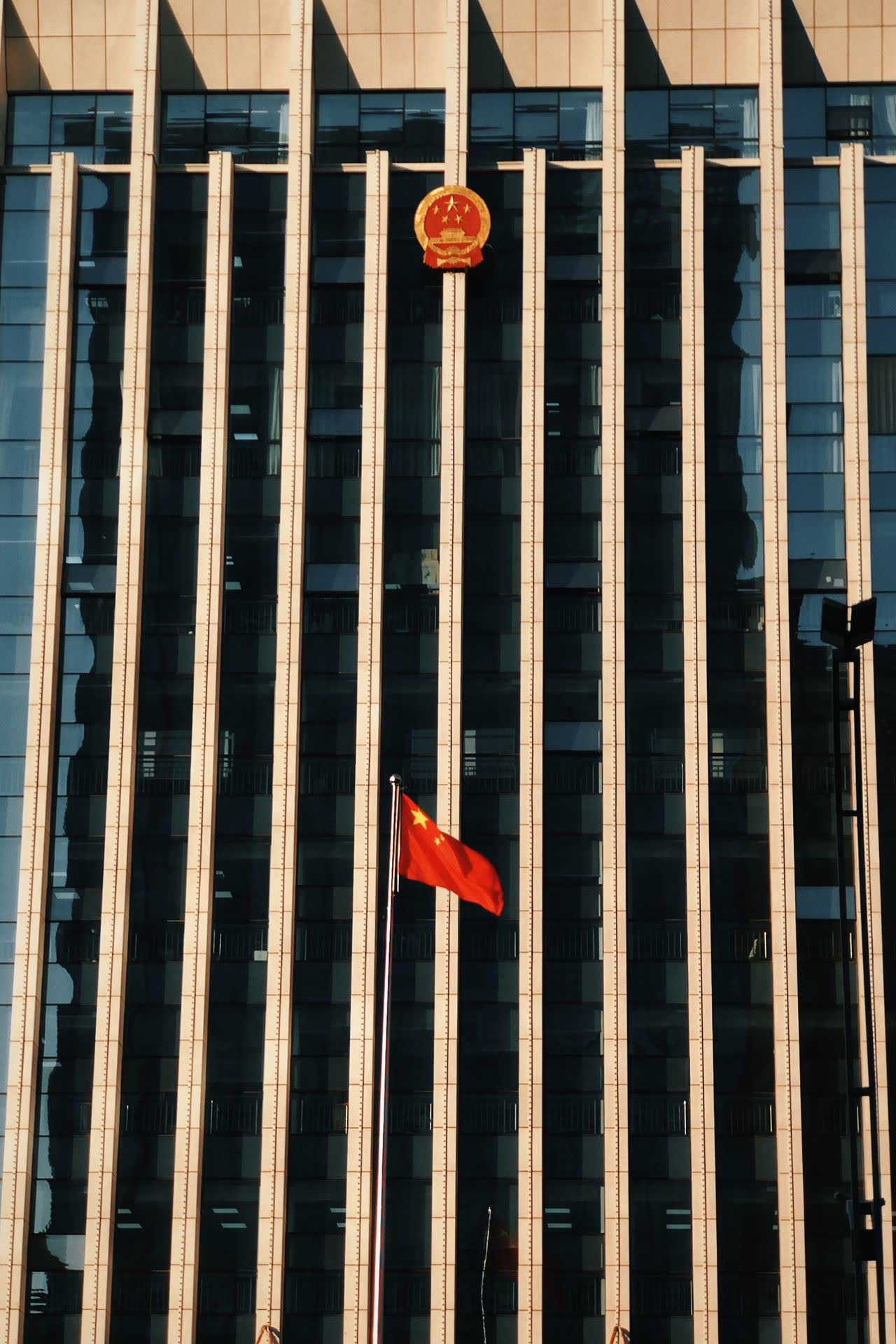
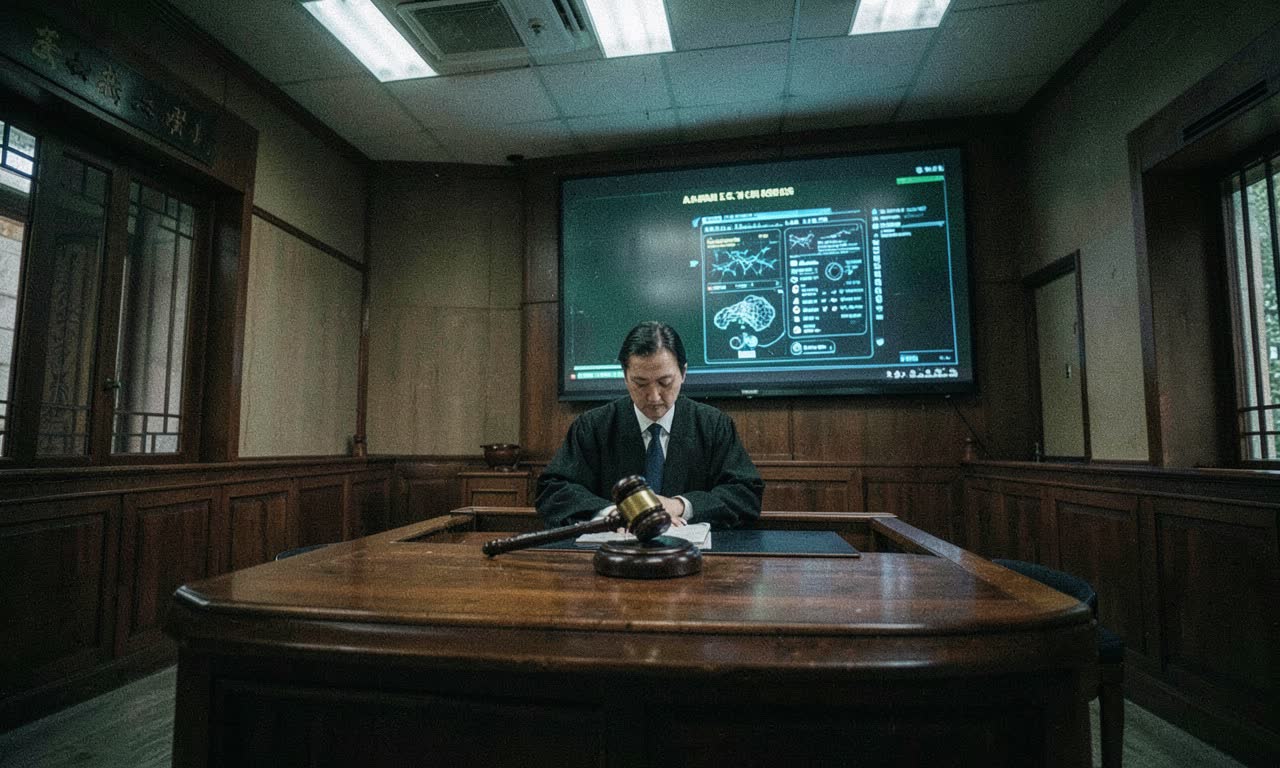
A technology company in China tried to replace a quality assurance supervisor with a large language model. When he resisted, they offered him a 40% pay cut. When he refused that, they fired him. The court ruled the dismissal illegal.
The reasoning is what matters: AI adoption, the court said, is a deliberate business choice — not an emergency or an act of God. A decision made by management, for management’s reasons, cannot be dressed up as an unforeseeable circumstance to justify breaking employment contracts.
Read that again. This is the first time any court has directly challenged the “AI made us do it” defence that companies worldwide have been hiding behind since 2023.
🔍 THE BOTTOM LINE
The legal shield for AI-driven layoffs just got its first crack. If a Chinese court can say “AI is a choice,” every employment jurisdiction on the planet — including NZ — needs to answer the same question.
Why This Ruling Matters More Than You Think
Between 2023 and 2025, Meta, Snap, Amazon, Microsoft, and every major advertising holding company from WPP to Dentsu slashed hundreds of thousands of jobs. The framing was always the same: AI made this inevitable. We had no choice.
Nobody tested that claim in court. Until now.
The Chinese ruling establishes two principles that should make employment lawyers worldwide sit up:
- AI adoption is optional. Companies choose to deploy AI. They could choose not to. That choice has employment consequences they must own.
- “Efficiency” doesn’t override contracts. Wanting to replace workers with cheaper software is a business strategy, not a natural disaster. Employment law still applies.
As Campaign Asia’s Ramakrishnan Raja noted, this framing ought to make executives across Asia “deeply rethink their perspectives on AI.” The same applies in New Zealand.
What This Means for NZ Workers
New Zealand employment law has a concept called “justification” — employers must have a valid reason for dismissal that’s both substantively and procedurally fair. The question nobody’s tested yet: does “we’re adopting AI” count as a justified reason?
Under NZ law, redundancy must be genuine. The employer has to consider alternatives, consult properly, and act in good faith. If a company replaces a worker with AI and calls it redundancy, a court could absolutely apply the same logic the Chinese court used — you chose to adopt AI, that doesn’t automatically make the worker’s position redundant.
The difference is that in NZ, nobody’s brought that challenge yet. But the Chinese precedent makes it more likely someone will.
The Bigger Pattern: Young Workers Hit Hardest
This ruling doesn’t exist in a vacuum. Stanford’s Digital Economy Lab recently found that junior workers aged 22-25 in AI-exposed occupations are experiencing a 13% relative decline in employment following widespread generative AI adoption. The ILO’s 2025 update found female-dominated occupations are almost twice as likely to face automation exposure (29% vs 16%) because women remain concentrated in clerical and administrative roles.
The workers being displaced by AI aren’t random. They’re disproportionately young, disproportionately female, and disproportionately in roles where AI vendors most want to demonstrate “savings.”
A court saying “this is a choice, not a force of nature” doesn’t stop the displacement. But it does mean companies can’t pretend it was inevitable — and that matters for accountability.
The Irony Nobody Mentions
Here’s the dark loop: workers displaced by AI often end up in the invisible workforce that trains the systems that displaced them. The ILO calls this “ghost work” — labelling data, grading outputs, writing prompts, correcting responses. The systems celebrated as autonomous frequently depend on low-paid, precarious human labour that the product demo never shows.
So the QA supervisor in China wasn’t just being replaced by an LLM. He was being asked to take a 40% pay cut to possibly help train the thing replacing him. The court’s ruling interrupts that cycle, at least for one worker.
What Should Happen Next
Three things this ruling should trigger in NZ:
-
A test case. NZ employment lawyers should be looking for the right plaintiff. When the next company tries to frame AI-driven redundancies as unavoidable, someone needs to challenge it under the Employment Relations Act.
-
MBIE guidance update. The government’s current AI guidance for businesses doesn’t address AI-driven dismissals. It should. Employers need clarity on what constitutes genuine redundancy when AI is the replacement technology.
-
Sector-specific rules. Australia’s APRA just told banks, insurers, and super funds they need a “step-change” in AI risk management and governance. NZ has no equivalent prudential guidance for financial services AI adoption. The Chinese court ruling is about individual workers; APRA’s move is about systemic risk. NZ needs both.
The Global Picture
China isn’t exactly known for worker-friendly courts. That a ruling like this came from a Chinese tribunal tells you something about how flagrant the “AI made us do it” defence has become. When even a jurisdiction not famous for labour protections says this crosses the line, it’s a signal.
Expect copycat challenges in the EU (where the AI Act’s employment provisions kick in August 2026), in Australia (where the Fair Work Commission could face similar arguments), and eventually in NZ. The legal question is the same everywhere: is AI adoption a business choice with employment obligations, or a force majeure that lets companies off the hook?
The Chinese court answered that. It’s a choice.
❓ Frequently Asked Questions
Q: Does a Chinese court ruling affect NZ employment law? Not directly — Chinese rulings aren’t binding in NZ. But the legal reasoning (AI adoption is a choice, not a force of nature) is applicable in any jurisdiction with employment protection laws. NZ employment lawyers could cite the reasoning, even if not the precedent.
Q: Can NZ employers still make roles redundant due to AI? Yes, but they must follow proper process under the Employment Relations Act. Genuine redundancy requires that the work is no longer needed — not just that a machine can do it cheaper. If the role still exists and you’ve just swapped a human for AI, that’s not necessarily a genuine redundancy.
Q: What should I do if my employer cites AI adoption for my redundancy? Get legal advice immediately. Challenge whether the redundancy is genuine. Ask your employer to show they considered alternatives, consulted properly, and acted in good faith — all required under NZ law. The Chinese ruling gives employment lawyers a useful argument: AI adoption was a business choice, not an emergency that justified cutting corners.
🔍 THE BOTTOM LINE
A Chinese court just cut through two years of corporate theatre. AI-driven layoffs aren’t inevitable — they’re decisions made by people who should own the consequences. New Zealand’s employment laws are strong enough to support the same conclusion. Someone just needs to test them.
SOURCES
- Campaign Asia — “AI is a choice, so are the layoffs” by Ramakrishnan Raja (6 May 2026)
- Chinese court ruling on AI-driven dismissal (2026)
- Stanford Digital Economy Lab — junior worker employment decline data (2026)
- ILO 2025 Update — automation exposure by gender
- EU AI Act Phase 2 Hits in August — Singularity.Kiwi
- AI Killing Entry-Level Career Pipeline — Singularity.Kiwi