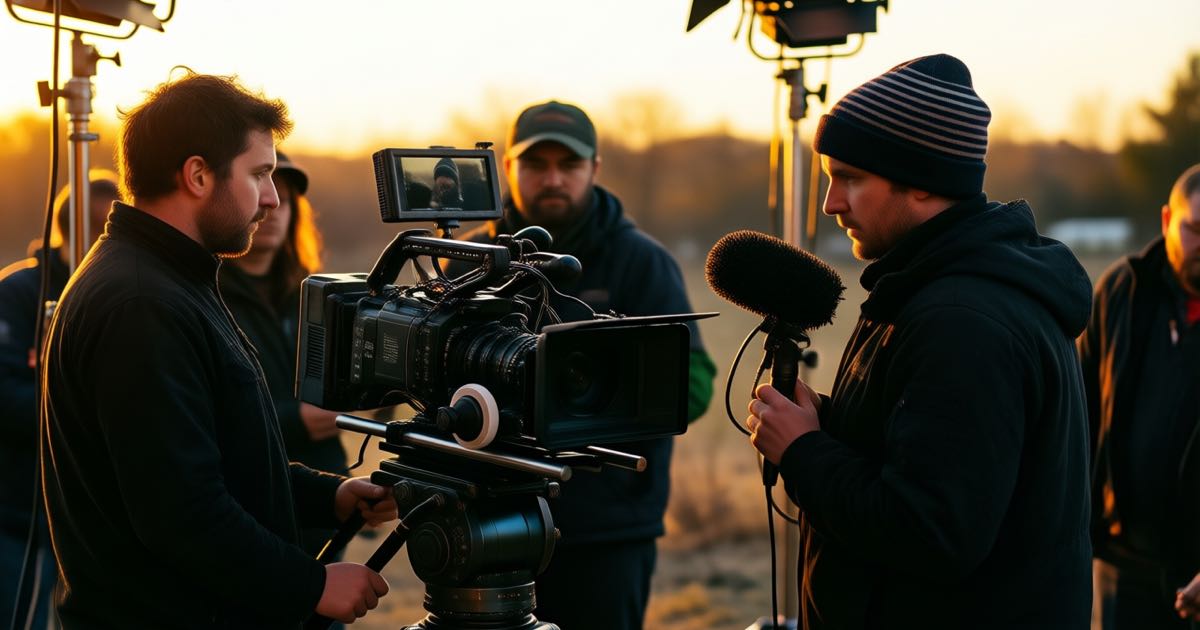
One of the month’s most-referenced jobs datasets got a serious challenge this week, and the exchange is worth reading in full for what it says about how AI’s workforce impact actually gets measured. The original analysis: economist Joseph Politano’s Apricitas piece, first published 27 September and recirculated widely after reaching Hacker News’ front page on 24 October, counts more than 200,000 US jobs lost across media, film and the arts in four years — roughly 50,000 of them in the past twelve months alone. Movie and sound recording accounted for more than 100,000 of the losses, nearly a third of the sector; written publishing lost more than 70,000.
🔍 THE BOTTOM LINE
The strongest available numbers show a genuine creative-employment recession in the US — and the two best datasets do not agree on the cause. The payroll analysis published this week finds two-thirds of film-industry job losses occurred before generative video was publicly usable, pointing to streaming economics, strikes and production flight rather than models; the structural argument answers that every digital-arts subsector shrank while live entertainment grew. Both things can be true, and the honest reading is that AI’s share is rising from a low base on top of an industry already in retreat. For creative careers, the actionable split is between screen work — where demand is migrating across borders and into creator platforms — and live work, which is measurably growing.
The structural case for AI as a driver
Politano’s argument is deliberately not a headline number. His honest framing, quoted by Tessera’s coverage, is that the exact AI share is “extremely difficult” to prove — because media firms have strong incentives to be “decidedly coy” about AI use, both for public-relations reasons and to protect the legal basis of their copyrights. What he offers instead is a pattern: every subsector of digital arts is losing work while in-person entertainment grows at a healthy pace, which is difficult to explain by general economic weakness. If audiences had simply stopped spending, live venues would be suffering too.
He also flags the early-stage signal: only 32 percent of workers in arts, entertainment and recreation use generative AI, against a 62 percent average across all industries — read by Tessera as evidence the displacement is early, not absent. And the comparison to newspapers’ long unbundling — half a million US newsroom jobs now down nearly 85 percent — sits behind the whole argument as a reminder that media employment can decline for decades without the sky falling visibly.
The rebuttal: check the dates
A rebuttal published 24 October by the analytics site Tensorust re-pulled the same US Bureau of Labor Statistics payroll series and aligned it against dates. Its case, in numbers it says it verified from BLS Current Employment Statistics via FRED:
- US film and sound recording payrolls fell from a peak of 456,100 in November 2022 to 328,500 in September 2026 — a loss of 127,600 jobs, or 28 percent of the sector.
- Of that loss, 85,400 jobs — 67 percent — were gone by December 2024, the month OpenAI first made Sora available to paying users.
- The single worst stretch was the 2023 strike year, in which 60,300 jobs vanished while, as the piece puts it, “no AI tool on earth could make a usable shot.”
- The post-Sora remainder — about 42,200 jobs — continued on the same slope the industry was already on, which the author reads as no bend in the curve when AI arrived.
The same dataset shows performing arts and spectator sports adding 86,900 jobs over the four years, up 17 percent. And the money did not vanish: the UK recorded £6.8 billion of film and high-end TV production spend in 2025, up 22 percent, 85 percent of it inward investment — a slate, the piece notes, that reads like the US studio release calendar. Los Angeles logged 19,694 shoot days in 2025, its lowest since 2020, down 16 percent per FilmLA. Netflix’s spend, meanwhile, climbed to roughly US$18 billion for 2025. Budgets did not shrink; they moved. As a concluding argument it is sharp: “The audience did not leave for a chatbot. It left for a guy with a camera and a ring light” — pointing to YouTube’s own claim of more than 490,000 full-time US creator jobs supported, a figure that sits largely outside the payroll statistics doing the counting.
🔍 THE BOTTOM LINE: Where the original analysis sees a sector-wide pattern consistent with AI adoption, the rebuttal sees an industry whose losses are mostly explained by dated, named non-AI events — the strikes, the streaming retrenchment, the tax-credit migration — with AI’s measurable contribution so far smaller and later than assumed. The two are not so much contradictory as measuring different windows of the same decline.
What both sides agree on
The agreement is more useful for career planning than the dispute. First, the losses are real and concentrated: digital screen work is the epicentre, however it is attributed. Second, live work is growing — whether from post-lockdown recovery, as the rebuttal’s timing argues, or as a durable escape from substitutability, as the structural argument implies. Third, the attribution debate itself is contaminated by incentives: firms hiding AI use for copyright posture means neither the bearish nor the bullish case can be settled from company disclosures. Fourth — the point on which Tessera’s read is probably fairest — the second-order effects of any new medium are genuinely unpredictable, a lesson the BookTok revival of the novel form delivered to publishing after it was declared dead.
Where New Zealand sits in this geography
The rebuttal’s central map — production moving between countries for economic reasons — is one New Zealand has its own seat on. The screen sector here supports around 24,000 jobs and contributes NZ$3.5 billion a year to GDP, and from 1 January 2026 the government changed the International Screen Production Rebate settings to chase exactly the intra-country migration the article describes: the feature-film minimum spend threshold dropped from NZ$15 million to NZ$4 million, the 5 percent uplift threshold fell from NZ$30 million to NZ$20 million, and post-production, digital and visual effects-only projects became eligible for the uplift — an explicit nod to what Economic Growth Minister Nicola Willis called New Zealand’s “world-leading” PDV and VFX expertise, as announced by the Beehive. The stated intent is to “keep Kiwi talent in steady work while attracting new investment, skills and technology,” funded through an expanded NZ$1.09 billion rebate pool.
The AI-exposure question lands on the same subsector from the other direction: post-production and VFX — the work the rebate now most aggressively courts — is also where generative video, cleanup and previz tools bite first in the production chain, long before anyone generates an entire feature. Our coverage of the AI-actor copyright fight and the young workers choosing physical trades over digital roles tracked both edges of that. The NZ career implication is uncomfortable but specific: the rebates are winning production volume against the same forces pulling screen work out of California, while the PDV work that volume delivers is the most tool-exposed layer of the craft. Volume is defensible; the task mix inside the volume is where change will show.
How a creative worker can read this fight
- The payroll statistics will undercount creator work. Both analyses note the BLS establishment survey misses self-employed and platform work — where YouTube’s creator economy lives. A portfolio career may be healthier than a payroll series suggests; it will also never show up in the jobs data being argued about.
- Live beats screen for substitutability risk. Whichever timing story is right, performing arts and spectator sports added 86,900 jobs over the window. The in-person premium is one of the few things both datasets support.
- Follow the production spend, not the studio headquarters. The jobs are going where the rebates are — the UK last year, NZ’s widened thresholds this one. For crew and post-production specialists, geography is the strategy.
FAQ
Did AI cause the loss of 200,000 US creative jobs? The 200,000 figure is Apricitas’ count of media, film and arts employment lost over four years, drawn from BLS payroll data. Its AI share is disputed: a 24 October rebuttal argues 67 percent of the film-industry losses occurred before public AI video generation existed, while the original analysis notes structural patterns consistent with early-stage AI displacement. Neither claim is proven from firm disclosures.
How many film industry jobs were lost before Sora launched? Per the Tensorust re-analysis of the BLS series, 85,400 of the 127,600 jobs lost from the November 2022 payroll peak were gone by December 2024 — before OpenAI’s Sora became publicly available.
Is live entertainment really growing while screen jobs fall? Yes, in both datasets: performing arts and spectator sports employment rose about 17 percent (86,900 jobs) from November 2022 to September 2026, while film and sound recording fell 28 percent.
What is New Zealand doing about its screen sector jobs? The government expanded the International Screen Production Rebate from 1 January 2026 — lower entry thresholds and a new uplift for post-production, digital and VFX-only projects — to keep the sector’s roughly 24,000 jobs competitive against the same global production migration documented in the US and UK data.
Sources
- Apricitas (Joseph Politano) — America has lost 200k of jobs in media, film and the arts (27 September 2026) — https://www.apricitas.io/p/ai-and-the-fall-of-the-creative-class
- Tensorust — Hollywood jobs and AI: 67% of the losses came before Sora (24 October 2026) — https://tensorust.com/articles/ai-didnt-kill-hollywood-jobs-streaming-bust/
- Tessera — America Lost 200k Creative Jobs in Four Years. AI Is a Suspect, Not a Conviction (25 October 2026) — https://thetesserapress.com/articles/america-has-lost-200k-of-jobs-in-media-film-and-the-arts-how-much-is-a
- NZ Government (Beehive) — Boosting New Zealand’s film industry — rebate changes from 1 January 2026 — https://beehive.govt.nz/release/boosting-new-zealand%E2%80%99s-film-industry
— CJ Murden, editor of Singularity.Kiwi. Former digital technologies teacher, author of AI-focused books. Writing with a New Zealand focus.