Recycling is one of the few remaining industries where a meaningful share of production is done by hand — human pickers standing along a conveyor, pulling cardboard and PET bottles off a moving line for eight hours a day. A six-year-old Edinburgh startup believes AI vision and cheaper robotics can finally price that labour out of existence, and it has just raised the money to try. Danu Robotics announced a $5 million late-seed round this week and says its H.E.R.O. sorting robot is finally ready for commercial deployment.
Founder Amy Ma — Xiaoyan Ma in Startups 100’s 2026 profile — came to the problem from the software side, after years as a developer at a London bank. The trigger was mundane: a finance office with all the perks, whose carefully separated recycling bins were being emptied into the trash. “Even though they have tons of money, there’s all these different recycling bins that just end up in the same place,” she told TechCrunch.
The bet: pincers, not suction, plus a robot that keeps learning
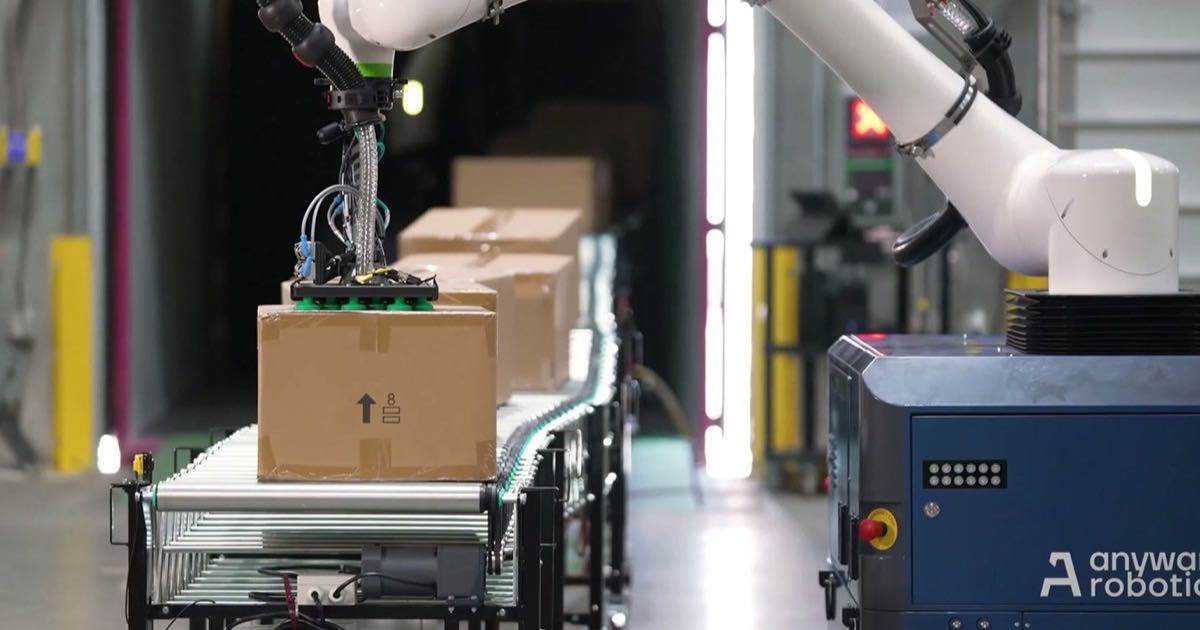
Danu’s machine takes a different mechanical path from the incumbents. Most competing waste-pickers — Glacier and RecycleEye among them — use suction arms to grab material off the line. H.E.R.O. uses a pincer claw, which Danu argues handles a wider range of shapes, films and crushed items without the dropped-pick penalty. The unit is designed to retrofit into an existing manual sorting facility, occupies under a metre of conveyor, and can be installed in less than a day — a deliberately unglamorous wedge into facilities that can’t afford a rebuild.
The company’s own materials describe a two-robot, multi-arm team format rather than the single large arm most of the industry converged on — a design Ma explains as working “more like a group of human pickers — but faster, more precise, and at a fraction of the cost.” The AI component, meanwhile, is the part that improves after installation: the company says its vision system is trained continuously as new waste streams, packaging formats and sensor inputs flow through, so accuracy compounds over time instead of being frozen at deployment.
The commercial proof is early but concrete. Danu holds $500,000 in signed contracts, letters of interest from two large customers, and a sales pipeline of more than 200 facilities — all aimed at a sorting market TechCrunch sizes at roughly $20 billion across Europe and North America.
The economics are the pitch
What makes Danu interesting is less the hardware than the spreadsheet it comes with. Ma’s numbers: a working site earns about $485,000 in additional revenue per year from the robot’s sorted output, against a $160,000 unit cost and $24,000 a year in maintenance. Run that arithmetic and the robot pays for itself in roughly four months of net revenue — which is why Danu can sell on ROI alone and why, as Ma told TechCrunch, recycling centres have an unusually immediate return on investment for automation. Danu’s own site claims high pick accuracy, with a pick only counted when the object actually lands in the bin.
Two caveats are worth holding onto. First, those economics are Danu’s own estimates; no independent deployment data has been published yet, and the robots are only now reaching customers. Second, contamination is the recycling industry’s core revenue problem — facilities lose money when badly sorted material gets binned or fined — which means operators have both a strong incentive to buy automation and a long history of decommissioning robots that couldn’t handle real-world waste. As Ma put it, many facilities that tried earlier robots “decommissioned them because they weren’t fit for purpose.” The next twelve months of lived performance, not lab accuracy, will decide whether Danu breaks that pattern.
Why it matters beyond one startup
Waste sorting sits squarely in the class of jobs robotics has long promised to absorb: repetitive, hazardous, high-turnover, and increasingly hard to staff in wealthy countries. Globally, less than 10% of the three billion tonnes of waste generated each year gets recycled, by Ma’s account — which is really a statement about sorting cost, not recycling technology. When sorting gets cheap enough, the recyclable fraction rises everywhere at once.
There is a New Zealand pattern in this, too: local authorities and private operators here face the same contamination fines and rising labour costs, and most still solve it with people. A sub-$200k, one-day-install robotic sort line that pays back inside a year is the kind of unit economics that would reach even ratepayer-funded facilities — no moonshot humanoid required. The robots taking over the dull work may not look like science fiction. Some of them look like a claw over a conveyor in Edinburgh.
Sources: TechCrunch, Danu Robotics, Startups 100 2026, Edinburgh Innovations