FieldAI, the California robotics startup building what it calls a “universal general-purpose brain” for robots, is raising $700 million at a $10 billion valuation, according to Business Insider, quoting a person familiar with the deal. That would quintuple the company’s valuation in just over a year — it was worth $2 billion when it raised $405 million last August from Jeff Bezos’ family office, Laurene Powell Jobs’ Emerson Collective and Khosla Ventures. The round is signed on a term sheet but not yet closed, no lead investor is confirmed, and FieldAI did not respond to Business Insider’s request for comment.
🔍 THE BOTTOM LINE: A year ago FieldAI was a $2B bet on a contrarian architecture: robot intelligence built from physics and probability instead of internet-scale training data. Now it’s a $10B bet, backed by revenue actually arriving — more than $135 million in revenue and customer contracts, up at least $35 million since June — from construction firms, data centre operators and defence companies running real deployments. The physics-first school of robotics just priced itself alongside the foundation-model giants.
What “physics-first” actually means — and why it’s contrarian
The dominant recipe for embodied AI right now is scale: scrape robot demonstrations, human videos and simulation data, and train large models until competence emerges — the approach behind the humanoid training-data pipelines this site covered at Innodata’s motion-capture lab opening. The bottleneck everyone in that lane complains about is that no internet-scale trove of robot experience exists the way it does for text or images.
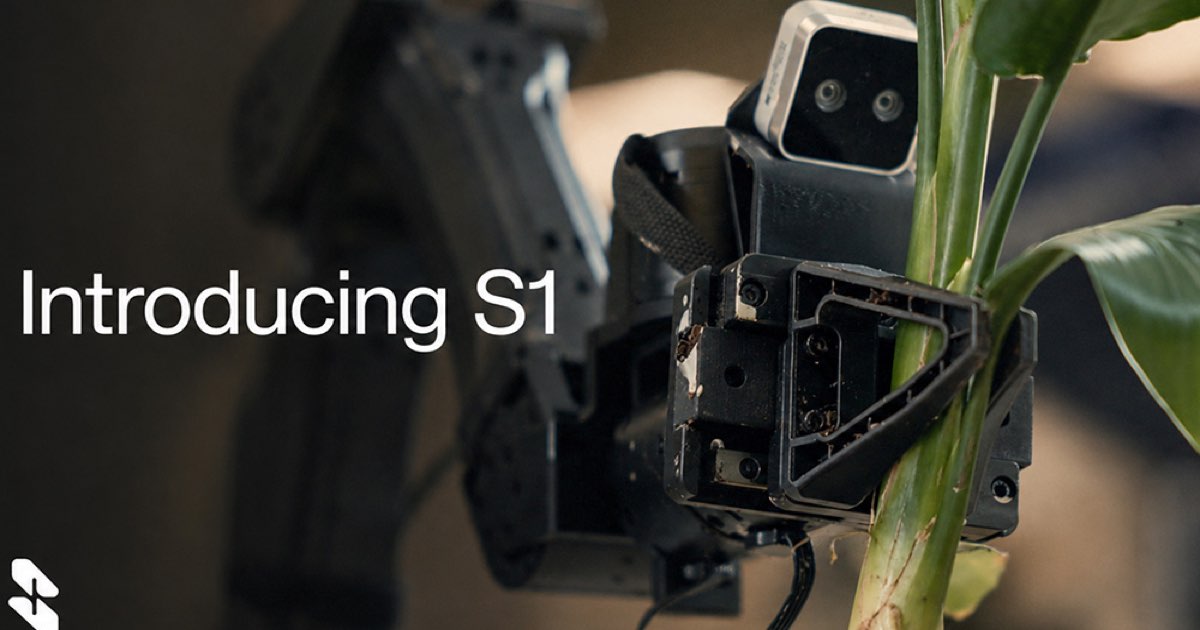
FieldAI’s answer, per its own description of the Field Foundation Models, is to sidestep the data hunger entirely: models grounded in physics — terrain resistance, risk probabilities, motion feasibility — that let machines decide safely in environments they’ve never seen, without task-specific retraining. CEO Ali Agha, who spent seven years at NASA’s Jet Propulsion Laboratory building autonomy for Mars exploration, told Business Insider in June the company’s advantage is software that works across “humanoids, robot dogs, drones and industrial rovers” without huge amounts of training data per task. It is the same bet Skild AI made with its S1 generalist robot model — one brain, many bodies — except Skild trains on data-scale and FieldAI explicitly leans on physics priors. Two different answers to the same data-starvation problem, and markets are now paying double-digit billions for both.
The revenue is the part that isn’t a story about vibes
Most of the eight- and nine-figure robot-brain valuations this cycle rest on pilots and promises. FieldAI is the rare one where Business Insider’s reporting includes a growth number that moved in the last quarter: at least $35 million in new revenue and customer contracts since June, taking the total past $135 million across more than 30 customers — construction firms, data centre operators, defence companies. TechCrunch’s 2025 profile noted its models were already running on real machines in the US, Europe and Japan, in environments from disaster sites to urban streets.
That revenue curve is exactly what the round prices. At $10B, FieldAI is valued at roughly 74x annualised revenue-and-contracts — rich for industrial software, cheap for a category where Skild AI sits north of $14B and Physical Intelligence at roughly $11B per Business Insider’s comparison, both still years from comparable commercial traction. If the physics-first approach genuinely needs less data to generalise, its cost of achieving autonomy is structurally lower than the scraping-everything approach — and the multiple looks defensible. If it doesn’t, this is the most expensive physics software ever sold.
Why the money is chasing this lane right now
Our take: watch what the $10B price tag does to the rest of the physical-AI funding market, because this round didn’t happen in a vacuum. China shipped its first humanoid IPO framework this month, as this site covered when CSRC draft rules landed, and Unitree’s listing path put public valuations on embodied AI for the first time — the Unitree IPO filing effectively repriced every private robot-brain startup in its wake. Investors now have public comps for “physical AI” in a way they didn’t in 2025, and private rounds like this one are being marked to those comps. The self-reinforcing loop — IPO marks private valuations, private valuations reset IPO expectations — is precisely the pattern that ends badly when revenue stalls. FieldAI at least has revenue. The test of whether physics-first was real or just capital-efficient marketing will be whether that $135M in contracts turns into renewals at deployment scale — because unlike a language model, a robot brain that fails in the field fails in front of the customer, in mud, in the rain, with a $200,000 machine on the line.
❓ FAQ
Has the round actually closed? No. Business Insider’s source describes a signed term sheet, not a closed financing, and says it isn’t clear which firm is leading. FieldAI did not respond to the report’s request for comment. Treat the $700M/$10B figures as agreed-in-principle, not banked.
What does FieldAI actually sell? Software: the Field Foundation Models, a “physics-first” autonomy stack that lets robots plan movements and assess risk in unfamiliar environments without task-specific training data. It runs on other companies’ hardware — humanoids, quadrupeds, drones, industrial rovers — rather than FieldAI building its own robots.
Who are its competitors? Other robot-foundation-model companies — Physical Intelligence (roughly $11B valued) and Skild AI (north of $14B) — plus the in-house autonomy teams at every major humanoid maker. The philosophical split is data-scale training versus physics priors, and most of the large labs are hedging across both.
Why does the valuation jump matter for anyone outside robotics? It’s the clearest price signal yet that investors think embodied AI has an answer to its data problem. If physics-first generalisation keeps working commercially, robots stop being demo-reel companies and start being a normal software business — with everything that implies for the labour market maths governments are currently guessing at.
🔍 THE BOTTOM LINE
FieldAI’s $10B mark is the market pricing a specific claim: that a robot brain grounded in physics can generalise without the internet-scale data the rest of the industry is frantically hoovering up. The claim now has $135M in receipts attached and a customer list that includes defence and construction. The next test isn’t the round closing — it’s whether physics-first renewals at scale show up before the data-scale competitors solve their own bottleneck. Two architectures, one prize, and the money just called the question.
📰 Sources
- Business Insider — Robotics startup FieldAI is set to raise $700 million at a $10 billion valuation (2 October 2026)
- Techmeme — Business Insider’s FieldAI report, aggregated 2 October 2026
- Business Insider — Robot startup FieldAI achieves $100M milestone in revenue, contracts (June 2026)
- TechCrunch — FieldAI raises $405M to build universal robot brains (20 August 2025)
- The Robot Report — FieldAI raises $405M, scales ‘physics first’ foundation models (August 2025)
- FieldAI — Announces over $400M in funds raised to advance embodied AI at scale
- Singularity.kiwi — Skild AI’s S1 bets one model can drive every robot