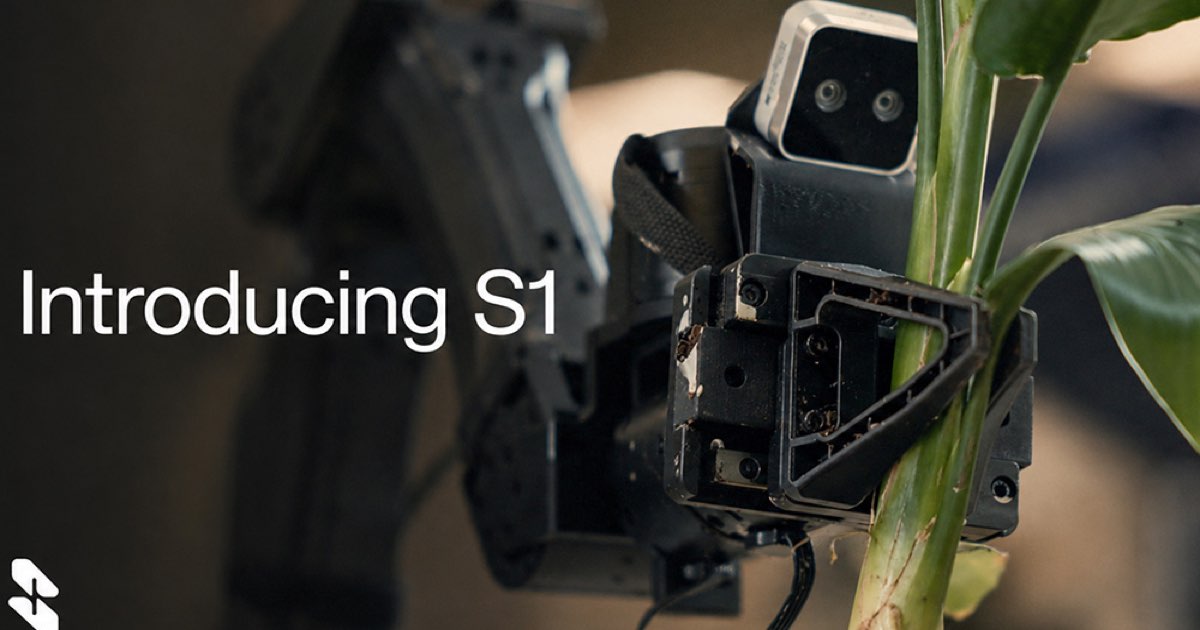
The bottleneck in robotics has never been building robots. It has been teaching them. Every new task has traditionally meant weeks of post-training — collecting demonstrations, tuning the policy, repeating until the robot stops dropping things. Skild AI, a San Francisco company that has raised nearly $1.7 billion since 2023, believes it has found a way around that. On August 31, 2026, it unveiled S1, its flagship robot foundation model, and the claim behind it deserves attention: show the robot a single video of a person doing a task, and it can do the task too.
What “in-context learning” means for a robot
In large language models, in-context learning was the shift that turned research demos into ChatGPT. Instead of fine-tuning a model for every new benchmark, you put instructions in the prompt and the model followed them. Co-founder and CEO Deepak Pathak told The Robot Report that S1 applies the same idea to robots: “You just add a video of a human doing something in the prompt, also called the context of the model, and it can just follow it on the robot.”
That is a structural change to how robots acquire skills. A robot that learns from one video instead of a retraining cycle can, in theory, be handed new jobs the day it arrives on site. Whether it holds up outside demo conditions is the open question — Skild’s own demonstrations, so far, are company demonstrations, and no independent lab has published a replication.
Mixing every data source, because none is enough on its own
Pathak argued that robotics has four kinds of training data, and that most companies lean on just one. Teleoperation data — a human directly driving the robot — is high quality but slow and narrow to collect. Human videos are abundant and diverse but hard to transfer to a machine with different joints and different hands. Simulation scales endlessly but carries the gap between the simulated world and the real one. Data-capture gloves sit somewhere in between.
Skild’s answer is to pre-train on all four at once. “If we think from first principles, we realize there is no golden path,” Pathak said. “We have to use all of them because the pros of one source compensates for the downside of another source.” That differs from, say, teleoperation-heavy players who bet everything on robot-collected data.
The pancake test
The detail that stayed with me: when one of Skild’s robots flipped a pancake, the team searched their millions of hours of training data for any flipping example of any kind — and found none. Pathak’s account is that the flip emerged from the model watching how the spatula moves, not from a copied demonstration. If that holds up, it is a small example of the generalisation that robot learning has been chasing for a decade.
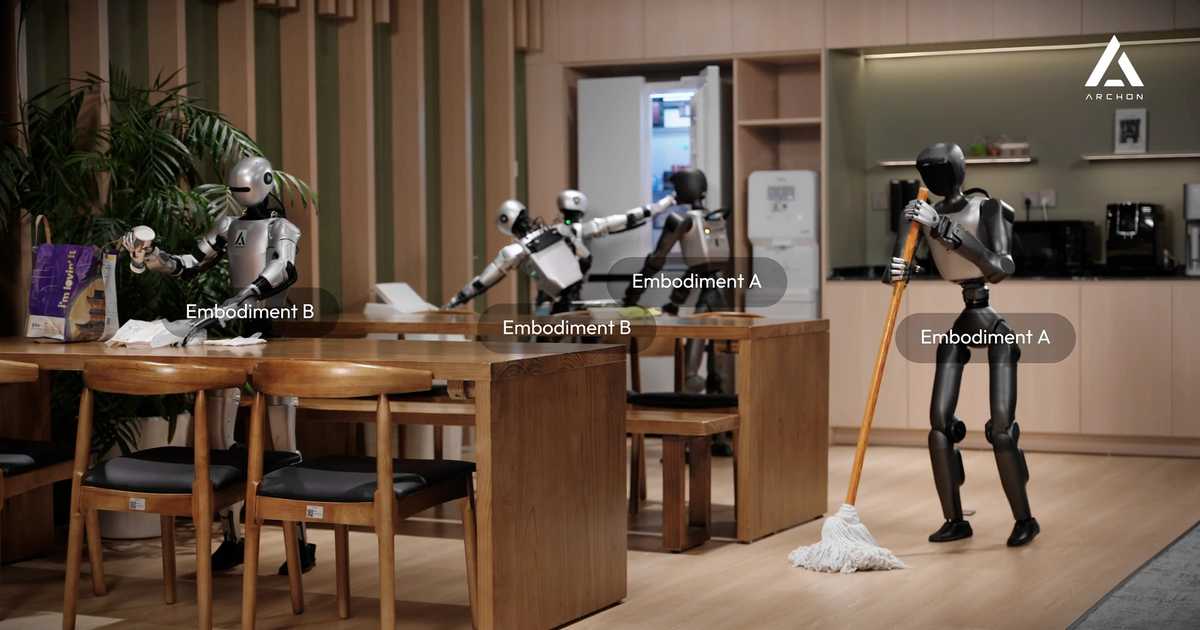
S1 is also what Skild calls “omni-bodied” — the same model is meant to work on quadrupeds, humanoids and static arms, with tasks running up to ten minutes: repotting a plant, making a coffee, cooking breakfast. Long-horizon tasks are where most robot demos quietly break, so targeting them is aimed at the actual problem, not the ones that are easy to show off.
The CEO’s own caution
It would be easy to write this as “robotics just had its ChatGPT moment.” Pathak refuses that framing. Asked about it directly, he said the transition matters the way the GPT shift did, but: “Now, the question is: Is it completely ready to be rolled out to people’s homes? Not quite. But this is the first sign of what we believe might come.” A founder with $1.7 billion of pressure to overhype talking down his own milestone is, to my mind, more credible than the claim itself.
Skild says more is coming within weeks — including details on how S1 is already running in production, helped along by its acquisition of Fetch Robotics’ assets from Zebra, which brings warehouse deployment experience in-house.
Why this matters beyond one startup
Skild is not alone. NVIDIA has an open humanoid foundation model, Generalist is chasing the same idea with a small model, and Figure is collecting crowdsourced training data at scale. The pattern across all of them is the same bet: whoever cracks general-purpose robot learning first sets the terms for the whole industry, the way OpenAI did for chatbots. New Zealand robotics developers are watching from a distance on that — but a genuinely general robot brain working across brands, form factors and tasks would land here the way cloud AI did: hardware bought anywhere, skills delivered by software, and the gap between owning the model and renting it deciding who profits.
Watch the coming weeks’ production claims. That is where “in-context learning” either becomes infrastructure or becomes a very good video reel.
— CJ Murden, editor of Singularity.Kiwi. Former digital technologies teacher, author of AI-focused books. Writing with a New Zealand focus.
FAQ
What is Skild AI’s S1? A robot foundation model unveiled August 31, 2026, that Skild AI says lets robots learn new tasks from a single demonstration video using in-context learning, instead of extensive retraining.
What is in-context learning in robotics? The same idea that powered ChatGPT, applied to robots: instead of retraining the model for each task, you put the task — here, a video of a person doing it — into the model’s prompt, and the robot carries it out.
What kinds of tasks can S1 handle? Skild AI says its demonstrations cover long tasks up to about ten minutes — repotting a plant, making coffee, cooking pancakes — across quadrupeds, humanoids and robot arms, with the same model.
Has anyone outside Skild verified the claims? Not yet. The demonstrations are company-made, and Skild’s CEO himself says the technology is “not quite” ready to roll out to homes. Independent validation is still missing.