When we covered this story two days ago, it was a procurement filing. It is now a video on the front page of Hacker News, and the framing has shifted.
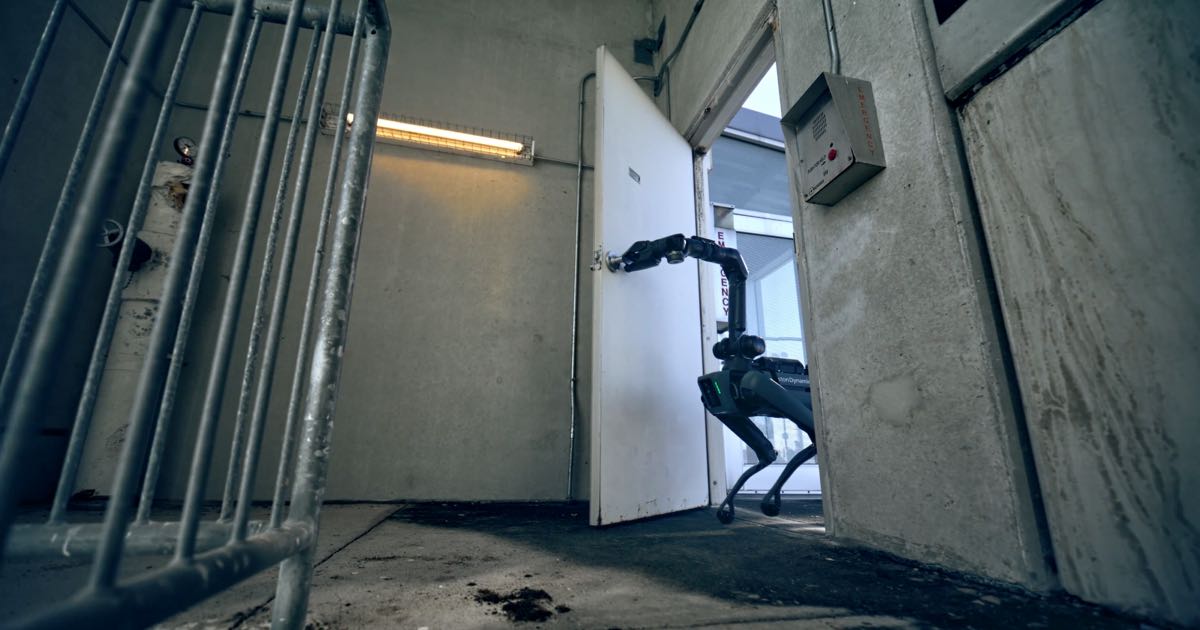
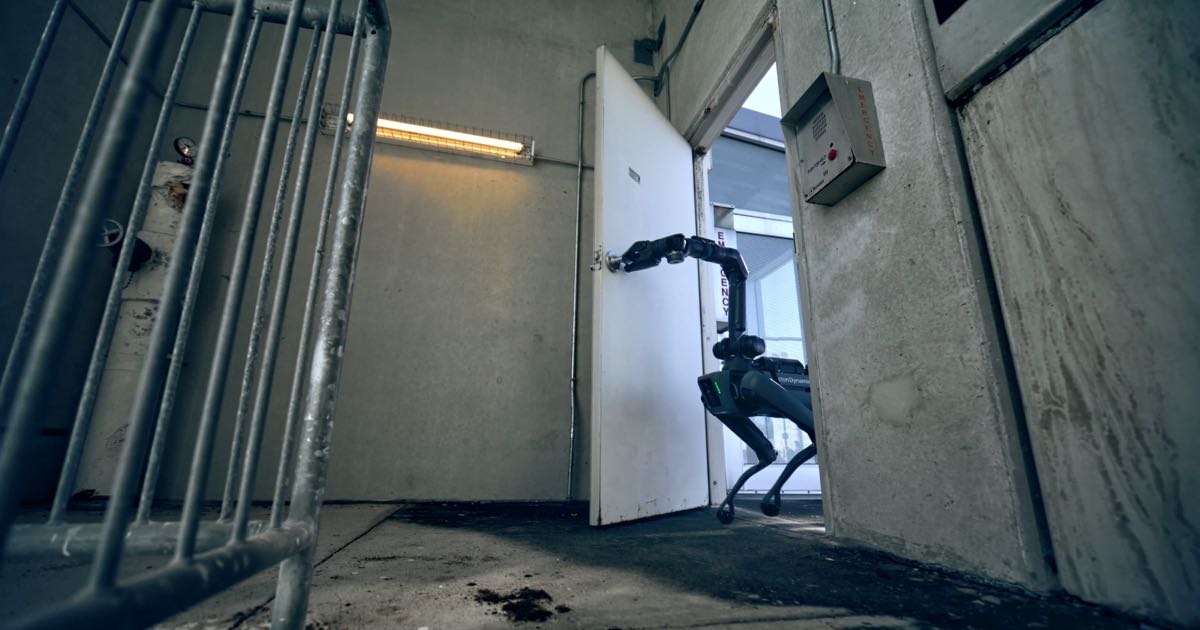
US Immigration and Customs Enforcement has placed a $2 million order for Boston Dynamics’ Spot quadruped robots, according to WCVB, the Boston ABC affiliate, which reported on August 29 that the robots will be used in operations “deemed unsafe for human agents” — hazardous gas detection, search and rescue, and suspicious package investigations. The deployment target is the part everyone is watching: WCVB’s headline says deportation operations. We covered the original DHS announcement on August 28, when 404 Media’s reporting described Spot as an inspection and situational-awareness tool intended to “improve officer safety.” What has changed since is not the paperwork — it’s that the story has escaped the trade press.
What Boston Dynamics says
The company’s statement, quoted by WCVB, is the standard line for this industry, but it is worth reading closely: “Boston Dynamics sells to many government agencies and public safety organizations and the robots are used to keep people out of harm’s way and aid first responders in assessing dangerous situations… any attempted weaponization of Boston Dynamics’ robots is strictly prohibited.”
Note what that commits to and what it doesn’t. Weaponisation is prohibited — Spot has no weapons mounted, and Boston Dynamics has user agreements to match. But a robot used to scout, film and map before agents enter a building is not weaponised, and it can still be part of an enforcement action people find chilling. The company’s prohibition answers a question most critics were not really asking.
ICE has not said when the robots will deploy. It is also unclear from available reporting how many units the $2 million covers — Spots run roughly $75,000 and up with attachments, which suggests a fleet of dozens rather than hundreds, but that arithmetic is ours, not ICE’s. The Secret Service already uses the same platform.
The argument underneath
On Hacker News, where the story sat on the front page overnight, the split was predictable. One camp: this is cyberpunk theatre — “these are not the metal-toothed cartoon dogs you so badly want them to be” — and remote inspection tools are genuinely useful for gas leaks and unstable buildings. The other: the issue is not capability but accountability — deploying any surveillance-capable platform against a population that largely cannot contest its treatment in court sets a precedent that outlives this particular administration.
Both things are true at once, which is why this story keeps resurfacing. Spot is a 30-kilogram sensor platform on four legs. It carries cameras, gas detectors and mapping software. Those capabilities are identical whether the customer is a fire department or an immigration agency, which is precisely the neutrality Boston Dynamics sells — and precisely what makes the purchase controversial.
New Zealand angle
Worth stating plainly: the NZ Police have trialled similar quadruped platforms, and each trial met public resistance. The ICE story lands here as a case study in what happens when procurement paperwork says one thing and the deployment context says another. If a New Zealand agency ever buys a Spot, the lesson from the US is that the purchase itself is the story — the use policy needs to be published on day one, not reverse-engineered after news breaks. Our earlier coverage of the DHS notice has the procurement detail; the pattern to watch is whether actual deployments match the hazard-assessment language.
What to watch next: any visual confirmation of Spots in the field with ICE, and whether Boston Dynamics’ usage terms are updated for government customers. Neither has happened yet.
— CJ Murden, editor of Singularity.Kiwi. Former digital technologies teacher, author of AI-focused books. Writing with a New Zealand focus.
FAQ
Is ICE really using robot dogs for deportation operations? ICE has a reported $2 million order for Boston Dynamics Spot robots. WCVB reports they will be used in deportation operations for tasks deemed unsafe for humans, such as gas detection and search. ICE has not confirmed deployment dates, and the stated use cases in the DHS procurement notice are inspection and hazard assessment.
Has Boston Dynamics commented? Yes. The company says its robots keep people out of harm’s way and that “any attempted weaponization of Boston Dynamics’ robots is strictly prohibited.” The statement doesn’t address non-weaponised use in enforcement operations.
Was this story covered before? Yes — singularity.kiwi covered the original DHS procurement notice on August 28-29, 2026. What’s new is the WCVB report naming deportation operations and the story’s spread to Hacker News’ front page on August 31.
How many Spot robots does $2 million buy? The unit count hasn’t been disclosed. At typical Spot pricing of roughly $75,000 per unit, a $2 million order implies dozens of robots with sensor packages, though that is an estimate.