A pair of Boston Dynamics alumni have spun out a company with a thesis you don’t hear from robotics startups very often: the problem with robots isn’t that they can’t lift boxes. It’s that they’re terrible company.
Dynamic Creatures, announced this morning NZ time, is led by Marc Theermann, Boston Dynamics’ former chief strategy officer, and Farbod Farshidian, who led research at the Robotics and AI Institute before becoming CTO. The company is now Boston Dynamics’ official entertainment and hospitality partner, and its first product is SnowJay — a platform that layers character, animation and conversation onto robots that already know how to walk.
“If you look at many robots out there, they’re deaf and mute,” Theermann told The Robot Report. “We think that in order for robots to be accepted into society, in restaurants and in general spaces outside, they need to be better at human-robot interaction.”
What SnowJay actually does
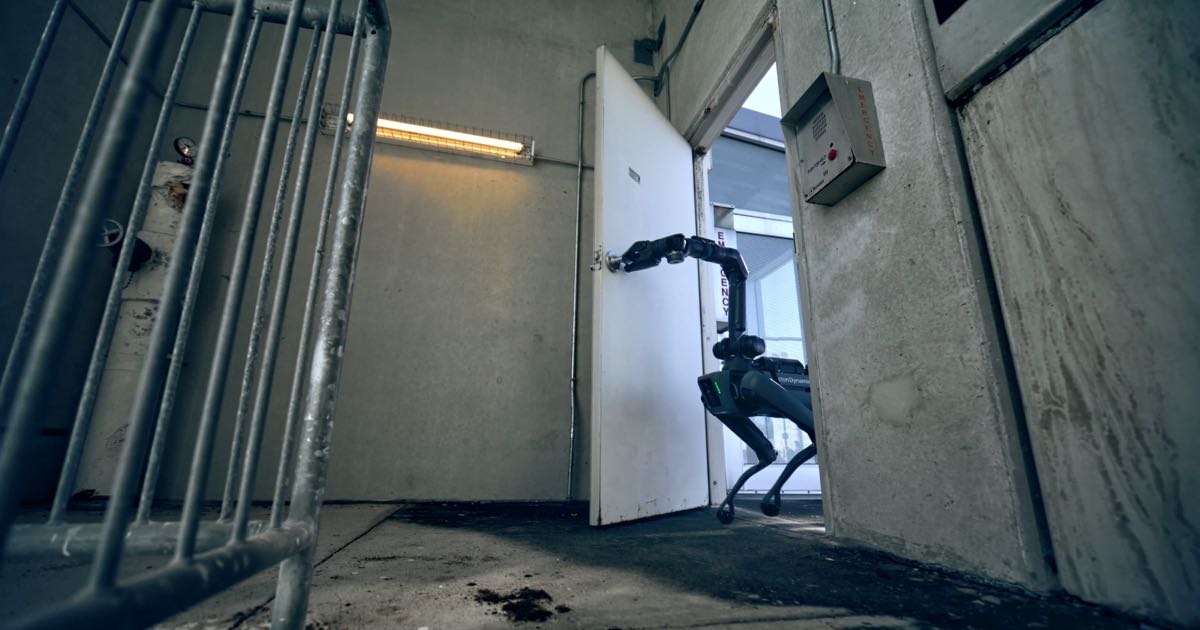
The pitch is less about new hardware and more about behaviour. SnowJay takes motion capture or hand-built animations, uses NVIDIA tooling and reinforcement learning to turn them into organic-looking movement, and runs the whole act on third-party machines: Boston Dynamics’ Spot quadruped, the Atlas humanoid, and robots from Unitree. Theermann says building the company’s own humanoid is a longer-term ambition, but for now the entertainment layer is the product.
There’s a credible lineage behind the approach. Farshidian’s team helped give Atlas the more natural gait it showed off at CES 2026 — the difference between a robot that walks like a machine and one that moves like a performer is exactly the skill set this company is selling.
The funding list reads like a Boston Dynamics family tree. Eniac Ventures, Kindred Ventures, Heliad, Sunshine Lake and BlueGrass Ventures are in, and the angel investors include Marc Raibert — the founder of Boston Dynamics and executive director of the RAI Institute — alongside Lukas Ziegler. Boston Dynamics’ interim CEO Amanda McMaster gave the venture a formal nod: “Dynamic Creatures is opening an important new frontier for advanced robotics,” combining proven platforms with “character design, adaptive behavior and real-time interaction.”
Why entertainment is a smarter beachhead than it sounds
The obvious read is gimmick: dancing robots for cruise ship tourists. But the logic tracks with how Boston Dynamics has always operated. Its viral videos were entertainment first and marketing second, and Theermann is candid about that being the point — showing robots “in these fun environments” so people understand what the hardware can do before it shows up anywhere serious.
The unstated bet is that theme parks, casinos and cruise ships are the lowest-stakes testing ground there is for robots in public. A casino floor is crowded, chaotic, full of distracted humans who didn’t consent to interacting with a machine — every hard problem in service robotics, minus the consequences of failure. If a robot character can hold a crowd’s attention for five minutes without unsettling anyone, the interaction layer it learned along the way transfers to hotels, restaurants and retail.
That framing also quietly answers a question the rest of the industry tends to skip. Warehouse and factory robots are judged on throughput. Nobody has a good metric for whether a robot is pleasant. Turning “likeability” into a product you can license to venues is an attempt to build that discipline before humanoid deployments make it urgent.
Whether audiences actually want robotic characters is the open question — animatronics at Disney parks have spent decades being charming without anyone mistaking them for company. SnowJay’s differentiation is that the characters are adaptive rather than scripted, which is either the future of live entertainment or an expensive way to unsettle holidaymakers. The company, its backers and Raibert are betting on the former, and given how much of modern robotics started as a Boston Dynamics party trick, it would be unwise to dismiss the bet.
This isn’t the first time the Atlas platform has been reframed for a new audience — its self-swapping battery pack repositioned the humanoid as an always-on industrial worker, and ICE’s purchase of Spot quadrupeds showed how quickly public-facing perception becomes part of a deployment story. The World Humanoid Robot Games in Beijing offered the same lesson from the other direction: robots competing in front of crowds taught engineers more about public tolerance than any lab demo.