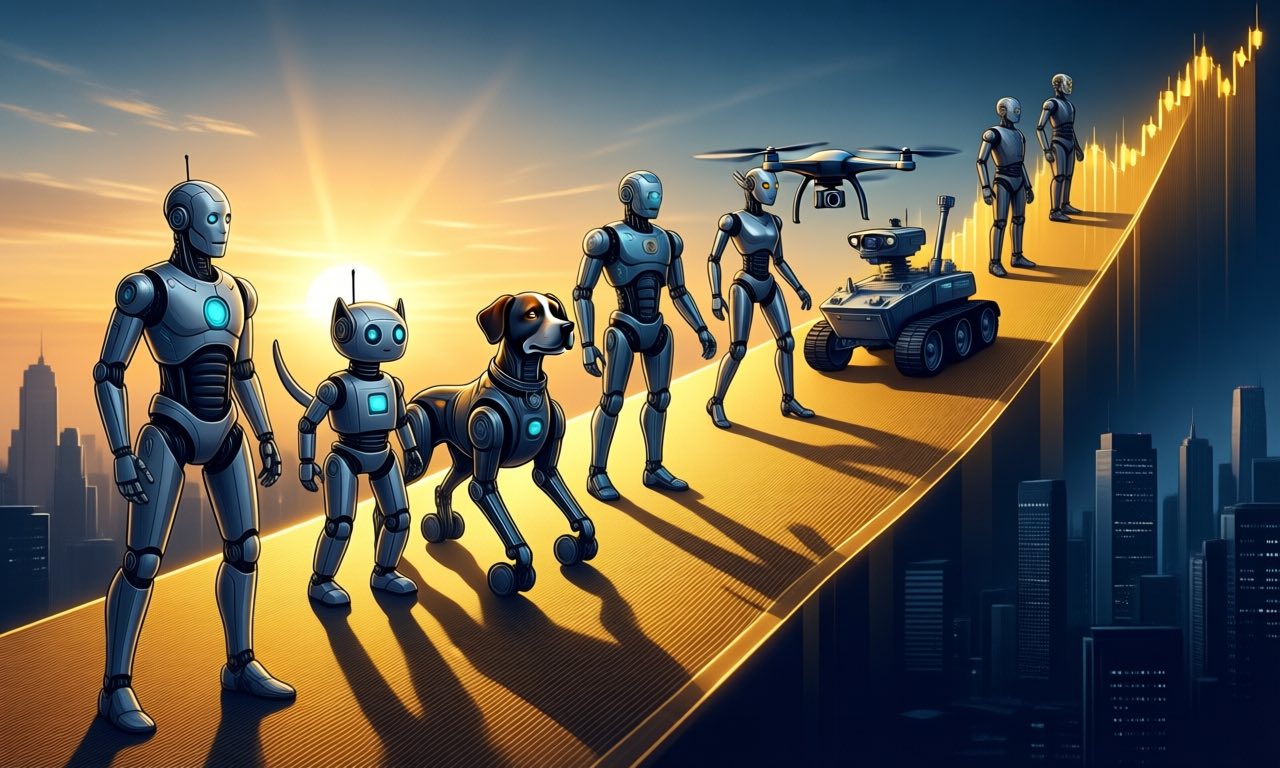
Robotics startups have raised more than $23 billion globally in 2026, according to Crunchbase News. That is within striking distance of the $26 billion the sector raised in all of 2025 — with four months of the year still remaining. The humanoid-specific slice is growing even faster: $8.6 billion this year, 1.8 times the full-year 2025 total, per Tech Funding News.
The headline number is one story. Where the money is going is another.
From pilots to paying customers
The shift that matters is not the funding total. It is the transition from demonstration to deployment.
Figure AI, last valued at $39 billion, signed a commercial deal with Catalyst Brands — the parent of JCPenney, Aéropostale, and Brooks Brothers — to deploy humanoids in its distribution and logistics network. This is not a pilot. It is a contract.
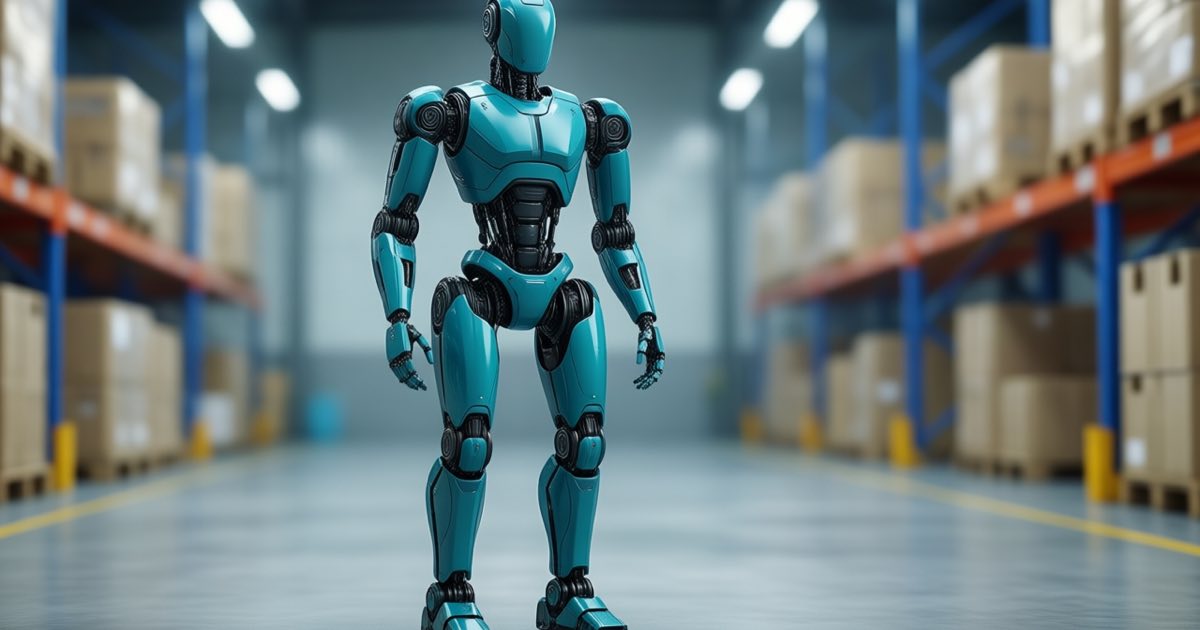
Agility Robotics is further along. Its Digit humanoid is already working for Amazon, GXO, Schaeffler, and Mercado Libre on actual warehouse tasks. The company has been shipping robots, not just demoing them, for over a year now — as we noted in our coverage of Agility’s cageless Digit V5.
Hyundai-owned Boston Dynamics plans to put tens of thousands of Atlas robots in its factories by 2028. The company showed Atlas swapping its own battery earlier this year — a milestone for autonomous operation, not just locomotion.
Where the money concentrates
The aggregate numbers obscure a narrow field. Five companies — Figure AI plus NEURA Robotics, Apptronik, Galbot, and UBTECH Robotics — have each raised $1 billion or more. They likely account for a large share of the $8.6 billion humanoid total.
What stands out here is how concentrated the capital is relative to the broader robotics sector. The $23 billion figure includes industrial automation, warehouse robotics, agricultural drones, and surgical robots. The humanoid slice — the category generating the most headlines — is dominated by a handful of names. The “robotics boom” headline number is real, but it rests on a much narrower foundation than the topline suggests.
Why now
The funding surge tracks a structural bet: the same AI breakthroughs powering language models can run robots in the physical world. Every major AI player has now placed that wager in some form.
Nvidia used its GTC Taipei conference to unveil a standard humanoid robot blueprint — a kit with a Unitree robot body, five-fingered hands, Nvidia onboard computing, and software tools, aimed at academic researchers and shipping in late 2026. We covered that move in our reporting on Nvidia’s open humanoid foundation model.
Sam Altman called robotics OpenAI’s next frontier and began hiring for the effort. Meta bought humanoid startup Assured Robot Intelligence outright, folding the team into its Superintelligence Labs unit — a more aggressive move than taking a stake, as we noted in our coverage of Meta’s robotics acquisition.
Tesla continues to say Optimus will reach the public market by the end of 2027, with 1,000 units already deployed on its own production lines. Jensen Huang has publicly called humanoids a “multitrillion-dollar economic opportunity.”
The gap between funding and economics
At the current pace, total venture funding for the sector could top $30 billion by year-end. That is a lot of money betting on machines that, as the World Humanoid Robot Games just demonstrated in public, still catch fire on the track and crash into judges’ tables.
The deployment at BMW and Amazon is real, but it is still pilot-scale relative to those companies’ total workforces. The gap between “robots are on factory floors” and “robots are load-bearing parts of factory economics” remains wide. Figure AI’s Catalyst Brands deal is the first sign that gap is narrowing — not because the robots got better, but because a customer signed a contract that assumes they are good enough.
That is the signal worth watching. Not the $23 billion. The purchase orders.